Mars Observer Launch on September 25, 1992
1992 · Cape Canaveral, United States
NASA launches Mars Observer to study the Martian surface, atmosphere, and climate. Unfortunately, contact with the spacecraft was lost in 1993.
July 20, 1976
The Viking 1 lander successfully landed on Mars, becoming the first U.S. spacecraft to land on the planet and send back images of the Martian surface.
Chryse Planitia, Mars | NASA
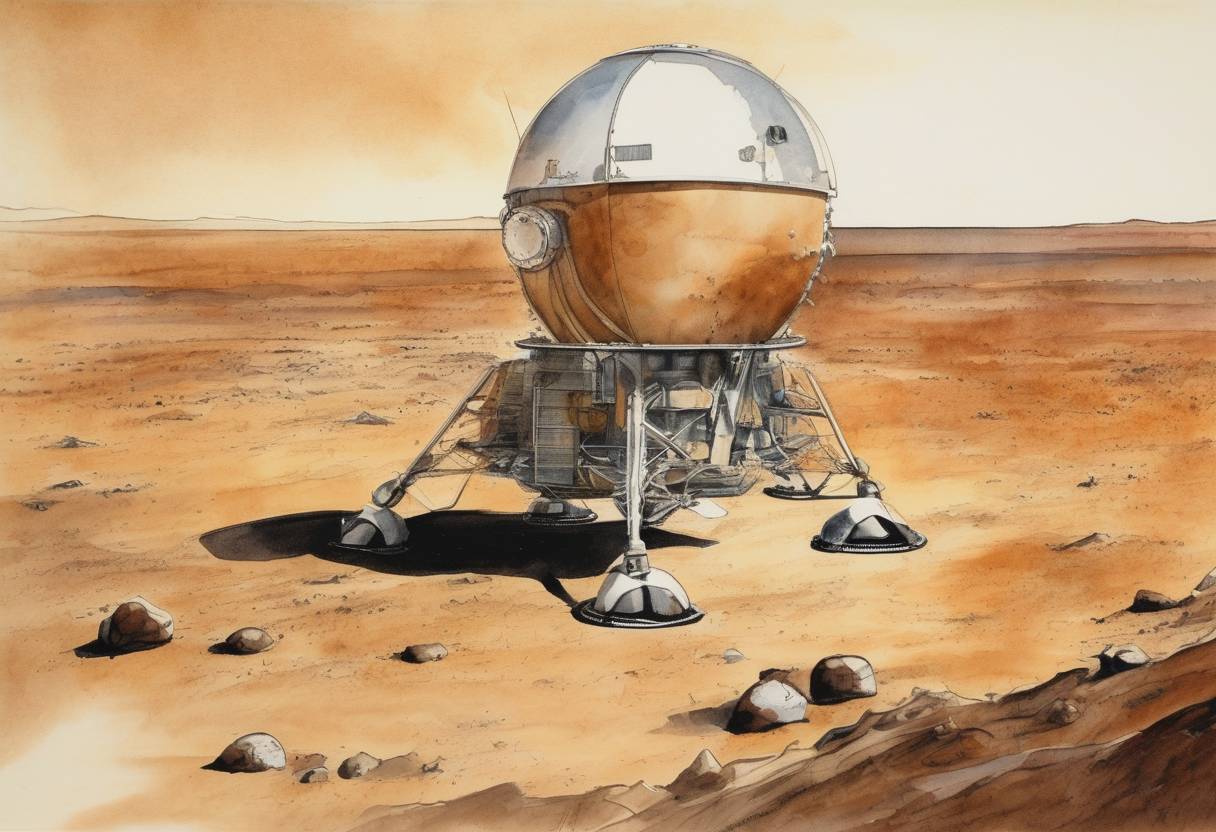
On July 20, 1976, the Viking 1 lander made history by becoming the first U.S. spacecraft to successfully land on Mars and transmit images of the Martian surface back to Earth. This landmark event marked a significant achievement in space exploration and provided humanity with its first close-up view of the Red Planet.
The Viking program, managed by NASA, was designed to explore Mars and search for signs of life. It consisted of two spacecraft, Viking 1 and Viking 2, each comprising an orbiter and a lander. The primary objectives of the Viking missions were to:
Viking 1 was launched from Cape Canaveral on August 20, 1975, aboard a Titan IIIE rocket. After a journey of nearly 11 months, the spacecraft entered Mars’ orbit on June 19, 1976. The lander separated from the orbiter and descended to the Martian surface on July 20, 1976.
The Viking 1 lander touched down in the Chryse Planitia region of Mars. The landing site was carefully chosen for its relatively flat terrain, which was deemed safe for landing and conducive to scientific study. Upon landing, Viking 1 began its mission by capturing and transmitting the first images of the Martian surface, revealing a barren, rocky landscape.
The Viking 1 lander conducted a series of experiments to analyze the Martian soil and atmosphere. Some key findings and contributions of the mission include:
The success of Viking 1 paved the way for future Mars exploration missions. It demonstrated the feasibility of landing on and studying the Martian surface, setting the stage for subsequent missions such as the Mars Pathfinder, Spirit and Opportunity rovers, and the Curiosity rover. The data collected by Viking 1 continues to inform our understanding of Mars and its potential for past or present life.
In summary, the Viking 1 lander’s successful mission on July 20, 1976, was a monumental step in space exploration, providing humanity with its first direct insights into the Martian environment and inspiring continued exploration of our neighboring planet.
Source: en.wikipedia.org