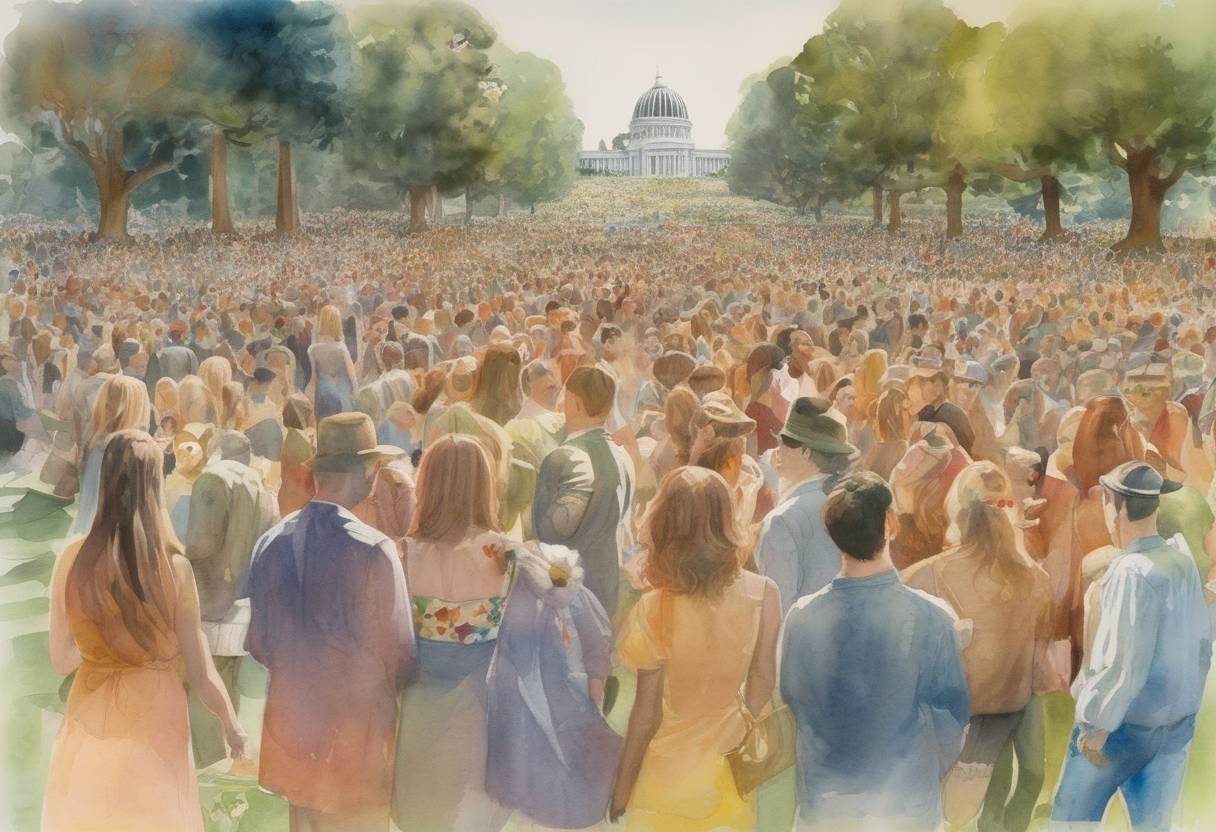
The Human Be-In: Prelude to the Summer of Love
On January 14, 1967, the Human Be-In took place in Golden Gate Park, San Francisco, marking a pivotal moment in the counterculture movement of the 1960s. This event is often regarded as a prelude to the famed Summer of Love, which would unfold later that year.
Context and Background
The 1960s were a period of significant social upheaval in the United States, characterized by the civil rights movement, anti-Vietnam War protests, and a burgeoning counterculture that challenged traditional norms. San Francisco, particularly the Haight-Ashbury district, became a hub for this counterculture, attracting young people from across the nation.
The Human Be-In was conceived as a gathering to unite various factions of the counterculture, including hippies, political activists, and spiritual seekers. It was organized by key figures such as Michael Bowen, a Beat Generation artist, and Allen Cohen, editor of the underground newspaper San Francisco Oracle.
The Event
Held at the Polo Fields in Golden Gate Park, the Human Be-In drew an estimated 20,000 to 30,000 people. The event was free and open to all, embodying the ideals of peace, love, and community. It featured a mix of music, poetry, and speeches from prominent figures of the counterculture movement.
Notable Participants
- Timothy Leary: The former Harvard psychologist and advocate for the use of psychedelic drugs famously urged the crowd to “turn on, tune in, drop out.”
- Allen Ginsberg: The Beat poet, known for his work “Howl,” led chants and provided a spiritual dimension to the gathering.
- Gary Snyder: Another influential poet, Snyder contributed to the event’s focus on environmental consciousness and Eastern spirituality.
- Musical Acts: Bands such as the Grateful Dead, Jefferson Airplane, and Big Brother and the Holding Company, featuring Janis Joplin, performed, providing the soundtrack for the day.
Significance and Aftermath
The Human Be-In is often credited with catalyzing the Summer of Love, a period during the summer of 1967 when tens of thousands of young people flocked to San Francisco. The event highlighted the growing influence of the counterculture and its ideals of peace, love, and communal living.
The gathering also underscored the role of San Francisco as a center for cultural and social experimentation. It helped popularize the use of psychedelic drugs and alternative lifestyles, influencing music, fashion, and art.
In the broader historical context, the Human Be-In and the Summer of Love contributed to the transformation of American society, challenging established norms and paving the way for future social movements.
Conclusion
The Human Be-In was more than just a gathering; it was a symbolic moment that captured the spirit of the 1960s counterculture. It brought together diverse elements of the movement, setting the stage for the cultural revolution that would define the era.