Stanley Baldwin Becomes Prime Minister for the Second Time
1924 · London, United Kingdom
Stanley Baldwin, leader of the Conservative Party, becomes Prime Minister of the United Kingdom for the second time, succeeding Ramsay MacDonald.
May 11, 2010
David Cameron became the Prime Minister of the United Kingdom, leading a coalition government with the Liberal Democrats.
London, United Kingdom | Conservative Party
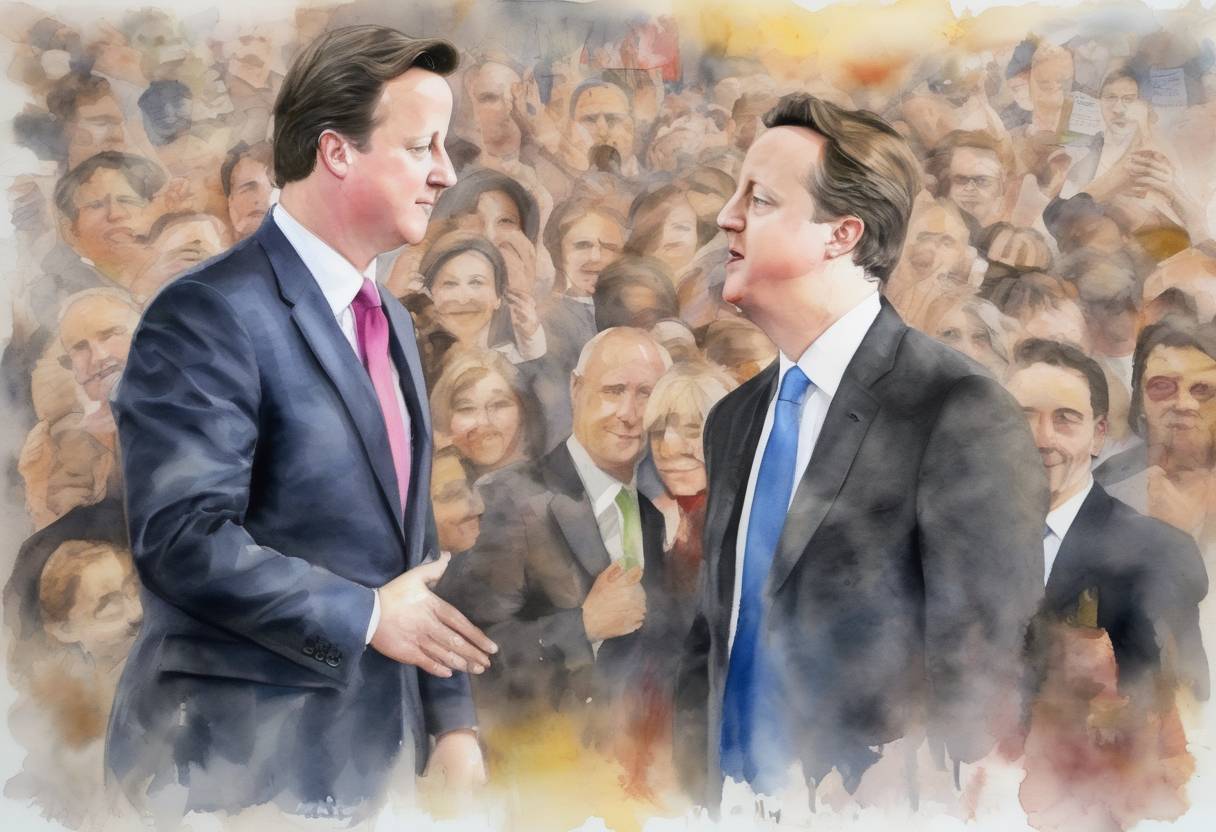
On May 11, 2010, David Cameron became the Prime Minister of the United Kingdom, marking the beginning of a coalition government between the Conservative Party and the Liberal Democrats. This event was significant as it ended 13 years of Labour Party rule and introduced the first coalition government in the UK since World War II.
2005-2010 Labour Government: The Labour Party, under Prime Ministers Tony Blair and later Gordon Brown, had been in power since 1997. By 2010, the Labour government faced criticism over economic issues, particularly following the global financial crisis of 2008.
2010 General Election: The general election held on May 6, 2010, resulted in a hung parliament, where no single party achieved an outright majority. The Conservatives, led by David Cameron, won 306 seats, Labour secured 258, and the Liberal Democrats, led by Nick Clegg, obtained 57 seats.
Negotiations: In the days following the election, intense negotiations took place between the parties. The Conservatives and Liberal Democrats eventually agreed to form a coalition, with David Cameron as Prime Minister and Nick Clegg as Deputy Prime Minister.
Coalition Agreement: The coalition agreement outlined key policy compromises, including economic measures to reduce the national deficit, political reforms, and environmental policies. The agreement was seen as a pragmatic solution to the electoral stalemate.
Gordon Brown’s Resignation: On the evening of May 11, Gordon Brown resigned as Prime Minister, paving the way for David Cameron to take office.
David Cameron’s Appointment: Following Brown’s resignation, David Cameron was invited by Queen Elizabeth II to form a government, officially becoming the Prime Minister.
Economic Policies: The coalition government prioritized austerity measures to address the UK’s budget deficit, which became a defining feature of Cameron’s tenure.
Political Reforms: The coalition introduced several political reforms, including the Fixed-term Parliaments Act 2011, which aimed to establish a more predictable electoral cycle.
Challenges and Criticisms: The coalition faced challenges, including public protests against austerity measures and internal tensions between the coalition partners.
Legacy: David Cameron’s leadership and the coalition government had a lasting impact on UK politics, influencing subsequent elections and party dynamics.
David Cameron’s rise to the premiership on May 11, 2010, marked a pivotal moment in British political history, characterized by the unique collaboration between two major parties and significant policy shifts in response to economic challenges.
Source: www.britannica.com