Election of Pope Paul I on April 26, 757
757 · Rome, Italy
Pope Paul I is elected as the 93rd pope of the Catholic Church.
April 21, 0753
According to legend, Rome was founded by Romulus and Remus on this day. The myth states that the twin brothers, who were raised by a she-wolf, decided to build a city. After a disagreement, Romulus killed Remus and named the city after himself.
Rome, Italy
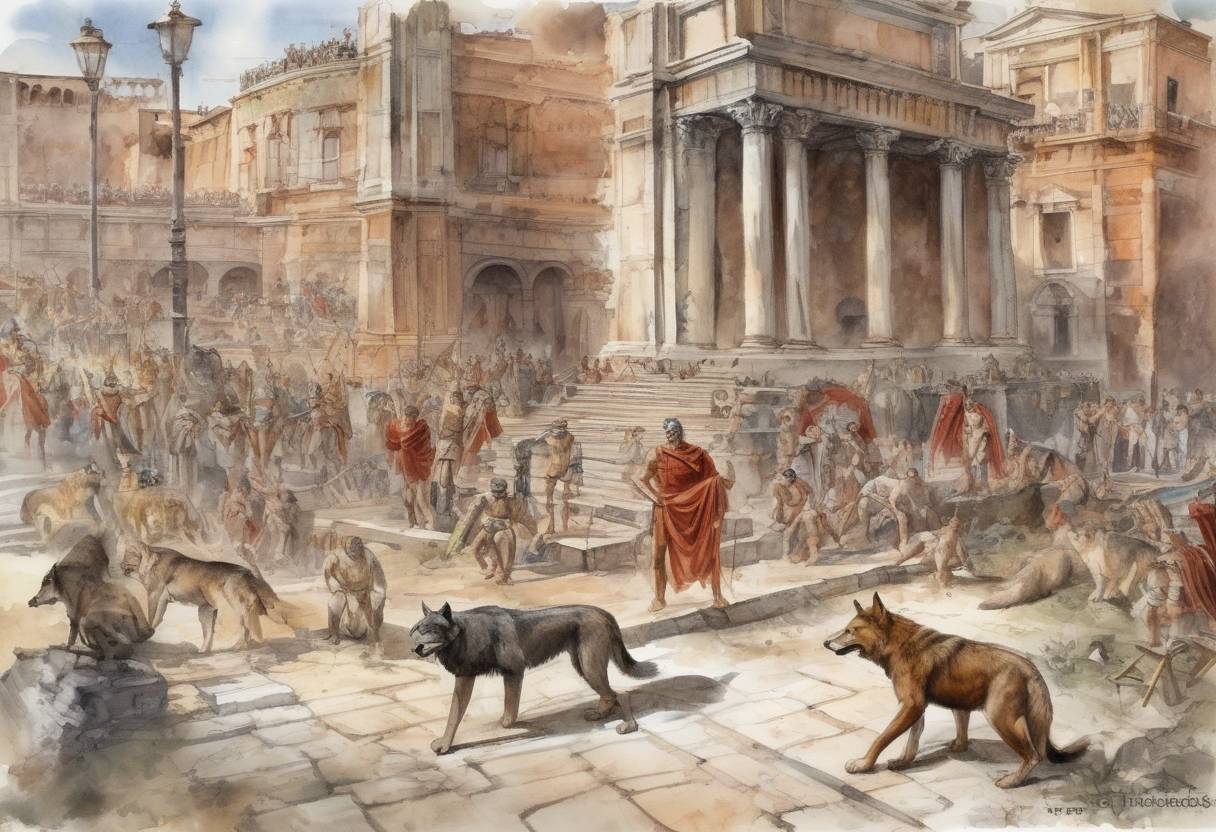
According to Roman mythology, the city of Rome was founded on April 21, 753 BCE, by the twin brothers Romulus and Remus. This legendary tale is a cornerstone of Roman cultural identity and has been passed down through generations, blending myth with the early history of Rome.
The story begins with the twins’ miraculous birth. Romulus and Remus were said to be the sons of Rhea Silvia, a vestal virgin and daughter of Numitor, the rightful king of Alba Longa. Their father was Mars, the god of war, which imbued the twins with divine significance. However, their birth was fraught with danger. Amulius, Numitor’s brother, had usurped the throne and ordered the twins to be cast into the Tiber River to eliminate any threats to his rule.
The infants were saved by the river’s currents and came to rest at the base of the Palatine Hill. There, they were discovered by a she-wolf, who nursed them until they were found by a shepherd named Faustulus. He and his wife, Acca Larentia, raised the boys as their own.
As young men, Romulus and Remus learned of their true heritage and helped restore their grandfather Numitor to the throne of Alba Longa. They then decided to establish a city of their own. The brothers chose the site where they had been saved by the she-wolf, but a disagreement arose over which hill to build their city on—Romulus favored the Palatine Hill, while Remus preferred the Aventine Hill.
The disagreement escalated, leading to a tragic conflict. According to the legend, Romulus killed Remus in a fit of rage, solidifying his sole leadership. Romulus then proceeded to lay the foundations of the new city, which he named Rome after himself.
The story of Romulus and Remus is more than just a myth; it serves as a symbolic narrative for the origins of Rome, reflecting themes of divine destiny, fraternal conflict, and the establishment of order from chaos. The tale underscores the martial and competitive spirit that would come to characterize Roman society and its expansionist ambitions.
While the exact historical accuracy of the legend is debated, archaeological evidence suggests that settlements existed on the Palatine Hill around the mid-8th century BCE, aligning with the traditional date of Rome’s founding. The myth of Romulus and Remus thus provides a narrative framework for understanding the early development of Roman civilization.
April 21 is celebrated as the anniversary of Rome’s founding, known as “Parilia” in ancient times, a festival that honored the pastoral origins of the city and its legendary founders. The story of Romulus and Remus continues to be a powerful symbol of Rome’s enduring legacy and cultural heritage.
In summary, the legend of Romulus and Remus is a foundational myth that encapsulates the spirit and identity of ancient Rome, blending mythological elements with historical tradition to explain the origins of one of history’s most influential civilizations.