The Sinking of the RMS Titanic: April 14, 1912
1912 · North Atlantic Ocean, International Waters
The RMS Titanic struck an iceberg in the North Atlantic Ocean at 11:40 PM ship's time, leading to its sinking and the loss of over 1,500 lives.
April 10, 1912
The RMS Titanic set sail on its maiden voyage from Southampton, England, heading towards New York City.
Southampton, England | White Star Line
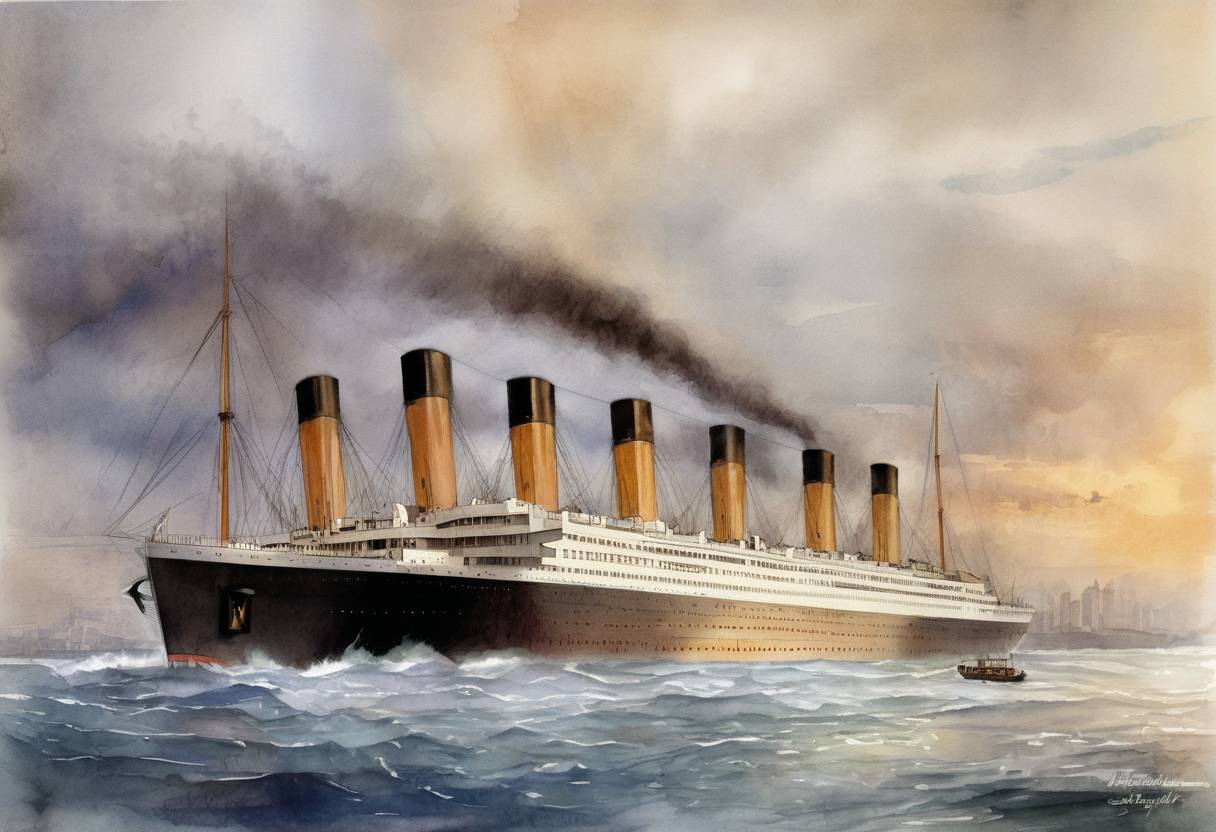
On April 10, 1912, the RMS Titanic, one of the most famous ships in history, embarked on its maiden voyage from Southampton, England, destined for New York City. This event marked the beginning of what was intended to be a triumphant journey across the Atlantic Ocean, showcasing the pinnacle of early 20th-century shipbuilding and luxury travel.
The Titanic was constructed by the shipbuilding company Harland and Wolff in Belfast, Ireland, and was owned by the White Star Line. It was designed to be the largest and most luxurious passenger liner of its time, measuring approximately 882 feet in length and boasting a gross tonnage of 46,328 tons. The ship was equipped with advanced safety features, including watertight compartments and remotely activated watertight doors, although it infamously carried lifeboats for only about half of its total passenger capacity.
The Titanic’s passenger list included a mix of prominent figures and everyday travelers. Some of the notable passengers included:
The Titanic’s maiden voyage is remembered not only for its initial promise of luxury and innovation but also for the tragic events that followed. The ship’s sinking on April 15, 1912, after striking an iceberg, resulted in the loss of over 1,500 lives and led to significant changes in maritime safety regulations, including the requirement for sufficient lifeboats for all passengers and the establishment of the International Ice Patrol.
The story of the Titanic continues to captivate the public imagination, serving as a poignant reminder of human ambition and the unforeseen consequences of technological advancement.
Source: www.britannica.com