Premier Performance of Ravel's 'Boléro' on November 22, 1928
1928 · Paris, France
The premier performance of Ravel's 'Boléro' took place at the Paris Opera. The composition is known for its unique orchestration and repetitive melody.
September 12, 1910
Gustav Mahler's Symphony No. 8, also known as the 'Symphony of a Thousand,' premiered in Munich.
Munich, Germany | Musik-Festhalle
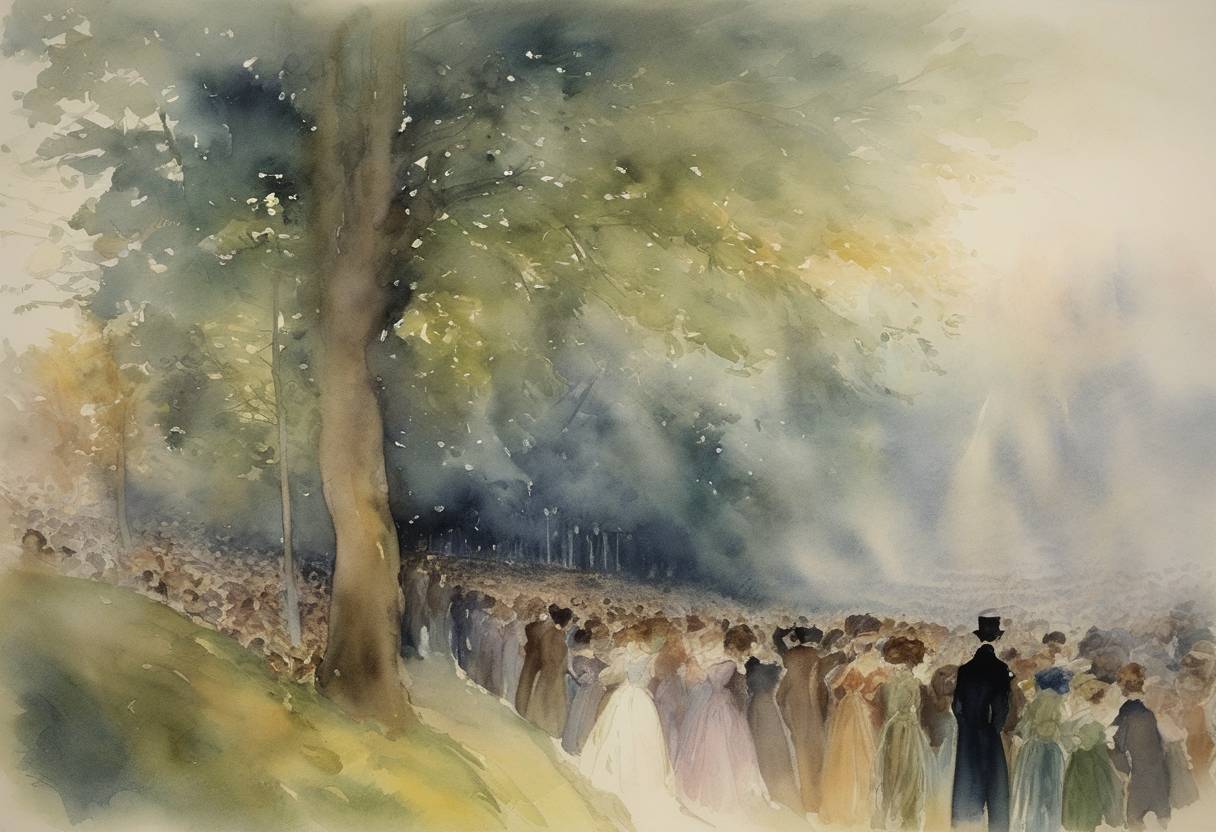
Gustav Mahler’s Symphony No. 8, famously dubbed the “Symphony of a Thousand” due to the enormous number of performers required, premiered on September 12, 1910, in Munich, Germany. This event stands as a key moment in the history of classical music, showcasing Mahler’s ambition and innovation within the symphonic form.
Mahler composed this symphony in 1906, and it holds a unique place in his oeuvre. Unlike his previous symphonies, Symphony No. 8 is choral throughout, integrating vocal forces with the orchestral. It is structured in two parts:
Part I: This section is a setting of the Latin hymn “Veni Creator Spiritus,” a traditional invocation that asks for divine inspiration and grace.
Part II: Culminates in an expansive setting of the closing scene from Goethe’s “Faust,” also known as “The Chorus Mysticus,” which explores themes of redemption and the eternal feminine.
The premiere of Symphony No. 8 took place at Munich’s Neue Musik-Festhalle. It was conducted by Mahler himself and was one of his most spectacular achievements during his lifetime. The event was notable for its massive orchestration, requiring:
This enormous assembly led to the nickname “Symphony of a Thousand,” a moniker publicists embraced to evoke the symphony’s grandeur, though the actual number of performers did not reach a thousand.
The Munich premiere was a resounding success, garnering enthusiastic acclaim from the audience and critics alike. Considered a landmark cultural event, it was attended by numerous notable figures, including prominent composers, musicians, and intellectuals of the time. The positive reception solidified Mahler’s reputation as a leading composer of the modern era, even though his health and life were in decline.
The premiere of Symphony No. 8 was one of Mahler’s last triumphant moments, as he passed away in 1911. The symphony’s mixture of text, voice, and music pushed the boundaries of what a symphony could encompass, influencing subsequent generations of composers. It remains a staple of the concert repertoire, celebrated for its sweeping scale and the spiritual profundity of its vision.
Source: www.britannica.com