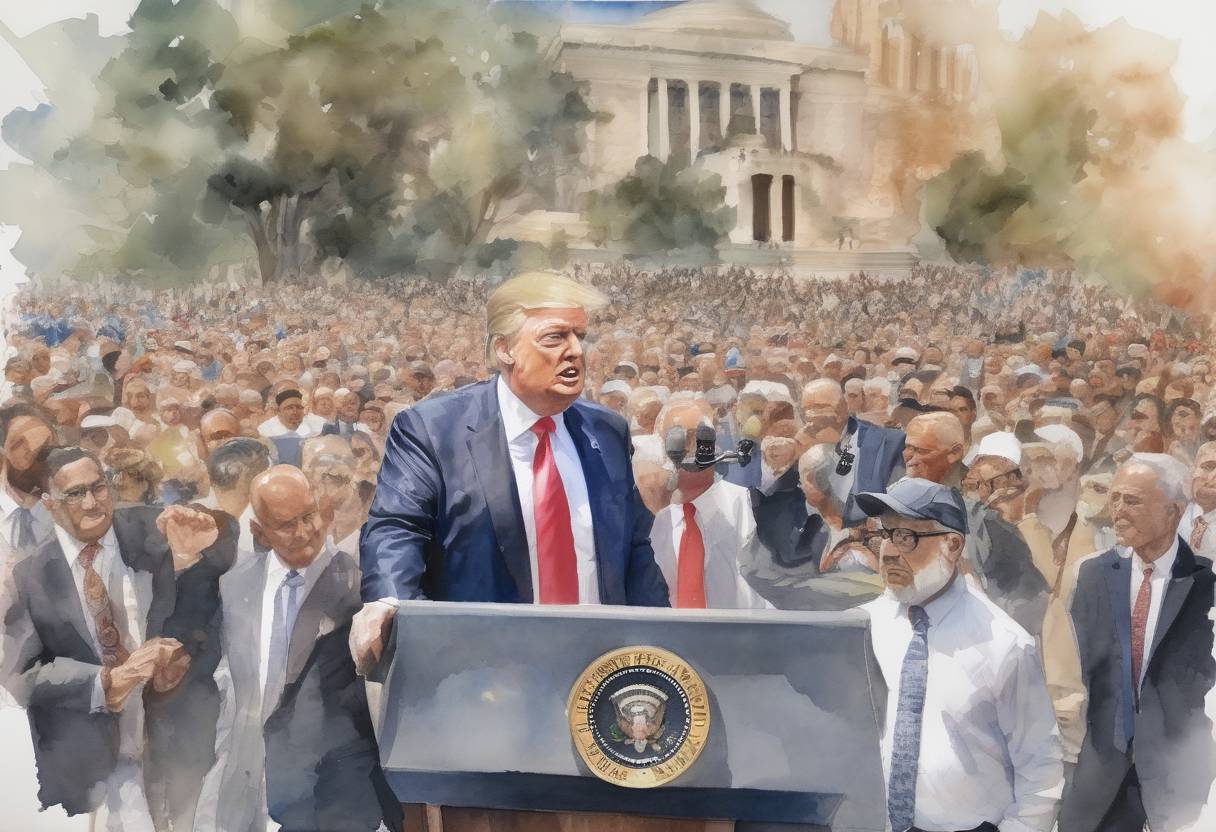
The Unveiling of the Middle East Peace Plan: “Deal of the Century”
On January 28, 2020, U.S. President Donald Trump unveiled a Middle East peace plan, commonly referred to as the “Deal of the Century.” This plan was a significant diplomatic effort aimed at resolving the long-standing Israeli-Palestinian conflict. The announcement took place at the White House, with Israeli Prime Minister Benjamin Netanyahu standing alongside President Trump.
Key Components of the Plan
The peace plan proposed by the Trump administration included several key components:
Two-State Solution: The plan endorsed a two-state solution, proposing the creation of an independent Palestinian state alongside Israel. However, it imposed several conditions on the Palestinians, including the requirement to recognize Israel as a Jewish state and to renounce terrorism.
Territorial Provisions: The plan allowed Israel to annex approximately 30% of the West Bank, including all Israeli settlements and the Jordan Valley, while offering Palestinians a demilitarized state on the remaining territory. East Jerusalem would remain under Israeli control, with the possibility of a Palestinian capital in the outskirts of the city.
Economic Incentives: The proposal included a $50 billion economic plan aimed at boosting the Palestinian economy and improving infrastructure, contingent upon the Palestinians’ acceptance of the political terms.
Reactions and Controversy
The unveiling of the plan was met with mixed reactions and significant controversy:
Israeli Reaction: The plan was largely welcomed by the Israeli government, particularly by Prime Minister Netanyahu, who saw it as a historic opportunity to secure Israeli sovereignty over key areas of the West Bank.
Palestinian Response: The Palestinian leadership, including President Mahmoud Abbas, rejected the plan outright, arguing that it heavily favored Israeli interests and undermined Palestinian aspirations for statehood. They criticized the plan for legitimizing Israeli settlements and denying Palestinians control over East Jerusalem.
International Reactions: The international community had varied responses. Some countries, like Saudi Arabia and the United Arab Emirates, expressed cautious support, emphasizing the need for direct negotiations between Israelis and Palestinians. Others, including the European Union, reiterated the importance of a negotiated two-state solution based on pre-1967 borders.
Historical Significance
The “Deal of the Century” represented a significant shift in U.S. policy towards the Israeli-Palestinian conflict, aligning closely with Israeli positions. It highlighted the complexities and challenges of achieving peace in the region, as well as the deep divisions between the involved parties. The plan’s reception underscored the enduring geopolitical tensions and the difficulty of reconciling competing national and territorial claims.
In the aftermath, the plan did not lead to immediate negotiations or a resolution of the conflict. Instead, it further entrenched existing divides and underscored the need for a more balanced approach to peace-making efforts in the Middle East.