U.S. Missile Strike on Syrian Airbase - April 7, 2017
2017 · Shayrat, Syria
The United States launched 59 Tomahawk cruise missiles at a Syrian airbase in response to a chemical weapons attack in Khan Shaykhun.
April 14, 2018
The United States, United Kingdom, and France launch coordinated airstrikes against Syrian government sites in response to a chemical weapons attack in Douma.
Damascus, Syria | United States Armed Forces
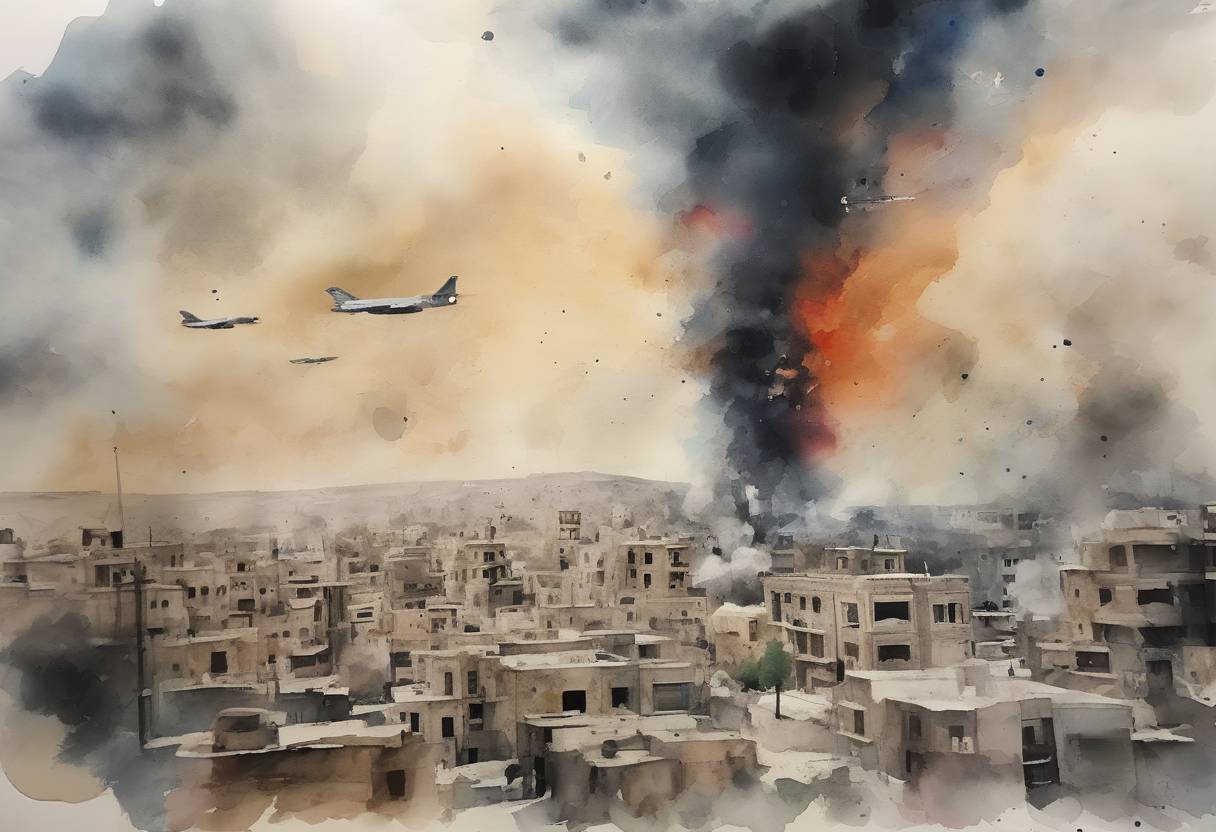
On April 14, 2018, the United States, United Kingdom, and France launched coordinated airstrikes against Syrian government sites. This military action was a direct response to a chemical weapons attack that occurred in Douma, Syria, on April 7, 2018, which was attributed to the Syrian government led by President Bashar al-Assad.
The Douma Chemical Attack: On April 7, 2018, reports emerged of a chemical attack in Douma, a town in the Eastern Ghouta region near Damascus. The attack reportedly involved the use of chlorine gas and possibly a nerve agent, resulting in numerous civilian casualties, including children. The Syrian government denied responsibility, but the attack drew international condemnation.
International Response: The attack in Douma prompted widespread outrage and calls for action from the international community. The United Nations Security Council held emergency meetings, but efforts to pass a resolution condemning the attack were stymied by geopolitical tensions, particularly between the United States and Russia, a key ally of the Syrian government.
Targets and Execution: The airstrikes targeted three main sites associated with Syria’s chemical weapons capabilities:
Military Coordination: The operation involved a combination of naval and air assets. The United States deployed Tomahawk cruise missiles launched from ships in the Mediterranean Sea, while the UK and France contributed with fighter jets and missiles.
Immediate Reactions: The strikes were met with mixed reactions globally. The United States, UK, and France justified the action as a necessary measure to deter further use of chemical weapons by the Assad regime. Russia and Iran, both supporters of Assad, condemned the strikes as violations of international law and acts of aggression.
Impact on Syrian Conflict: While the strikes were intended to degrade Syria’s chemical weapons capabilities, they did not significantly alter the broader dynamics of the Syrian civil war. The Assad regime continued to consolidate power with the support of Russia and Iran.
International Law and Policy: The airstrikes reignited debates over the legality and effectiveness of unilateral military interventions without explicit UN Security Council authorization. They also highlighted the ongoing challenges in enforcing international norms against the use of chemical weapons.
In summary, the April 14, 2018, airstrikes were a significant moment in the Syrian conflict, reflecting the complexities of international diplomacy and military intervention in response to humanitarian crises.
Source: www.bbc.com