Treaty of Córdoba: Establishing Mexican Independence
1821 · Córdoba, Mexico
The Treaty of Córdoba, which established Mexican independence from Spain, was signed by the last viceroy of New Spain, Juan O'Donojú and Agustín de Iturbide.
September 27, 1821
Mexico gains independence from Spain after the signing of the Treaty of Córdoba.
Córdoba, Mexico | Mexican Independence Movement
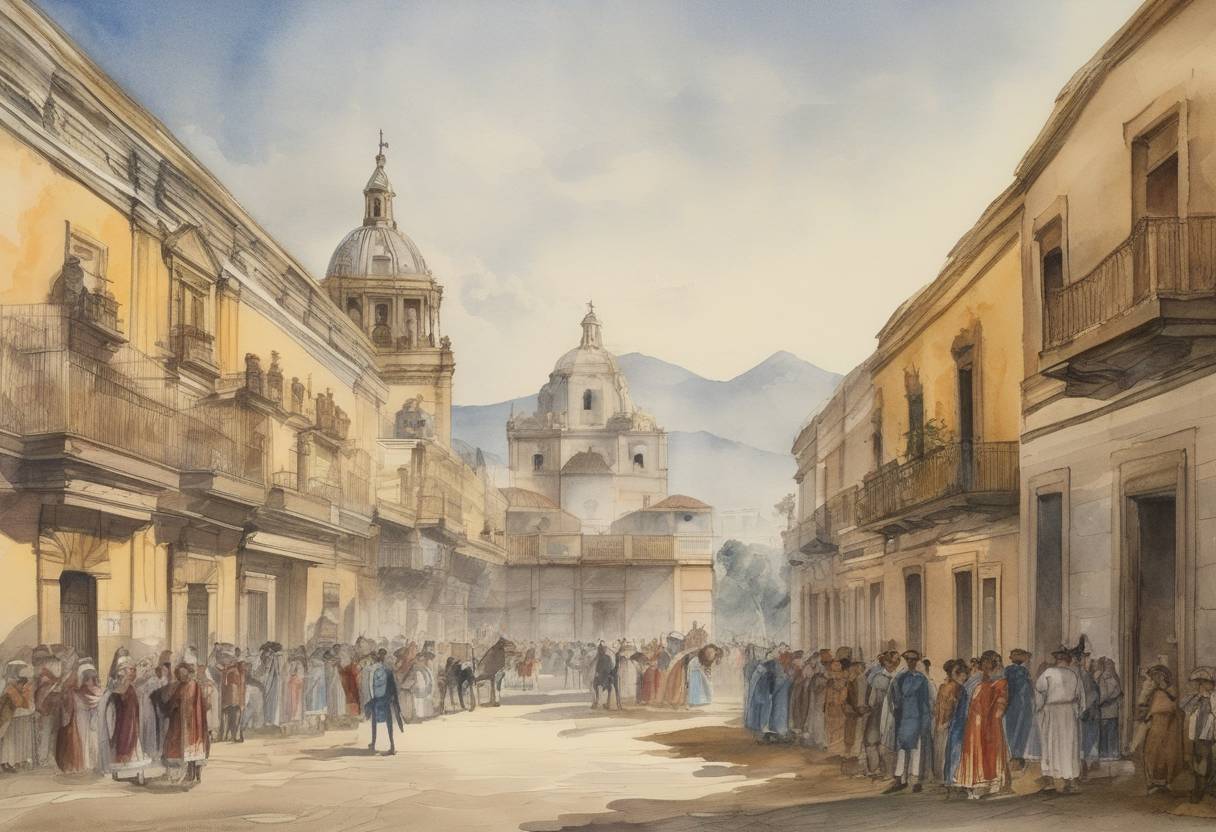
On September 27, 1821, Mexico officially gained its independence from Spain, marking the end of an 11-year struggle that began with the Grito de Dolores in 1810. This significant event was formalized with the signing of the Treaty of Córdoba, which laid the groundwork for Mexico’s sovereignty.
The Mexican War of Independence was a complex conflict influenced by various social, political, and economic factors. The initial push for independence was led by Miguel Hidalgo y Costilla, a Catholic priest who issued the Grito de Dolores on September 16, 1810, calling for the end of Spanish rule. Over the years, leadership of the independence movement shifted among various figures, including José María Morelos and Vicente Guerrero.
The movement was fueled by discontent with the Spanish colonial rule, which imposed heavy taxes and restricted trade. Additionally, the social hierarchy heavily favored Spanish-born individuals (peninsulares) over those born in the colonies (criollos), leading to widespread dissatisfaction among the latter.
The Treaty of Córdoba was signed on August 24, 1821, in the town of Córdoba, Veracruz, by Spanish Viceroy Juan O’Donojú and Mexican revolutionary leader Agustín de Iturbide. The treaty was a culmination of negotiations that recognized Mexican independence and established the terms for the transition of power.
Following the signing of the treaty, the Army of the Three Guarantees, led by Iturbide, entered Mexico City on September 27, 1821, symbolizing the end of Spanish rule. This event marked the official beginning of Mexico as an independent nation.
However, the initial vision of a monarchy was short-lived. Agustín de Iturbide declared himself Emperor of Mexico in 1822, but his reign was brief, ending in 1823 when Mexico became a republic.
The independence of Mexico had significant implications for the region, inspiring other Latin American countries to pursue their own struggles for independence. It also marked the decline of Spanish colonial power in the Americas.
The Treaty of Córdoba remains a pivotal document in Mexican history, symbolizing the country’s transition from a colonial territory to an independent nation.
Source: en.wikipedia.org