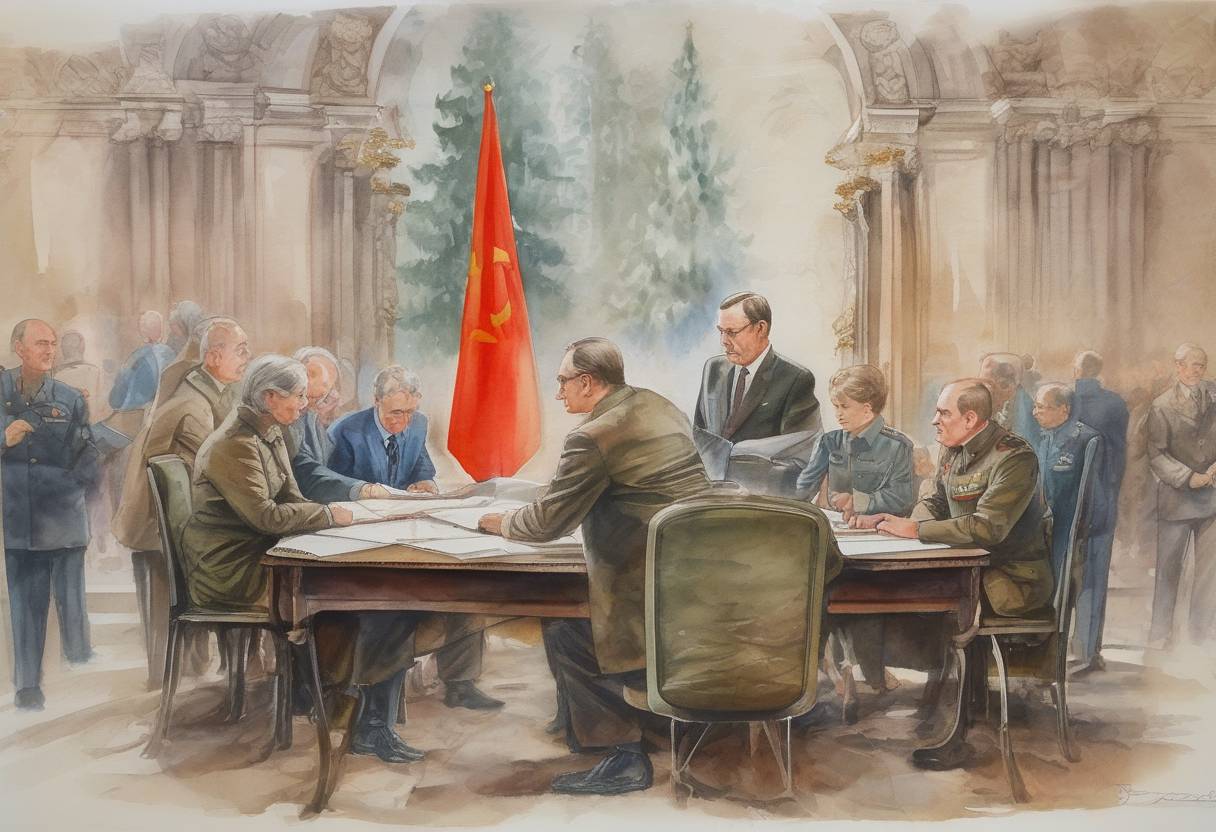
The Two Plus Four Agreement: Paving the Way for German Reunification
On September 12, 1990, the Treaty on the Final Settlement with Respect to Germany, commonly known as the Two Plus Four Agreement, was signed in Moscow. This pivotal treaty marked a significant step towards the reunification of Germany, which officially occurred on October 3, 1990. The agreement involved the two German states—East Germany (the German Democratic Republic) and West Germany (the Federal Republic of Germany)—and the four Allied powers from World War II: the United States, the Soviet Union, the United Kingdom, and France.
Context and Background
Post-World War II Division: After World War II, Germany was divided into East and West, with the former under Soviet influence and the latter aligned with the Western Allies. Berlin, the capital, was similarly divided.
Cold War Tensions: The division of Germany became a symbol of the Cold War, with the Berlin Wall erected in 1961 to prevent East Germans from fleeing to the West.
Collapse of the Eastern Bloc: By the late 1980s, the Eastern Bloc was experiencing significant political changes. The fall of the Berlin Wall on November 9, 1989, was a crucial moment that accelerated the push for German reunification.
Key Provisions of the Agreement
Sovereignty: The treaty restored full sovereignty to a unified Germany, allowing it to make independent decisions regarding its internal and external affairs.
Borders: Germany’s borders were confirmed, particularly the Oder-Neisse line, which demarcated the boundary with Poland, ensuring stability in Central Europe.
Military Restrictions: Germany agreed to limit its military forces and renounced the possession of nuclear, biological, and chemical weapons.
Allied Rights: The treaty terminated the remaining rights of the Allied powers in Germany, effectively ending their post-war occupation responsibilities.
Significance and Aftermath
Reunification: The treaty was a crucial legal and diplomatic step that facilitated the reunification of Germany, which was completed less than a month later.
European Stability: It contributed to the stabilization of Europe post-Cold War, as it addressed security concerns and territorial disputes.
End of the Cold War: The agreement symbolized the end of Cold War divisions in Europe and paved the way for further European integration.
Diplomatic Success: The negotiation process demonstrated successful diplomacy among former adversaries, setting a precedent for future international agreements.
The Two Plus Four Agreement remains a landmark in modern European history, illustrating the power of diplomacy and cooperation in resolving complex international issues.