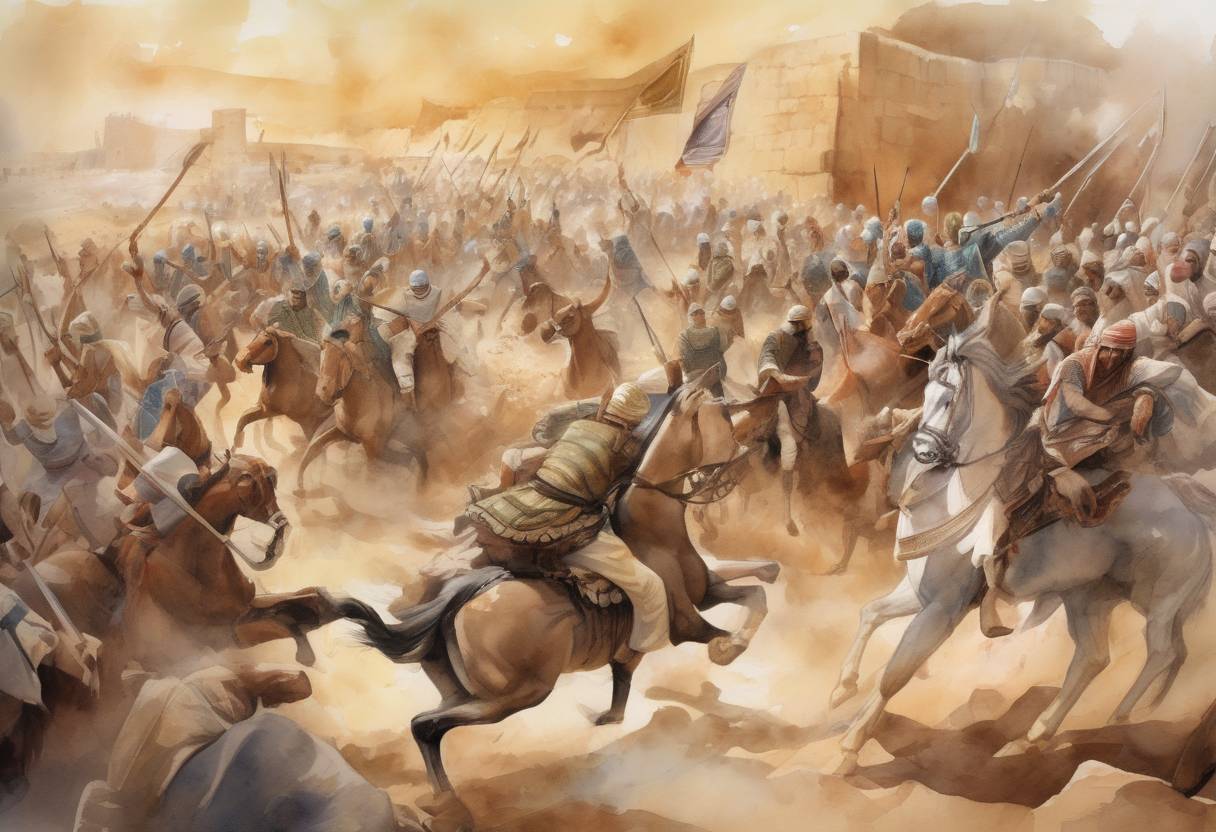
The Battle of Khaybar
The Battle of Khaybar was a significant military engagement that took place in 628 CE (7 AH in the Islamic calendar), not in 686 CE. This battle was a pivotal moment in early Islamic history, where Muslim forces, led by the Prophet Muhammad, captured the Jewish oasis of Khaybar in the Arabian Peninsula.
Context Leading to the Battle
Khaybar was a well-fortified oasis located approximately 150 kilometers north of Medina. It was inhabited by Jewish tribes who were known for their agricultural wealth and strong fortifications. The relationship between the Muslim community in Medina and the Jewish tribes of Khaybar had been tense, partly due to previous conflicts and alliances formed during the Battle of the Trench.
The strategic importance of Khaybar lay in its location and resources, which were seen as a potential threat to the Muslim community in Medina. Additionally, the Jewish tribes of Khaybar were believed to have supported the Quraysh and other tribes against the Muslims in previous conflicts.
The Battle
The campaign against Khaybar began in the month of Muharram in the 7th year of the Hijra. The Muslim forces, numbering around 1,400 men, set out from Medina with the aim of neutralizing the threat posed by the oasis and securing its resources.
The battle involved a series of skirmishes and sieges against the various forts that made up the Khaybar oasis. The most notable of these was the Fort of Al-Qamus, which was famously captured by Ali ibn Abi Talib, the cousin and son-in-law of the Prophet Muhammad. His bravery and leadership during the siege were pivotal in the Muslim victory.
Aftermath and Significance
The victory at Khaybar had several important consequences:
Economic Gains: The Muslims gained control over the fertile lands and resources of Khaybar, which significantly boosted the economic strength of the Muslim community in Medina.
Political Influence: The defeat of the Khaybar tribes weakened the opposition to the Muslim state and solidified the Prophet Muhammad’s influence in the region.
Treaty and Coexistence: The Jewish inhabitants of Khaybar were allowed to remain in the oasis under a treaty that required them to pay a portion of their agricultural produce as tribute to the Muslim state. This arrangement set a precedent for future interactions between Muslims and non-Muslim communities.
Strengthened Position: The victory further solidified the position of the Muslim community in the Arabian Peninsula and paved the way for future expansions.
The Battle of Khaybar is remembered as a testament to the strategic acumen of the Prophet Muhammad and his companions, as well as a turning point in the consolidation of Muslim power in the region.