Eugene B. Ely's Historic Landing on the USS Pennsylvania
1911 · San Francisco, United States
Eugene B. Ely landed on the deck of the USS Pennsylvania stationed in San Francisco Bay, marking the first time an aircraft landed on a ship.
May 9, 1926
The first flight over the North Pole was made by Richard E. Byrd and Floyd Bennett.
Spitsbergen, Norway | United States Navy
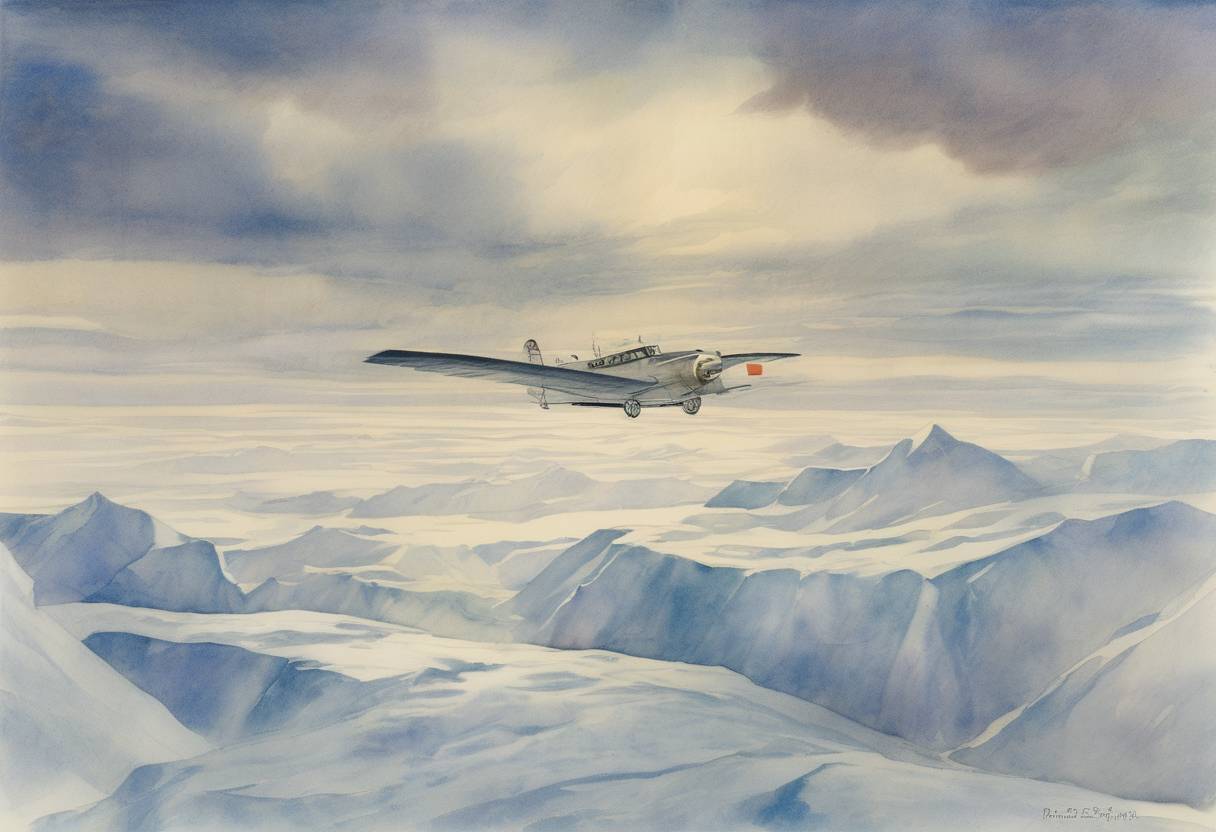
On May 9, 1926, a significant milestone in the history of aviation and exploration was achieved when Richard E. Byrd and Floyd Bennett claimed to have completed the first flight over the North Pole. This event marked a pivotal moment in the exploration of the polar regions and showcased the advancements in aviation technology of the time.
Richard E. Byrd: A U.S. Navy officer and aviator, Byrd was already known for his pioneering work in aviation and exploration. His interest in polar exploration was inspired by the potential for new discoveries and the challenge of navigating extreme environments.
Floyd Bennett: An experienced pilot and mechanic, Bennett was Byrd’s trusted partner for this daring expedition. His skills were crucial in ensuring the success of the flight.
Aircraft: The duo used a Fokker F.VIIa/3m tri-motor monoplane named the “Josephine Ford,” after the daughter of Edsel Ford, who was a major sponsor of the expedition.
Flight Details: The flight took off from Spitsbergen, Norway, and was reported to have reached the North Pole and returned in approximately 15 hours and 44 minutes. The total distance covered was about 1,360 miles (2,190 kilometers).
Navigation: Byrd utilized a sextant and a sun compass for navigation, which were innovative tools for polar exploration at the time. These instruments were critical in the featureless and harsh polar environment where traditional navigation methods were ineffective.
Verification: Almost immediately after the flight, questions arose regarding the accuracy of Byrd’s claims. Some skeptics doubted whether the plane had actually reached the North Pole, citing inconsistencies in Byrd’s navigational records and the flight’s duration.
Later Analysis: In subsequent years, further analysis of Byrd’s flight data suggested that the plane might have turned back before reaching the pole. Despite this, Byrd and Bennett were celebrated as heroes, and Byrd received the Medal of Honor for his achievement.
Advancements in Aviation: The flight demonstrated the potential of aircraft to explore remote and inhospitable regions, paving the way for future polar expeditions and the development of long-distance aviation.
Legacy: Despite the controversy, Byrd’s expedition inspired further exploration of the polar regions and contributed to the understanding of these remote areas. Byrd continued his career as a prominent explorer, leading several expeditions to Antarctica.
In conclusion, the claimed first flight over the North Pole by Richard E. Byrd and Floyd Bennett remains a topic of debate, yet it undeniably played a significant role in the history of exploration and aviation. The event highlighted the challenges and possibilities of early 20th-century exploration, setting the stage for future endeavors in the polar regions.
Source: www.pbs.org