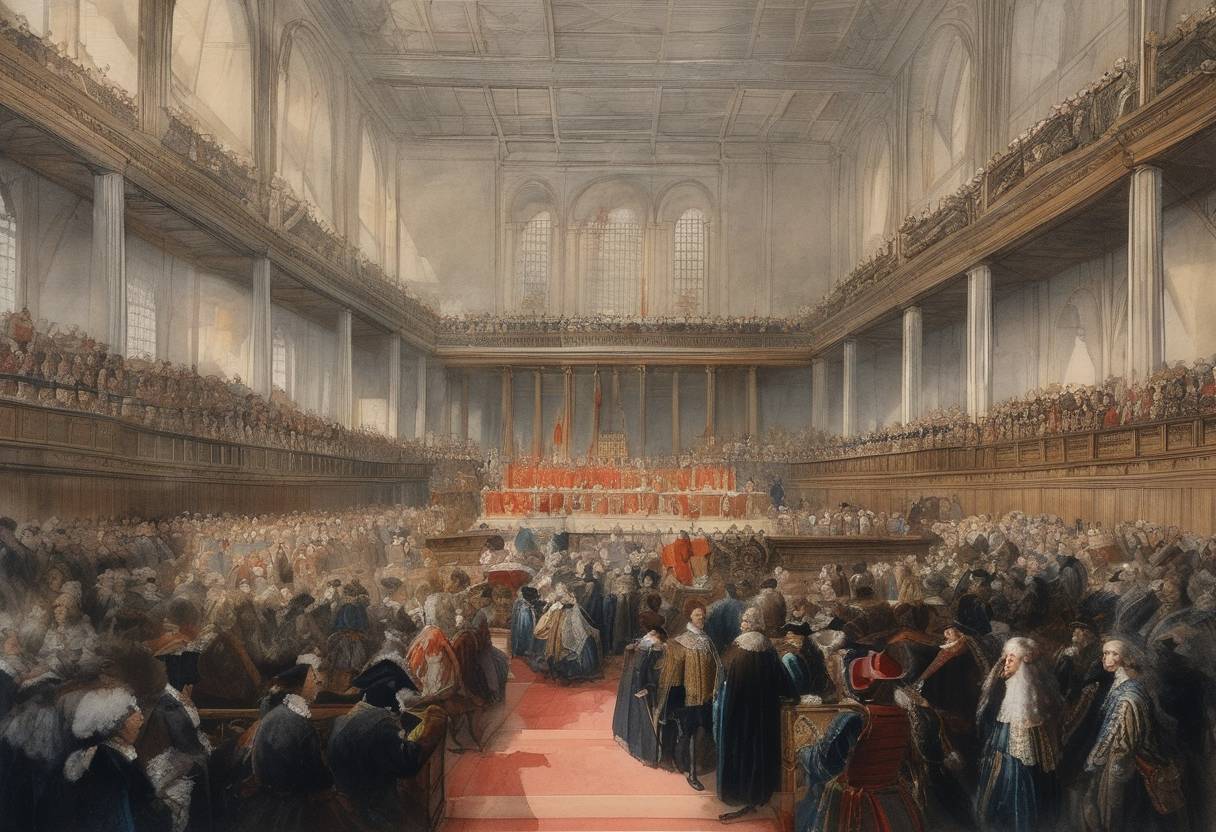
The Restoration of Charles II: A Landmark in English History
On May 8, 1660, the Convention Parliament, convened after the end of the Commonwealth period, formally voted to restore Charles II to the English throne. This event marked the official beginning of the English Restoration, a pivotal moment in British history that signaled the end of republican rule following the English Civil War and the Protectorate under Oliver Cromwell and his son, Richard.
Background Context
The Restoration was the culmination of a series of complex political and social movements post-Civil War. After the death of Oliver Cromwell in 1658, his son Richard Cromwell proved incapable of maintaining control. This instability, exacerbated by dissatisfaction with military rule and strict Puritan regulation, led many to reconsider the monarchy as a stabilizing institution.
Key Developments
Monck’s Intervention: The turning point came when General George Monck led his army from Scotland into England. He played a strategic role in the negotiations that dismantled the remaining power structures of the Commonwealth.
Declaration of Breda: Prior to the restoration, Charles II issued the Declaration of Breda on April 4, 1660, outlining his terms for returning to England, which included general amnesty, religious tolerance, and the settlement of land disputes.
Convention Parliament: The Convention Parliament was freely elected in 1660, as previous Rump Parliaments had been discredited. It comprised both royalists and moderate Republicans who were willing to negotiate the terms of the monarchy’s return.
The Restoration Decision
On May 8, 1660, the Convention Parliament unanimously declared Charles II as the lawful monarch, marking the end of the Interregnum. The vote hinged on sentiments favoring stability, the restoration of traditional governance, and addressing the public’s desire for normalcy after years of civil unrest.
Broader Impact
Political Stability: The Restoration brought a period of relative political stability. It re-established the monarchy with certain limitations, setting the stage for the constitutional monarchy that would evolve in subsequent centuries.
Cultural Revival: The restoration of Charles II is also noted for accompanying a resurgence in arts and culture, sometimes referred to as the “Merry Monarch” era, for his patronage of the arts and the rebirth of public entertainments, particularly theater.
Religious and Political Settlements: Politically, the restoration saw the re-establishment of the Church of England and the Clarendon Code, which aimed to regulate non-conformist religious practices.
The official restoration of Charles II effectively ended two decades of political experimentation and laid the groundwork for the future development of the British constitutional framework.