The Dedication of the Statue of Liberty
1886 · New York City, United States
The Statue of Liberty is dedicated in New York Harbor by President Grover Cleveland.
October 29, 1886
The statue of Liberty is officially dedicated by President Grover Cleveland, a gift from the people of France to the United States, symbolizing freedom and democracy.
New York, United States | United States government
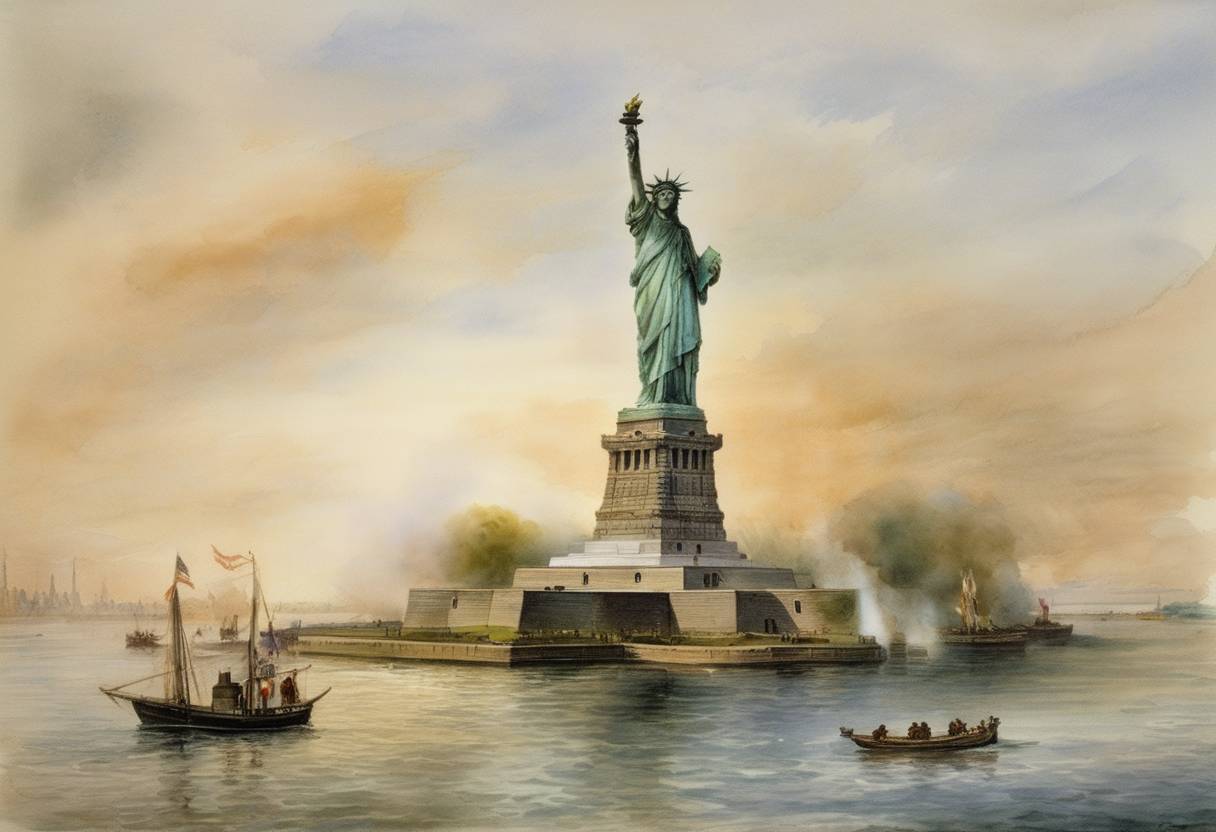
On October 28, 1886, the Statue of Liberty was officially dedicated by President Grover Cleveland. This monumental occasion marked the culmination of years of French-American collaboration and symbolized the enduring friendship between the two nations, as well as the shared ideals of freedom and democracy.
The concept for the statue originated with Édouard René de Laboulaye, a French political thinker and supporter of the Union in the American Civil War. He proposed the idea of a monument celebrating American independence and the centennial of the Declaration of Independence. French sculptor Frédéric Auguste Bartholdi was commissioned to design what would become a colossal structure known as “Liberty Enlightening the World.”
The project depended on both French and American contributions. France provided the statue, while the United States was responsible for the pedestal. Funding challenges were overcome through public subscriptions, lotteries, and various fundraising activities. American newspaper publisher Joseph Pulitzer played a significant role in rallying public support and donations for the pedestal’s completion through his newspaper, “The World.”
Bartholdi designed the statue with a copper exterior around a wrought-iron framework engineered by Gustave Eiffel, who later gained fame for the Eiffel Tower. The statue was constructed in sections and shipped to the United States, where it was reassembled on Liberty Island, previously known as Bedloe’s Island, in New York Harbor.
The dedication ceremony took place on a rainy day with much fanfare and was attended by numerous dignitaries, including President Cleveland. The event featured speeches, military parades, and a ceremonial unveiling. In his address, President Cleveland underscored the statue’s message as a beacon of liberty and the enduring alliance between France and the United States.
The Statue of Liberty quickly became a symbol of hope and opportunity, particularly for immigrants arriving in America, who saw it as a welcoming figure. Over time, it has become an iconic representation of the United States’ identity and values, standing as a testament to international friendship and the universal aspiration for freedom.
Source: www.nps.gov