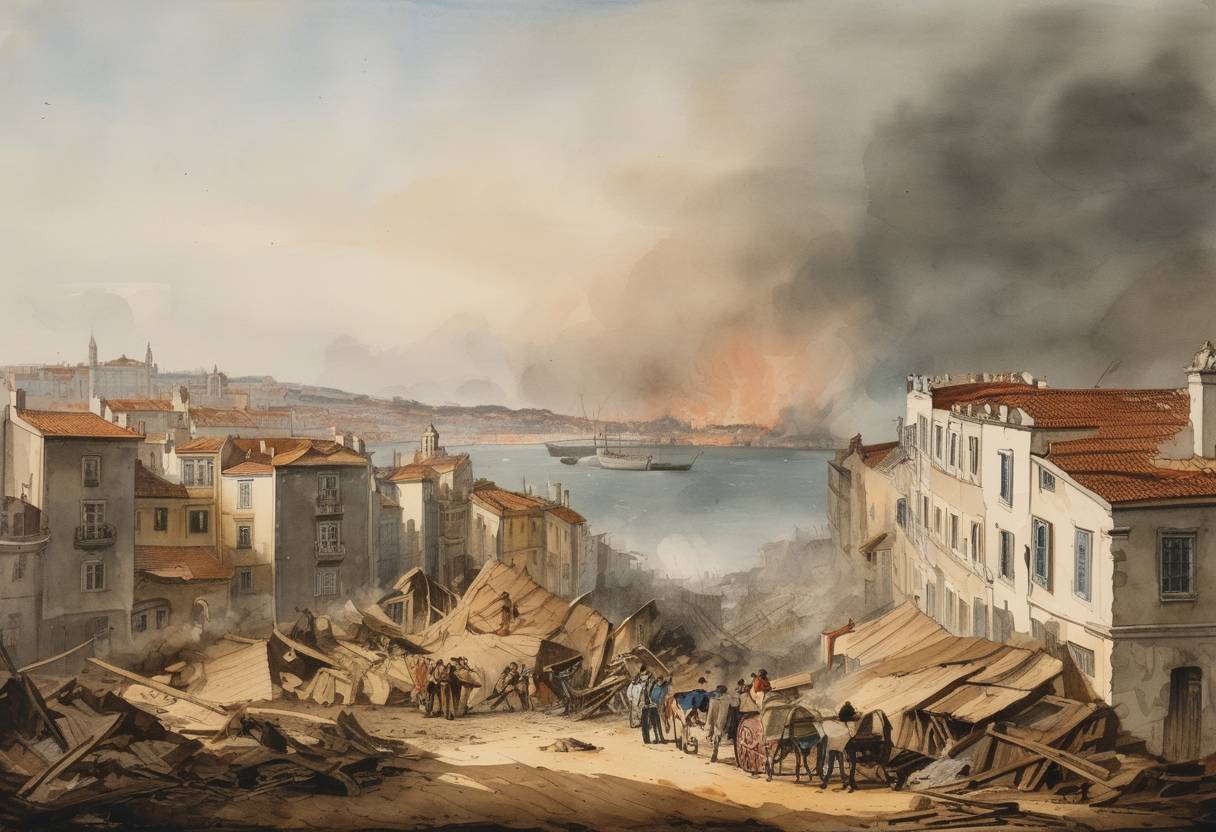
The Great Lisbon Earthquake of 1755
The Great Lisbon Earthquake occurred on November 1, 1755, not on August 10. It remains one of the deadliest earthquakes in European history. The disaster struck on All Saints’ Day, a major religious holiday, which contributed to the high number of casualties as people gathered in churches.
- Time and Magnitude: The earthquake struck at approximately 9:40 AM and is estimated to have a magnitude of 8.5 to 9.0 on the moment magnitude scale.
- Immediate Effects: The initial quake was followed by fires throughout Lisbon, devastating much of the city. The tremors lasted for several minutes, causing widespread destruction.
- Tsunami: The earthquake triggered a massive tsunami that affected the Iberian Peninsula, the Azores, the Canary Islands, and even reached as far as the Caribbean. The tsunami wave was reported to be over 6 meters high in some areas.
Casualties and Damage
- Casualties: It is estimated between 30,000 to 50,000 people lost their lives due to the earthquake and the subsequent tsunami and fires.
- Structural Damage: Many significant buildings, including churches, palaces, and residential structures, were destroyed. The iconic Ribeira Palace was among the buildings demolished.
Aftermath and Reconstruction
- Rebuilding Efforts: The Marquês de Pombal, Sebastião José de Carvalho e Melo, led the rebuilding of Lisbon. Under his guidance, the Baixa district was rebuilt with strict architectural guidelines to resist future earthquakes.
- Urban Planning Innovations: The redesign incorporated early examples of earthquake-resistant construction techniques and one of the first instances of modern urban planning in Europe.
Historical Significance
- Impact on European Thought: The disaster had a profound impact on European Enlightenment thought, challenging ideas about divine intervention and promoting discussions regarding natural disaster preparedness.
- Philosophical and Cultural Responses: Notably, philosophers like Voltaire addressed the catastrophe, questioning the idea of a benevolent deity in his poem “Poème sur le désastre de Lisbonne” and later in “Candide.”
The event is a pivotal moment in Portuguese history, influencing both architectural practices and philosophical discourse throughout Europe. The lessons learned from the disaster continue to inform urban planning and disaster preparedness strategies around the world.