Hungary Closes Border with Serbia - September 15, 2015
2015 · Röszke, Hungary
Hungary closed its border with Serbia to stop the influx of migrants, leading to clashes between police and migrants and sparking international criticism.
July 22, 1990
A mass grave containing the bodies of executed dissidents is discovered in Visegrád, Hungary.
Visegrád, Hungary | Hungarian Government
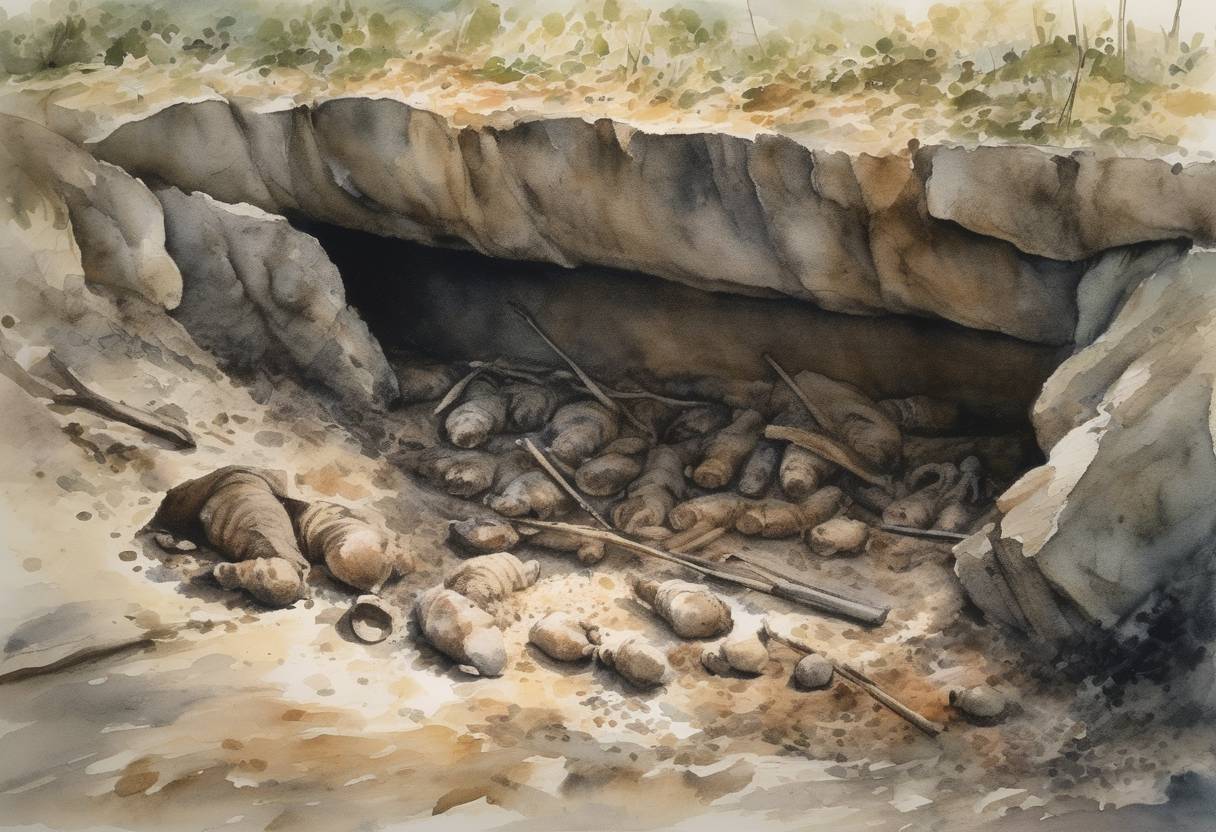
On July 22, 1990, a significant and somber discovery was made in the small town of Visegrád, Hungary, when a mass grave containing the bodies of individuals executed during the political purges of the Communist era was uncovered. This finding was part of a series of revelations during the period of political transition in Eastern Europe following the fall of communist governments.
During the years of communist rule in Hungary, which was established following World War II and solidified throughout the late 1940s, the government led by the Hungarian Working People’s Party engaged in widespread political repression. Thousands of citizens were imprisoned, tortured, or executed without fair trials, primarily during the harshest periods of the 1950s under the regime of Mátyás Rákosi and later during the governmental retaliation following the 1956 Hungarian Revolution.
The mass grave discovered in Visegrád highlighted the brutal extent of political purges carried out by the communist regime. The bodies were believed to be those of political dissidents, intellectuals, and other individuals who opposed the government or were perceived as threats to the communist ideology of the time. The discovery was particularly shocking and served as a sobering reminder of the nation’s turbulent past, spotlighting the darker aspects of the previous half-century.
The uncovering of the mass grave came at a time when Hungary was undergoing rapid political changes. In 1989, the country had transitioned from a people’s republic to a parliamentary democracy, marked by a series of peaceful transitions. The revelations of such graves and past atrocities fueled public debate about justice and reconciliation, emphasizing the need for an open examination of the communist era’s human rights abuses.
Efforts to identify the remains and provide proper burials for the victims were undertaken, drawing attention to ongoing demands for accountability and restorative justice across former Eastern Bloc nations. The events in Visegrád in 1990 thus contributed to a broader reckoning not only within Hungary but also throughout the region, as nations confronted the legacies of totalitarian rule and moved towards democratic governance.
Source: en.wikipedia.org