The 12th Street Riot: Detroit, Michigan - July 23, 1967
1967 · Detroit, United States
The 12th Street Riot begins in Detroit, Michigan, leading to 43 deaths and over 1,000 injuries.
May 31, 1921
A race riot occurs in Tulsa, Oklahoma, known as one of the most severe incidents of racial violence in U.S. history. Mobs of white residents attack the Black community of Greenwood, resulting in numerous deaths and widespread destruction.
Tulsa, United States | White mobs and local officials
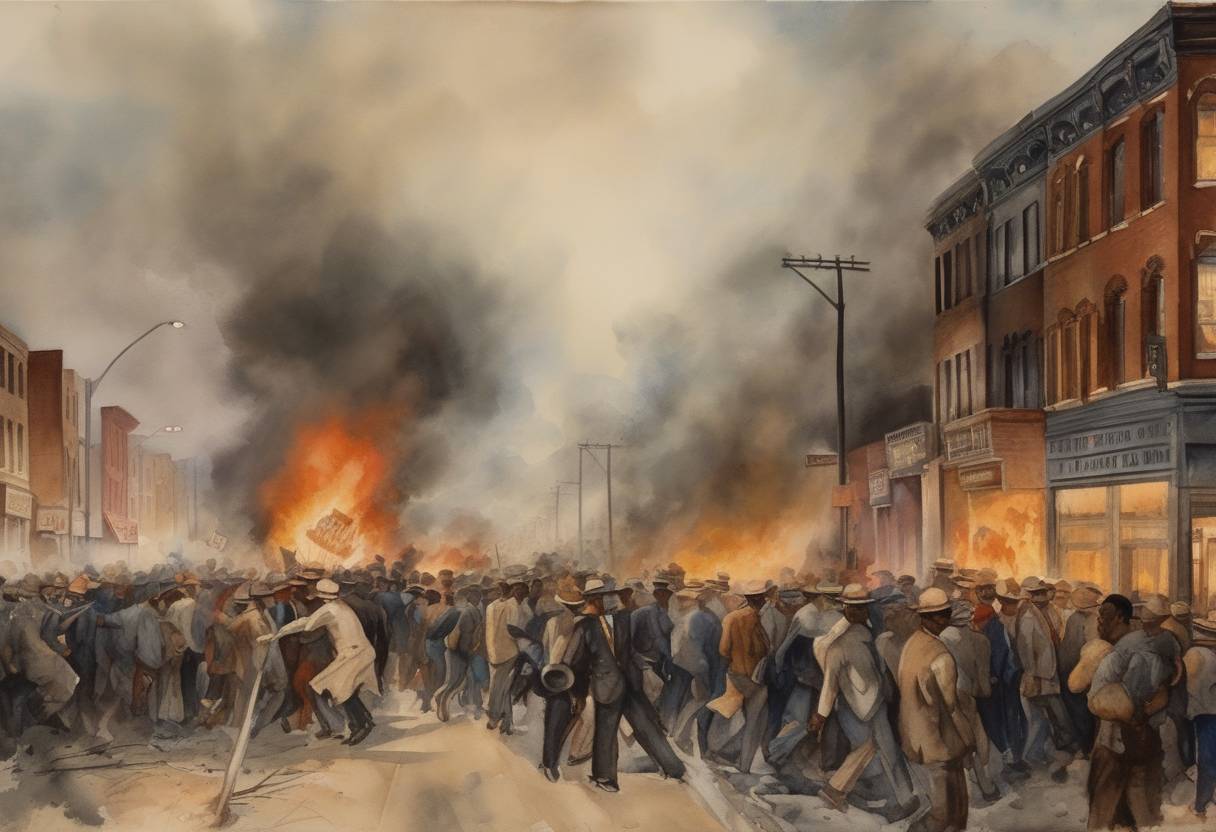
The Tulsa Race Massacre, also known as the Tulsa Race Riot, was one of the deadliest acts of racial violence in American history. It occurred against a backdrop of racial tensions in the United States during the early 20th century. Post-World War I America saw a resurgence of racial violence, partly fueled by the Great Migration, where African Americans moved from the rural South to urban areas across the country in search of better economic opportunities and racial equality.
In Tulsa, Oklahoma, these tensions were exacerbated by the prosperity of the Greenwood District, an affluent African American community known as “Black Wall Street.” This area was home to thriving businesses, schools, and churches and was considered a model for black economic success in a deeply segregated society.
The immediate spark for the violence on May 31, 1921, was an incident involving two teenagers: Dick Rowland, a Black shoeshiner, and Sarah Page, a white elevator operator. Although the precise details are unclear and largely disputed, it was alleged that Rowland assaulted Page in an elevator in downtown Tulsa.
Following Page’s subsequent and purportedly exaggerated claim of assault, local newspapers inflamed tensions by publishing racially charged reports, some suggesting a lynch mob was ready to act against Rowland. This led to a gathering of armed Black and white residents at the Tulsa courthouse where Rowland was being held, each group determined to protect their respective interests—Black residents sought to prevent a lynching, while white residents were incited toward violence.
The confrontation escalated into a full-scale riot. As evening descended, the violence expanded into the Greenwood District. White mobs, some deputized and armed by city officials, attacked the community, destroying homes, businesses, and effectively leveling the area over the course of the night and into the next day.
By the time order was restored on June 1, 1921, the destruction was immense. Estimates of casualties vary, but it is believed that up to 300 African Americans may have died, and over 1,000 homes and numerous businesses were destroyed. Thousands of Black residents were left homeless, and the community of Greenwood was effectively decimated.
In the wake of the massacre, the survivors faced continued hardship, including limited insurance recompense due to riot exclusion clauses, and systematic efforts to prevent rebuilding. The incident was largely omitted from local, state, and national histories for decades, with survivors and their descendants suffering the consequences of silence and unresolved trauma.
The Tulsa Race Massacre stands as a poignant reminder of the racial strife and systemic inequalities that have permeated U.S. history. Its impact reverberated for generations, influencing civil rights struggles and prompting ongoing discussions about race relations, reparations, and historical memory. In recent years, there has been a significant movement to acknowledge and educate about this dark chapter in American history, including official investigations and calls for reparative justice.
Source: en.wikipedia.org