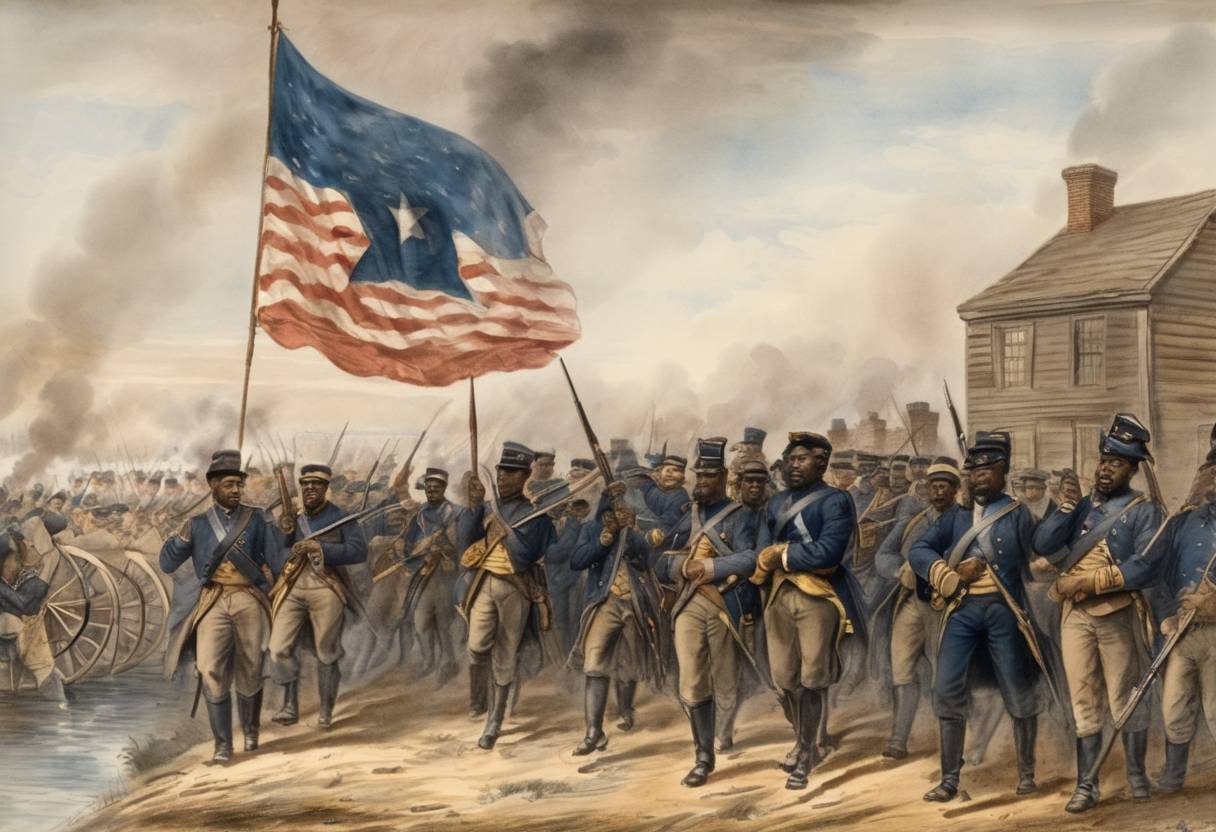
The Departure of the 54th Massachusetts Volunteer Infantry
On May 28, 1863, the 54th Massachusetts Volunteer Infantry Regiment famously departed Boston, Massachusetts, bound for the American Civil War battlefields in the South. This regiment was one of the first official African American units in the United States Armed Forces, representing a significant step in the Union’s commitment to enlist African American soldiers in the fight against the Confederacy.
Context and Formation
The regiment was organized following the issuance of the Emancipation Proclamation by President Abraham Lincoln on January 1, 1863, which proclaimed the freedom of slaves in Confederate-held territory and authorized the recruitment of African American soldiers. Massachusetts Governor John A. Andrew played a pivotal role in the creation of the regiment, recruiting free African American men from across the northern states. The 54th’s formation marked a turning point in the inclusion of African Americans in the Union Army.
Leadership and Recruitment
The regiment was commanded by Colonel Robert Gould Shaw, a young officer from a prominent abolitionist family in Boston. His leadership would become legendary, especially following his death at the Battle of Fort Wagner less than two months after their departure from Boston. Recruitment efforts, led by figures such as Frederick Douglass, also involved Douglass’ own sons, Charles and Lewis, who joined the regiment.
Departure and Symbolism
The 54th Massachusetts departed Boston from Battery Wharf amidst great fanfare and public support. This departure was marked by a ceremonial procession through the streets of Boston, with thousands of residents cheering them on. This moment was highly symbolic, as it underscored not only the regiments’ bravery and commitment but also the broader Northern abolitionist support for emancipating and arming African Americans.
Historical Impact
The valiant assault on Fort Wagner on July 18, 1863, would bring the 54th Massachusetts national fame and proved the valor and capability of African American soldiers in combat. Despite suffering heavy casualties, the regiment’s determination and sacrifice were pivotal in changing public perceptions and policy regarding African American soldiers in the Union Army. Their legacy paved the way for more African American enlistments, contributing significantly to the Union’s ultimate victory in the Civil War.