June 27, 1895: First U.S. Patent for a Gasoline-Driven Automobile
1895 · Springfield, United States
The first U.S. patent for a gasoline-driven automobile is granted to Charles Duryea.
March 6, 1930
Clarence Birdseye developed and categorized frozen foods in Springfield, Massachusetts, revolutionizing food preservation and storage.
Springfield, United States | General Foods
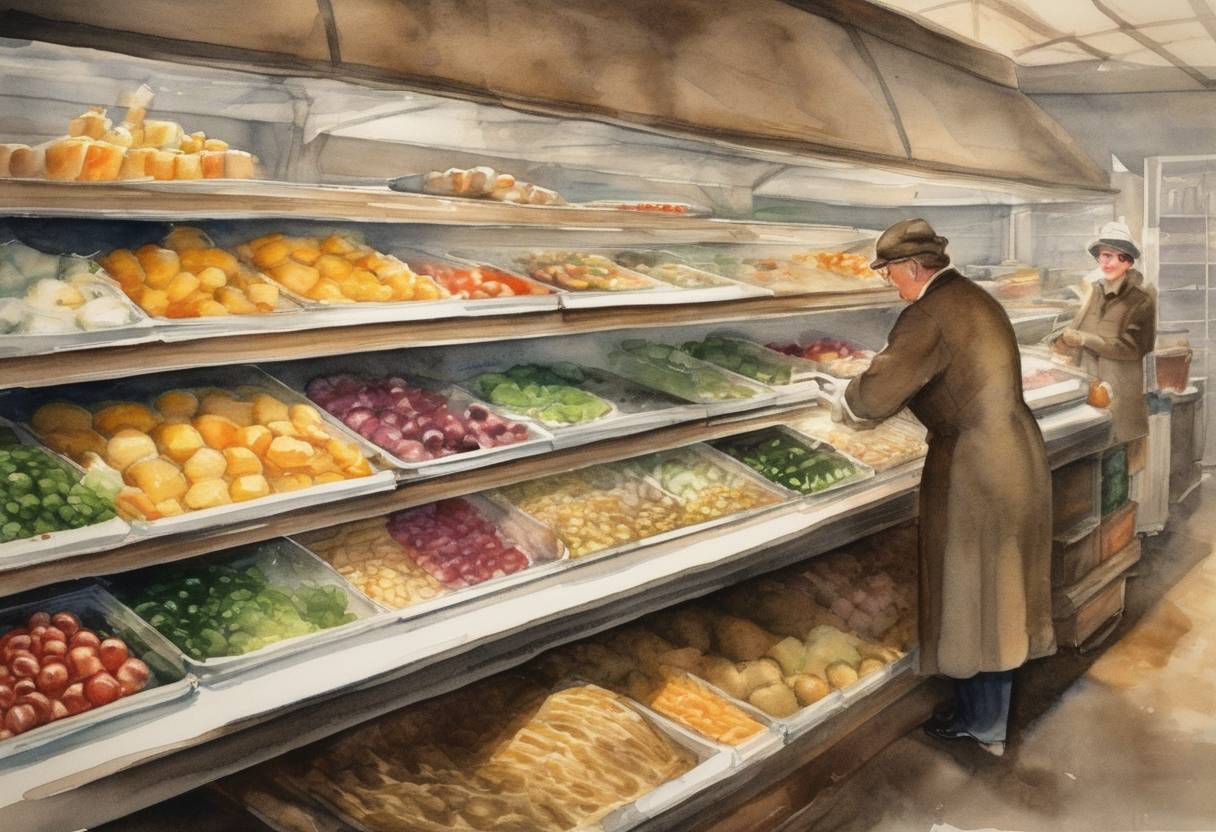
On March 6, 1930, Clarence Birdseye, an American inventor, and entrepreneur, revolutionized the food industry by introducing a new method for preserving food through freezing. This significant development took place when Birdseye’s company debuted a line of frozen foods to the public in Springfield, Massachusetts.
Clarence Birdseye’s journey to pioneering frozen food began during his time in Labrador, Canada, in the early 20th century. He observed the indigenous Inuit people using natural freezing methods to preserve fish. Inspired by this, Birdseye hypothesized that rapid freezing at extremely low temperatures could preserve the texture and taste of food more effectively than traditional methods.
After returning to the United States, Birdseye worked on developing a mechanical process that could mimic the fast freezing he had seen in nature. He focused on rapidly freezing small packages of food between two cold metal plates, which he found maintained the cellular structure of the food, keeping it fresh after thawing.
On March 6, 1930, Birdseye’s innovative frozen foods were showcased to the public for the first time at the Goldman-Sachs building in Springfield. The product line included a variety of quick-frozen goods, such as meats, spinach, fruits, and vegetables. This event marked an essential step forward in the commercialization of frozen food, making it accessible to a broader audience and demonstrating its appeal.
By proving that high-quality, nutritious food could be preserved through freezing, Birdseye set the stage for a dramatic transformation in food distribution and consumer behavior, laying the groundwork for the global frozen food industry.
Birdseye’s avant-garde freezing process profoundly influenced food preservation and storage. His method not only ensured convenience and economic efficiency but also helped reduce food waste significantly. The broader impact included enabling a varied diet irrespective of seasonal produce constraints, assisting global trade, and supporting long-term storage for emergencies and military use.
Clarence Birdseye’s contributions laid the foundation for the formation of the Birds Eye Frozen Food Company, which would eventually become a significant player in the food industry. His innovations paved the way for the development of frozen food technologies that are still in use today.
Birdseye’s legacy as the pioneer of the frozen food industry continues to impact modern food consumption and preservation practices worldwide, reinforcing the ingenuity and foresight that marked March 6, 1930, a pivotal date in culinary history.
Source: www.history.com