Soviet Troops Enter Hungary to Crush the Hungarian Revolution: November 4, 1956
1956 · Budapest, Hungary
Soviet troops enter Hungary to crush the Hungarian Revolution, resulting in a significant loss of life.
August 1, 1957
The United States and Canada formed the North American Aerospace Defense Command (NORAD), a bi-national organization providing aerospace warning, air sovereignty, and defense for Northern America.
Colorado Springs, United States | NORAD
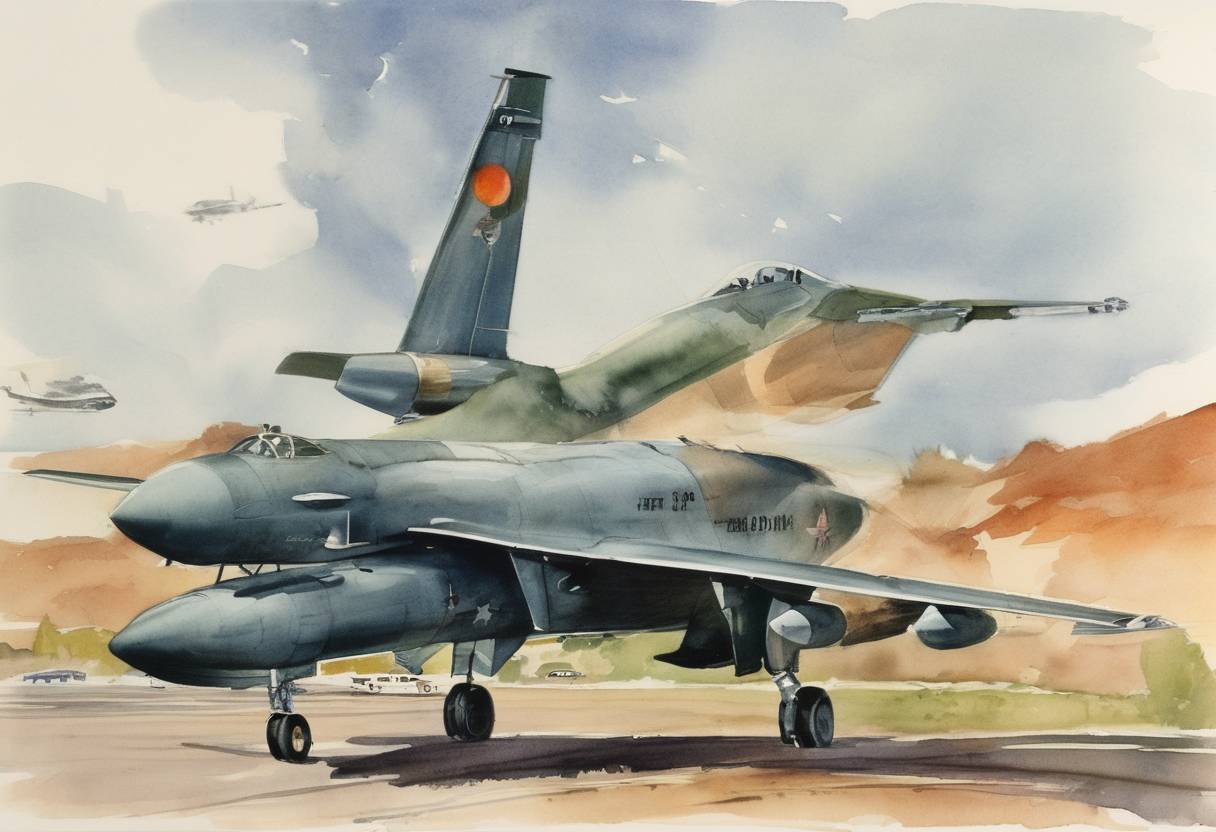
On August 1, 1957, the United States and Canada officially agreed to establish the North American Aerospace Defense Command (NORAD), marking a pivotal moment in Cold War aerospace defense strategy. This bi-national organization was created to provide comprehensive aerospace warning, air sovereignty, and defense for North America against external threats, particularly those posed by the Soviet Union during the Cold War era.
The formation of NORAD was rooted in the geopolitical climate of the 1950s, characterized by the intensifying Cold War tensions between the United States and the Soviet Union. In response to the potential threat of Soviet missile attacks and to protect the North American continent, the U.S. and Canada recognized the need for a coordinated defense strategy.
Both nations had been independently working on air defense initiatives; however, the threat posed by nuclear-armed bombers necessitated a unified command structure. The North American air defense policies aimed to integrate radar technology, provide rapid response capabilities, and foster cooperation between the two countries.
NORAD’s command structure is unique in that it is truly bi-national. It features a combined headquarters located at Peterson Air Force Base in Colorado Springs, Colorado. The command is led by a Commander appointed alternately from either the United States or Canada, further solidifying the partnership between the two nations.
NORAD played a critical role throughout the Cold War by maintaining a state of readiness and ensuring the security of North American airspace. The organization’s existence highlighted the importance of international cooperation in defense and laid the groundwork for future collaborations against common threats.
Post-Cold War, NORAD adapted to new security challenges, including the threat of terrorism and unconventional aerospace threats. Its enduring legacy underscores the strategic importance of bi-national defense agreements and continues to be a crucial component of North American defense policy.
The creation of NORAD represents a significant historical collaboration that has strengthened ties between the United States and Canada and offers an enduring model of international military cooperation.
Source: www.norad.mil