Malta Gains Independence from the United Kingdom - September 21, 1964
1964 · Valletta, Malta
Malta gains independence from the United Kingdom.
June 5, 1798
French forces under General Napoleon Bonaparte occupied Malta.
Valletta, Malta | French Republic
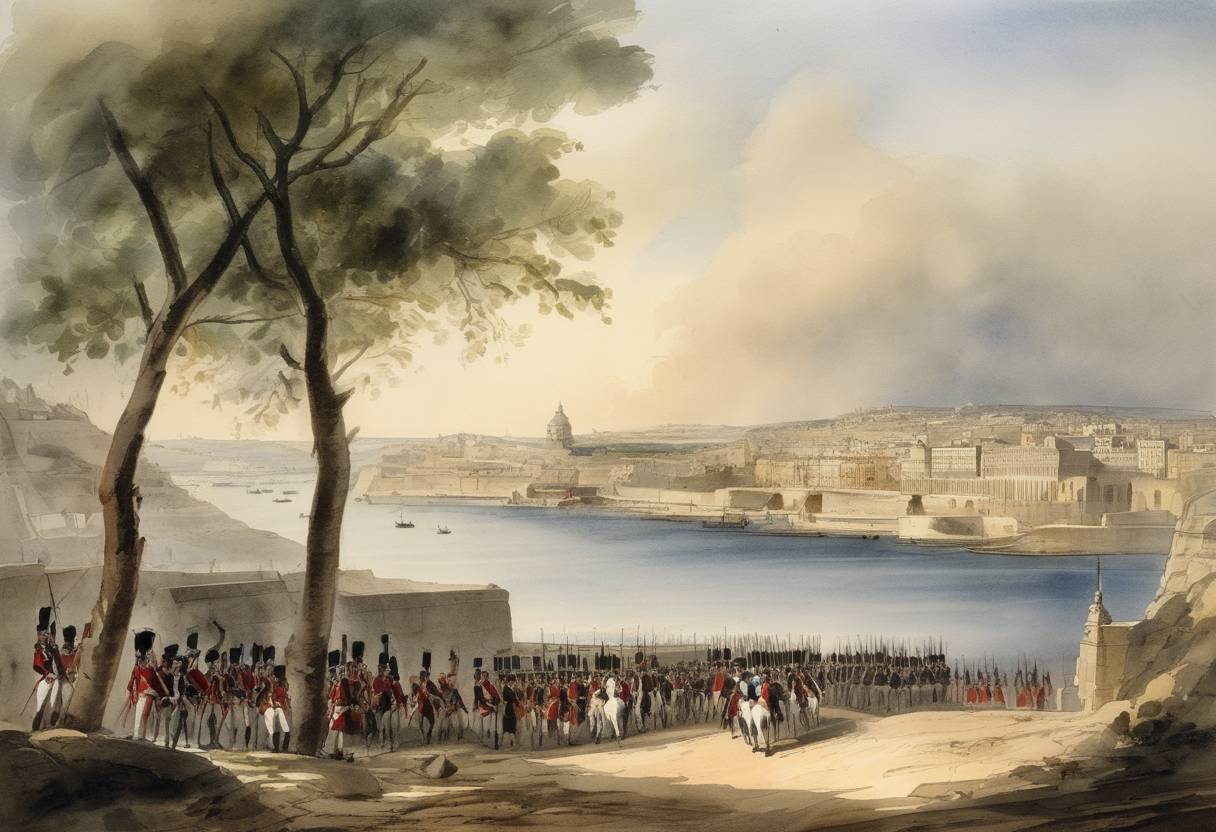
On June 5, 1798, French forces under the command of General Napoleon Bonaparte occupied the island of Malta, marking a strategic gain in the Mediterranean during Napoleon’s Egyptian campaign. This event was significant due to both its immediate impact and its broader implications in the context of European and Mediterranean geopolitics.
Napoleon Bonaparte embarked on an expedition in May 1798 aimed at cutting off British access to India and establishing a French presence in the East. As Napoleon’s fleet traversed the Mediterranean, the strategic position of Malta became crucial. Malta was geographically central in the Mediterranean, providing an ideal naval base to support operations and secure supply lines. At the time, the island was controlled by the Sovereign Military Order of Malta, which was financially and militarily weakened.
Upon arrival, Bonaparte encountered minimal resistance. The French fleet arrived off the coast of Malta on June 5, 1798. Due to the Order’s lack of resources and the internal tension among its ranks, the French were able to negotiate a relatively peaceful surrender. The Order’s Grand Master, Ferdinand von Hompesch zu Bolheim, who had little prospect of mounting a defense, capitulated quickly. In exchange for their surrender, members of the Order were allowed to leave the island with their personal property.
Napoleon quickly reorganized the governance of the island, introducing reforms aligned with revolutionary principles, such as the abolishment of feudal privileges and the establishment of some public works. However, the French occupation was not well-received by the Maltese population, leading to unrest and eventually a rebellion in 1799. The occupation was short-lived; by 1800, British forces, responding to the local uprising and aiming to block French expansion, took control of Malta.
The occupation of Malta by France in 1798 was a part of the broader conflicts of the Napoleonic Wars. It demonstrated Napoleon’s strategic ambitions in the Mediterranean but also foreshadowed the limitations of extending French revolutionary ideals through military occupation, given the strong local resistance they incited.
Source: en.wikipedia.org