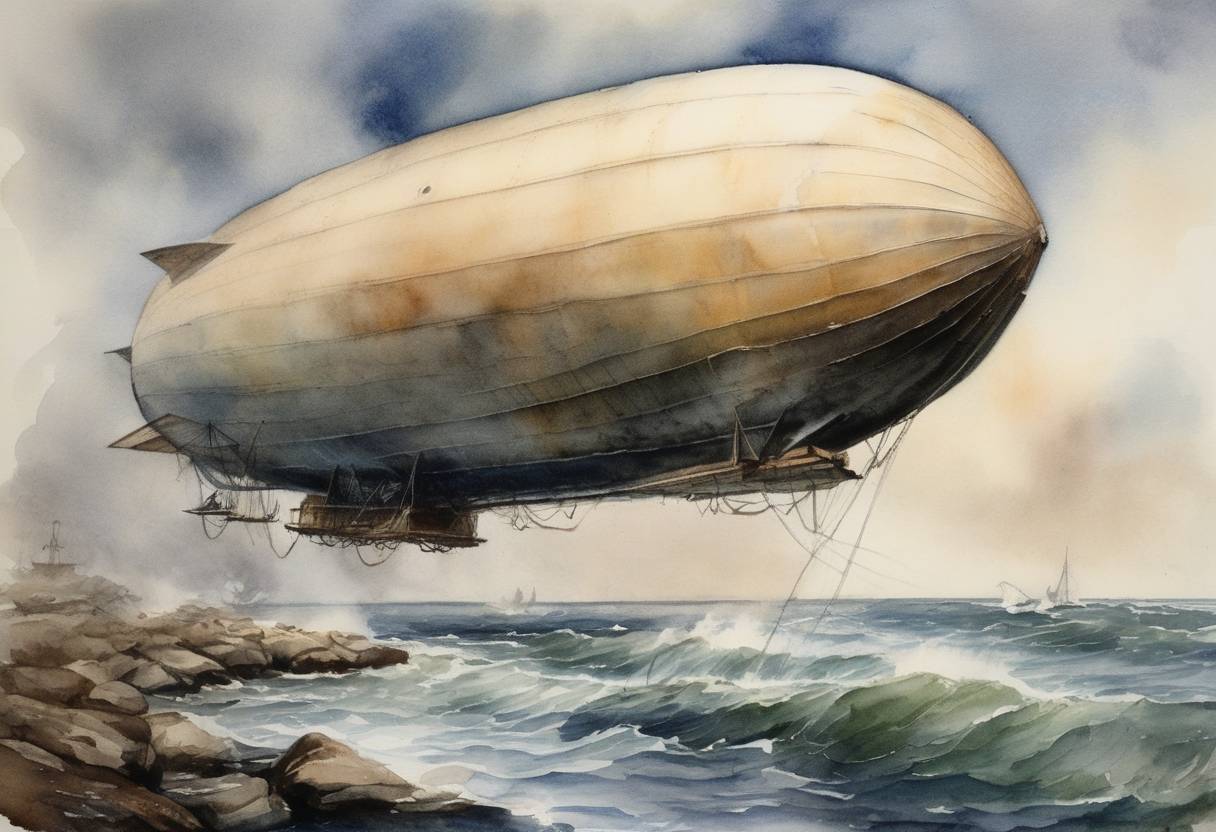
The Crash of USS Akron: April 4, 1933
The dirigible USS Akron, one of the largest airships ever built, met a tragic end off the coast of New Jersey on April 4, 1933. This disaster marked the deadliest airship accident in history at that time, resulting in the loss of 73 lives out of a total of 76 aboard.
Background
The USS Akron was a helium-filled rigid airship of the United States Navy, commissioned in 1931. It was an impressive feat of engineering, stretching 785 feet in length and built to serve as a flying aircraft carrier, with the ability to launch and recover up to five small fighter planes.
The Final Flight
On the night of April 3, 1933, the USS Akron embarked on a mission that took it along the eastern seaboard of the United States. Commanded by Lt. Commander Herbert V. Wiley, the airship encountered difficult weather conditions almost immediately. As the night wore on, the Akron faced increasingly severe meteorological challenges, including high winds and violent updrafts.
The Crash
By the early morning hours of April 4, the USS Akron was battling against turbulent weather over the Atlantic Ocean near Barnegat Light, New Jersey. At approximately 12:30 AM local time, a powerful updraft threw the airship into a series of uncontrollable maneuvers. Subsequently, the airship’s tail contacted the ocean, causing the structure to break apart and plunge into the sea. The disaster was compounded by the cold waters and lack of immediate rescue capabilities.
Aftermath and Casualties
Rescue efforts were severely hampered by the adverse conditions and the remoteness of the crash location. Out of 76 crewmen, only three survived the ordeal, including Lt. Commander Wiley. Tragically, among the deceased was Rear Admiral William A. Moffett, a notable advocate for naval aviation and instrumental figure within the U.S. Navy.
Historical Significance
The catastrophe highlighted significant shortcomings in the design and operational procedures relating to airship use. One major critique was the absence of life vests and adequate rafts, widely seen as contributing to the high loss of life. The incident precipitated rapid changes within the military regarding safety protocols and reduced confidence in airships, hastening their fall from favor in naval operations. The Akron’s demise marked a pivotal moment in the history of aviation, serving as a cautionary tale about the vulnerabilities and risks of early 20th-century airship travel.