Nixon Announces Suspension of Offensive Action in North Vietnam
1973 · Washington D.C., United States
President Richard Nixon announced the suspension of offensive action in North Vietnam, a step towards ending U.S. involvement in the Vietnam War.
October 15, 1969
Hundreds of thousands of people across the United States participate in the National Moratorium to End the War in Vietnam, protesting against the Vietnam War.
Various, United States | National Moratorium Committee
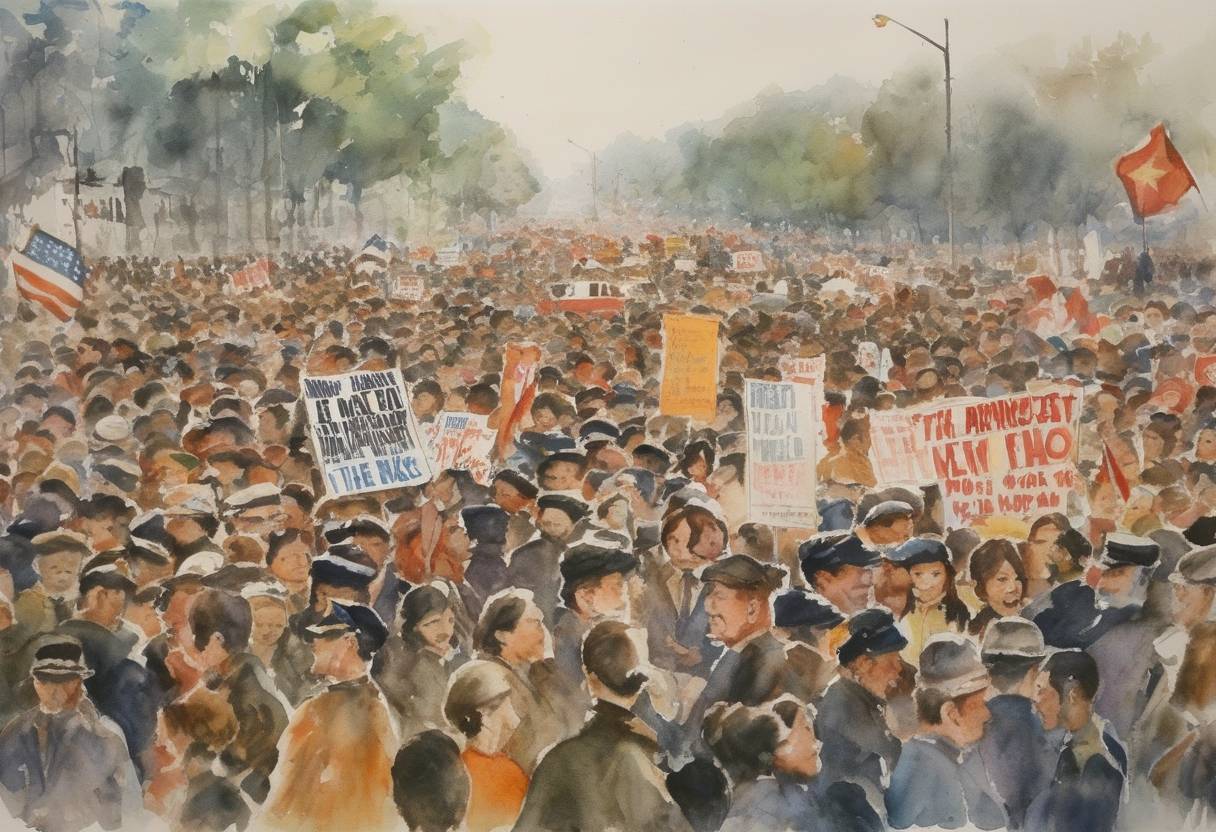
On October 15, 1969, the United States witnessed one of the largest organized protests in its history against the Vietnam War, known as the National Moratorium to End the War in Vietnam. This demonstration marked a significant moment in the anti-war movement as citizens across the nation engaged in a collective stand against the ongoing conflict in Southeast Asia.
By 1969, the Vietnam War had dragged on with increasing American casualties and deepening public disapproval. Earlier efforts by the anti-war movement to halt U.S. involvement had shown growing frustration among citizens. The war, which had begun as a conflict to prevent the spread of communism in Southeast Asia, had led to widespread casualties and raised ethical concerns about U.S. military actions.
The Vietnam Moratorium Committee, led by activists Sam Brown, David Hawk, and David Mixner, called for an unprecedented nationwide strike and day of protest to oppose the war. They urged businesses and schools to close and for citizens to join peaceful demonstrations.
On this day, hundreds of thousands of Americans in cities and towns across the country participated in the moratorium. The protest included activities such as marches, rallies, and peace vigils. In Washington, D.C., tens of thousands gathered on the National Mall to listen to anti-war speakers. Prominent politicians, including Senators George McGovern and Charles Goodell, were in attendance advocating for an end to the conflict.
Metropolitan areas like New York City, Boston, San Francisco, and Chicago saw major demonstrations. College campuses were especially active, with students and faculty engaging in teach-ins and discussions about the war’s impact on Vietnam and the United States.
The National Moratorium was notable for its peaceful nature and widespread participation, cutting across racial, economic, and religious lines. This day of protest strengthened the voice of the anti-war movement, highlighting increasing public unrest and pressure on the Nixon administration.
In response to the scale of the protests, President Richard Nixon maintained his stance for “peace with honor,” continuing the effort to withdraw gradually while seeking negotiations. However, the Moratorium highlighted a significant shift in public opinion, emphasizing the urgency and seriousness of ending the U.S. involvement in Vietnam.
Following October 15, further large-scale demonstrations were organized, notably the Vietnam Moratorium’s follow-up on November 15, 1969, which saw even larger turnouts.
The events on October 15, 1969, are remembered as a pivotal demonstration against the Vietnam War, illustrating the power of collective protest and its role in shaping U.S. foreign policy.
Source: en.wikipedia.org