1914 · Belfast, United Kingdom
HMHS Britannic, the third and largest Olympic-class ocean liner of the White Star Line, was launched. It was intended to be a transatlantic passenger ship but was instead used as a hospital ship during World War I.
September 20, 1911
The White Star Line's RMS Olympic, sister ship to the ill-fated Titanic, is in a collision with the British cruiser HMS Hawke off the Isle of Wight, resulting in significant damage to the Olympic.
Isle of Wight, United Kingdom | White Star Line
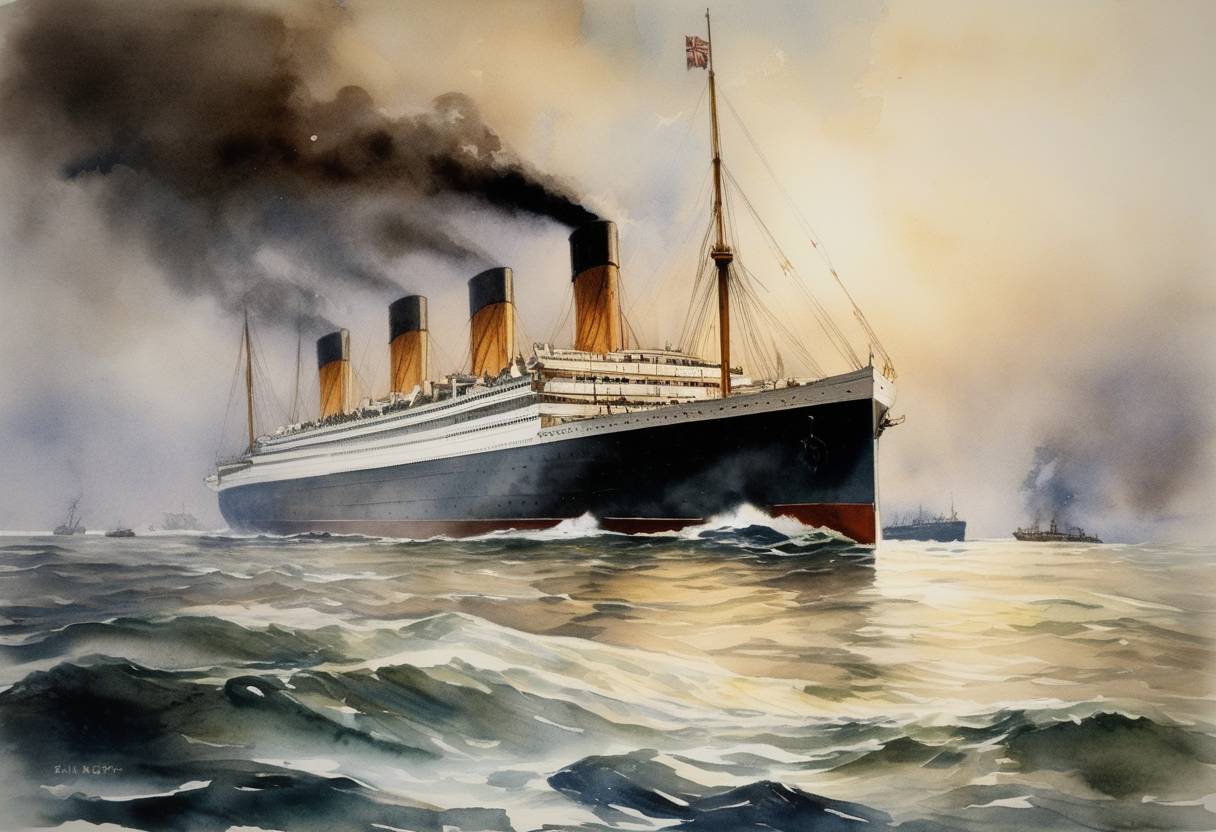
On September 20, 1911, a significant maritime incident occurred involving the RMS Olympic, a luxury liner operated by the White Star Line and the sister ship to the infamous RMS Titanic, and the British cruiser HMS Hawke. The collision happened in the Solent, a strait off the Isle of Wight in the United Kingdom.
The RMS Olympic was one of the largest ocean liners in the world at the time, renowned for her grandeur and size. Under the command of Captain Edward Smith, who would later command the Titanic, the Olympic was undertaking her fifth voyage. Meanwhile, HMS Hawke was a Royal Navy cruiser designed to protect Britain’s interests at sea.
While navigating the waterways, the Olympic was being overtaken by HMS Hawke. Accounts suggest that the Olympic’s massive displacement created strong suction forces due to its size and speed. These forces, likely coupled with navigational misjudgments, drew the lighter cruiser dangerously close to the liner. As a result, Hawke’s bow collided with Olympic’s stern, causing substantial damage to both vessels.
RMS Olympic: The collision resulted in a lengthy gash in Olympic’s starboard hull, flooding two of her watertight compartments. The damage was significant but not immediately life-threatening to the ship or its passengers.
HMS Hawke: The cruiser sustained damage to her bow, designed to ram enemy ships but now compromised by the collision.
The events had several implications:
Investigation: An inquiry was conducted to determine the cause of the collision. Controversy surrounded the decision to assign blame to the Olympic’s maneuvering, as it raised questions about the impact of large ship designs on navigation.
Operational Lessons: The collision underscored the challenges posed by new, massive passenger ships interacting with other vessels. Consequently, it influenced later navigational protocols and ship designs, including for Olympic’s sister ships.
Repairs and Service: The Olympic underwent extensive repairs at the Harland and Wolff shipyards in Belfast. Despite the setback, she returned to service and continued operating for many years.
The collision of the Olympic and HMS Hawke was notable not only for the scale of the vessels involved but also because it highlighted the maritime industry’s growing pains during an era of rapidly advancing technology and design. It foreshadowed challenges in safety regulations and shipbuilding practices, which would be further emphasized by the later disaster involving the Titanic.
Source: www.britannica.com