The Granting of the Pennsylvania Charter to William Penn
1681 · London, England
King Charles II granted a land charter to William Penn for the area that will later become Pennsylvania.
August 30, 1682
William Penn receives the area that is now the state of Delaware from the Duke of York.
New Castle, American Colonies | English Crown
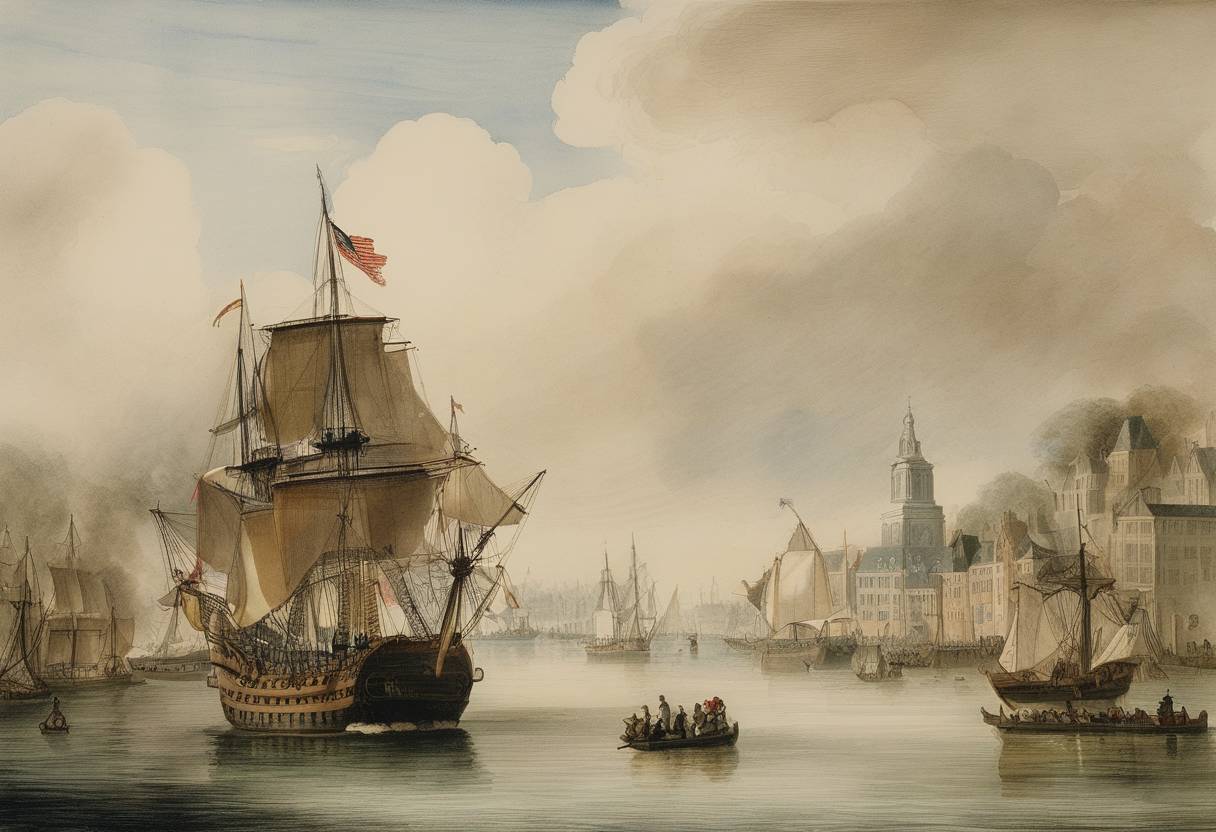
On August 30, 1682, a significant transfer of land took place that would shape the early colonial history of what is now the United States. William Penn, an influential English Quaker and the founder of Pennsylvania, received control of the territory that now constitutes the state of Delaware from the Duke of York, James, who would later become King James II of England.
The transfer of Delaware was part of the English Crown’s efforts to colonize and administratively organize lands in North America. At this time, the area known as the Delaware Colony was strategically important due to its location along key waterways and its relationship to other English colonial holdings.
Previously, Delaware had been part of New Netherland, a Dutch colony that was seized by the English in 1664. The land was subsequently granted to the Duke of York by his brother, King Charles II. With the Duke’s grant, the region became part of the proprietary colonies held by the English monarchy.
William Penn’s acquisition of Delaware was a crucial part of his plan to establish a larger area of settlement that exemplified his ideas about religious tolerance and self-governing principles. Penn was known for his advocacy of democratic governance and religious freedom, ideals that he intended to put into practice in his American colonies.
The charter granted to Penn originally included parts of what is today the state of Pennsylvania, and the addition of Delaware provided him with access to the Atlantic Ocean via the Delaware Bay. This access was vital for trade, communication, and transportation, thereby bolstering the economic prospects of his colonial enterprise.
In the short term, Penn faced challenges in governing this new, diverse colony, which included Swedes, Dutch, and English settlers. He made efforts to reconcile these groups and integrate them into his colonial administration, promoting policies of fairness and tolerance.
In a broader historical context, the incorporation of Delaware expanded the practice of religious freedom and democratic principles in colonial America. The ideas and governance models Penn implemented would later influence the development of American political thought and democratic institutions.
While Delaware ultimately developed its distinct identity and governance—eventually becoming a separate entity from Pennsylvania—it began its history under Penn’s inclusive leadership, setting a foundation for the values that would later become integral to American society.
Source: www.history.com