1763 · Paris, France
The Treaty of Paris is signed, ending the Seven Years' War and marking the beginning of British dominance outside Europe.
March 30, 1856
The Treaty of Paris was signed, ending the Crimean War between Russia and an alliance of the Ottoman Empire, France, Britain, and Sardinia.
Paris, France | None
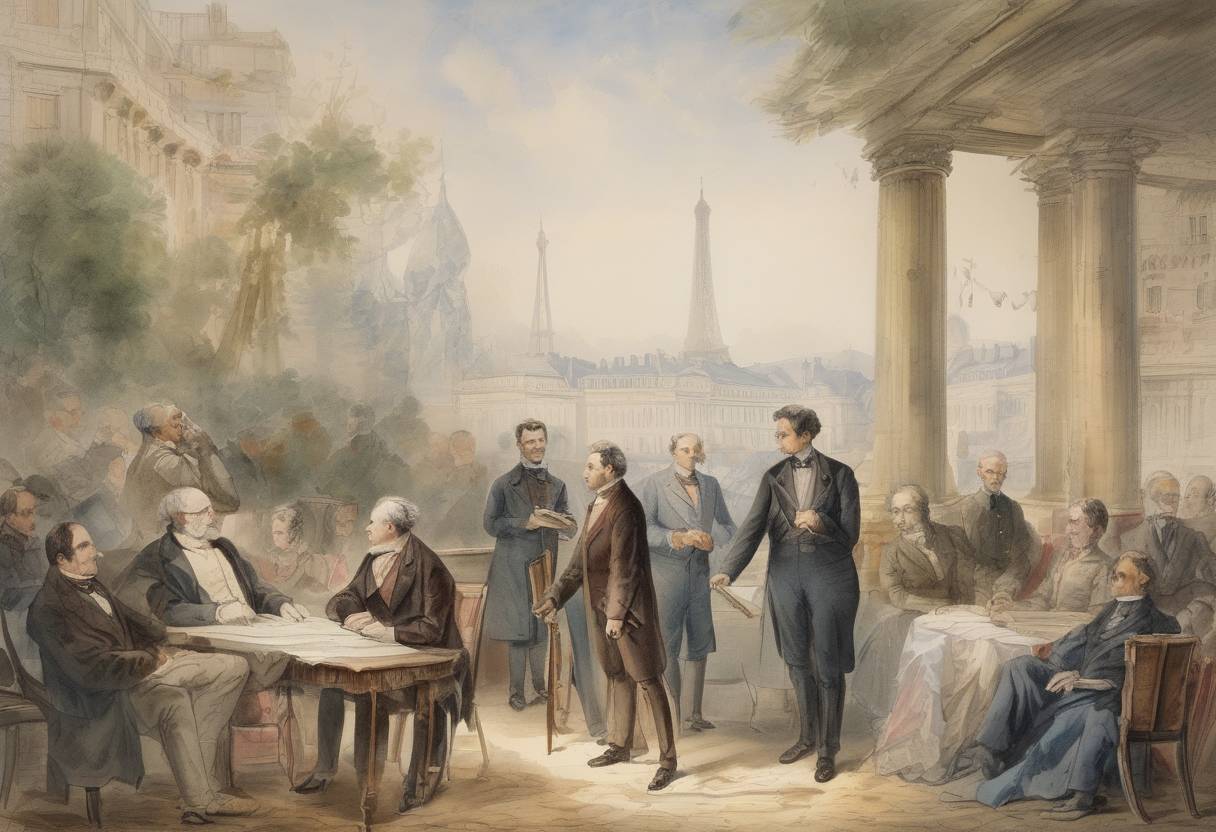
On March 30, 1856, the Treaty of Paris was signed, marking the end of the Crimean War. This conflict, which lasted from 1853 to 1856, involved Russia on one side and an alliance of the Ottoman Empire, France, Britain, and Sardinia on the other. The war was primarily fought over the decline of the Ottoman Empire and the contest for influence over its territories.
The Crimean War was rooted in the geopolitical struggle known as the “Eastern Question,” which revolved around the fate of the declining Ottoman Empire. Russia sought to expand its influence over the Ottoman territories, particularly in the Balkans and the Black Sea region. The immediate cause of the war was a dispute over the rights of Christian minorities in the Holy Land, then part of the Ottoman Empire, which escalated into a broader conflict.
Outbreak of War (1853): Hostilities began when Russia occupied the Danubian Principalities (modern-day Romania), prompting the Ottoman Empire to declare war.
Allied Intervention (1854): Britain and France, fearing Russian expansion and the threat to their interests in the Mediterranean, joined the conflict on the side of the Ottomans. Sardinia joined the alliance in 1855.
Siege of Sevastopol (1854-1855): One of the war’s most significant battles was the prolonged siege of the Russian port city of Sevastopol in Crimea, which eventually fell to the allies after a year-long siege.
Diplomatic Efforts: Throughout the war, there were various diplomatic efforts to reach a peace settlement, culminating in the Congress of Paris in 1856.
The Treaty of Paris was signed on March 30, 1856, at the Congress of Paris. The key terms of the treaty included:
Neutralization of the Black Sea: The Black Sea was declared neutral territory, prohibiting any warships from entering and banning military fortifications along its coast. This was a significant blow to Russian naval power.
Return of Territories: Russia returned the Danubian Principalities to Ottoman control and ceded a portion of Bessarabia to Moldavia, a move that altered the balance of power in Eastern Europe.
Protection of Christians: The treaty reaffirmed the rights of Christian minorities in the Ottoman Empire, a central issue that had sparked the conflict.
International Commission: An international commission was established to ensure free navigation of the Danube River, promoting trade and cooperation in the region.
The Treaty of Paris significantly reshaped the political landscape of Europe. It temporarily checked Russian expansion and maintained the balance of power in Europe. However, the restrictions on Russian naval power in the Black Sea were lifted in 1871, following the Franco-Prussian War, when Russia unilaterally repudiated the treaty’s terms.
The Crimean War and the Treaty of Paris highlighted the complexities of international diplomacy and the shifting alliances in 19th-century Europe. It also underscored the declining power of the Ottoman Empire and set the stage for future conflicts in the region.
The war is often remembered for its impact on military tactics and technology, including the use of trench warfare and the introduction of modern nursing practices by figures like Florence Nightingale.
Source: en.wikipedia.org