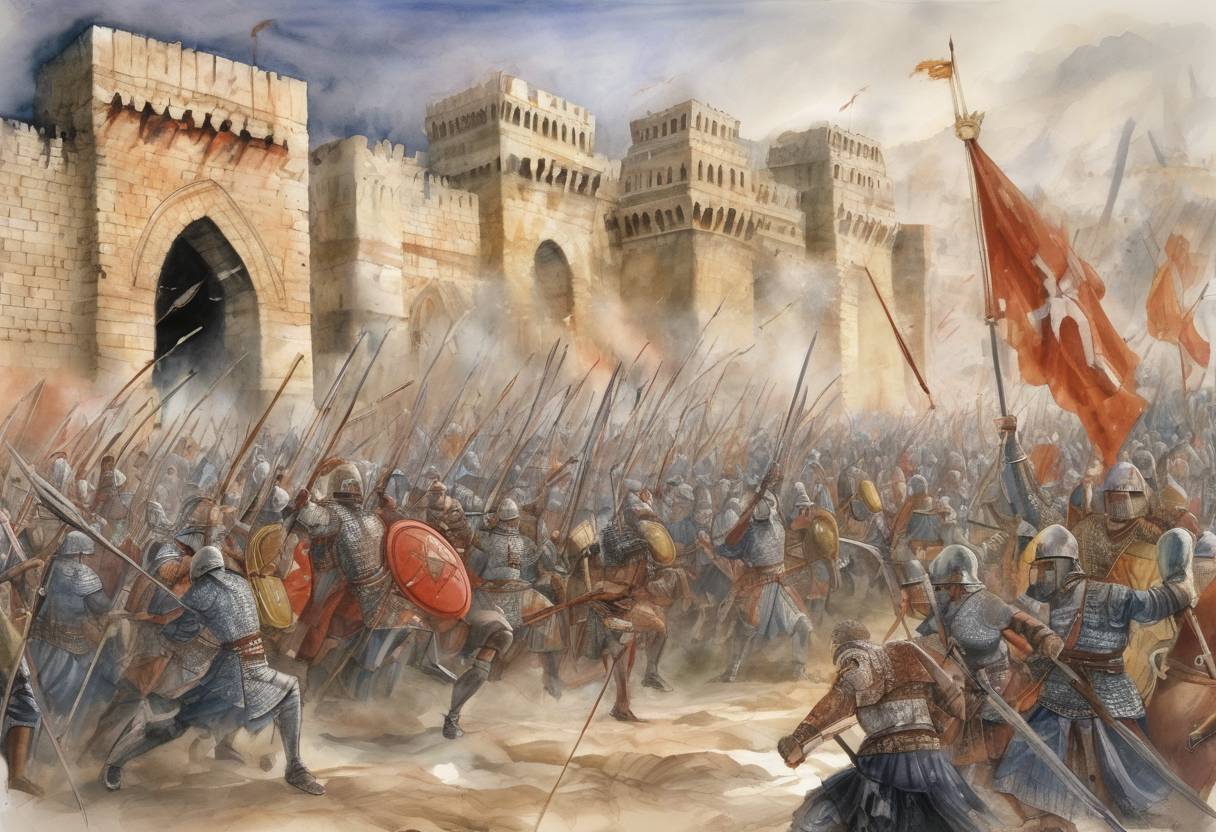
The Siege of Constantinople by the Avars and Persians - July 7, 626
The Siege of Constantinople in 626 was a pivotal moment in the Byzantine-Sassanian War, a protracted conflict between the Byzantine Empire and the Sassanian Empire. This particular siege marked a significant attempt by the Avars, in alliance with the Sassanian Persians, to capture the Byzantine capital, Constantinople.
Context and Prelude
The Byzantine-Sassanian War (602–628) was characterized by intense military engagements and territorial disputes. By the early 7th century, the Sassanian Empire, under King Khosrow II, had made substantial territorial gains, capturing key Byzantine territories in the Near East, including Jerusalem and Egypt. The Byzantine Empire, led by Emperor Heraclius, was under immense pressure, both militarily and economically.
The Avars, a nomadic group from the Eurasian steppes, had established a powerful khaganate in Central Europe and had previously engaged in raids against the Byzantine territories. By 626, the Avars formed an alliance with the Sassanian Persians, aiming to deliver a decisive blow to the Byzantine Empire by capturing its capital, Constantinople.
The Siege
On July 7, 626, the Avars, along with their Slavic allies, began the siege of Constantinople. The city was well-fortified, surrounded by formidable walls that had withstood numerous attacks over the centuries. The Avars attacked from the western landward side, while the Persian forces, led by General Shahrbaraz, positioned themselves on the eastern side of the Bosporus, effectively encircling the city.
Despite the formidable alliance against them, the Byzantines, under the leadership of Patriarch Sergius and the city’s military commander, Bonus, mounted a robust defense. The Byzantine navy played a crucial role in preventing the Persians from crossing the Bosporus to join forces with the Avars, maintaining control of the sea routes and ensuring the city remained supplied.
Key Events
Naval Superiority: The Byzantine navy’s control of the sea was instrumental in thwarting the Persian attempts to reinforce the Avar siege efforts. This naval dominance prevented a full encirclement of the city.
Religious and Moral Support: Patriarch Sergius bolstered the morale of the defenders and citizens by leading religious processions and invoking divine protection, which was believed to have played a role in the city’s resilience.
Failed Assaults: The Avars launched several assaults on the city’s walls but were repelled each time by the determined Byzantine defenders.
Aftermath and Significance
The siege ended unsuccessfully for the Avars and Persians, who withdrew after failing to breach the city’s defenses. This victory was a turning point for the Byzantine Empire in the Byzantine-Sassanian War. It allowed Emperor Heraclius to launch a counter-offensive against the Sassanian Empire, eventually leading to the decisive Byzantine victory at the Battle of Nineveh in 627.
The failure of the siege also marked the beginning of the decline of Avar power in Europe. For the Byzantines, the successful defense of Constantinople reinforced the city’s reputation as an impregnable fortress and was celebrated as a divine deliverance, strengthening the morale and unity of the empire.
In summary, the Siege of Constantinople in 626 was a critical event that showcased the resilience of the Byzantine Empire and set the stage for its eventual resurgence against the Sassanian threat.