The End of the Salem Witch Trials: October 12, 1692
1692 · Salem, United States
The Salem witch trials are ended by a letter from Massachusetts Governor William Phips.
September 22, 1692
The last executions of the Salem witch trials took place, with eight people hanged for witchcraft in Salem, Massachusetts.
Salem, United States | Massachusetts Bay Colony
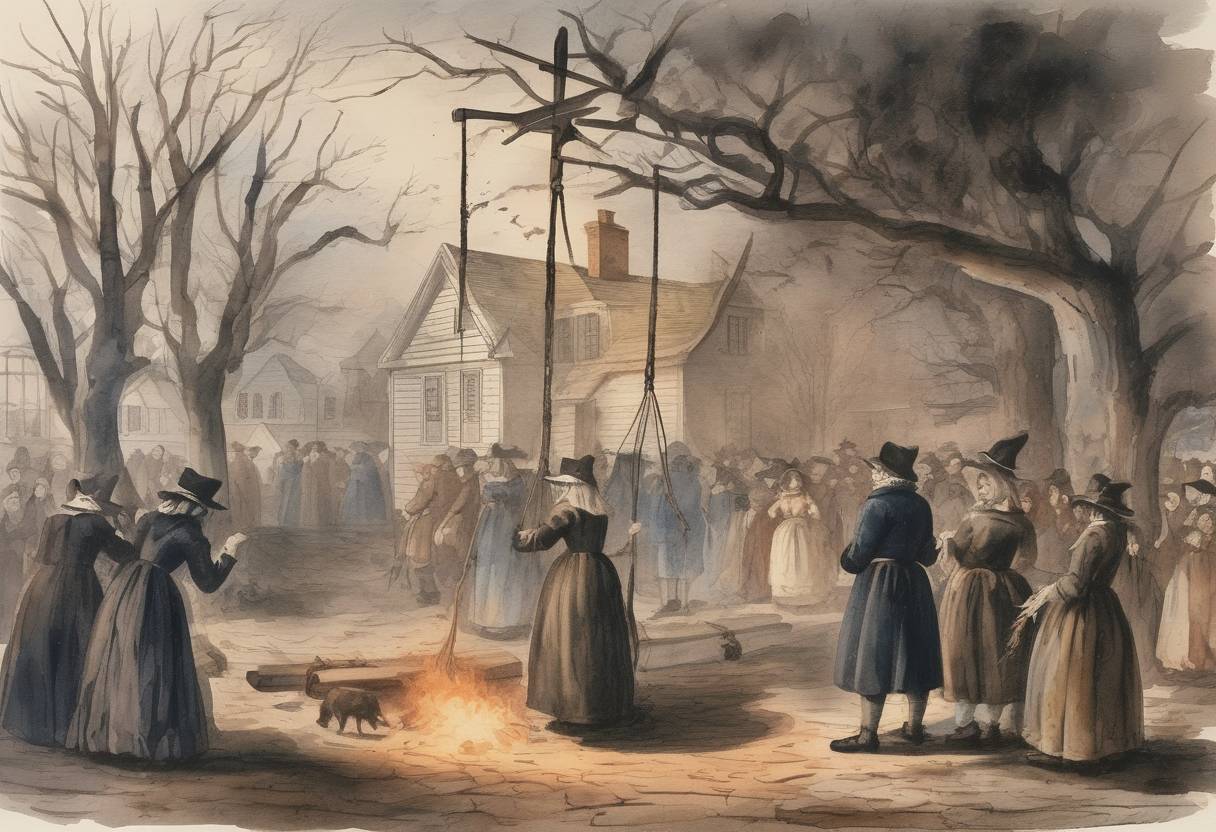
On September 22, 1692, the infamous Salem witch trials reached a grim milestone with the last executions carried out in Salem, Massachusetts. On this day, eight individuals were hanged, marking the final chapter of the most notorious witch hunt in American colonial history.
The Salem witch trials began in early 1692, fueled by a combination of superstition, fear, and social tensions. The Puritan community of Salem Village (now Danvers) was rife with anxiety over threats from Native American tribes, economic instability, and religious strife. These factors created a fertile ground for accusations of witchcraft, which were often rooted in personal vendettas and societal scapegoating.
The hysteria began when a group of young girls in Salem Village claimed to be possessed by the devil and accused several local women of witchcraft. The ensuing trials were characterized by dubious evidence, including “spectral evidence,” where accusers claimed to see the apparition of the accused committing witchcraft.
By September 1692, the witch trials had resulted in the execution of 19 people, predominantly women, by hanging. On September 22, the final group of eight individuals was executed. These individuals were:
The executions on September 22 marked the end of the capital punishments in the Salem witch trials. Public sentiment began to turn against the trials as doubts about the legitimacy of the accusations and the fairness of the proceedings grew. By October 1692, Governor William Phips ordered a halt to the trials and later prohibited the use of spectral evidence.
In the years following the trials, many involved expressed regret, and efforts were made to compensate the families of the victims. The Salem witch trials remain a powerful symbol of the dangers of mass hysteria, scapegoating, and the breakdown of due process.
The events of 1692 continue to be studied as a cautionary tale and a reflection on the complexities of human behavior and justice. The trials have left an indelible mark on American culture and history, serving as a reminder of the importance of safeguarding individual rights and maintaining a fair judicial system.
Source: en.wikipedia.org