678 · Rome, Italy
Saint Agatho becomes Pope, succeeding Pope Donus.
November 2, 0676
Donus becomes Pope, succeeding Adeodatus II.
Rome, Italy | Catholic Church
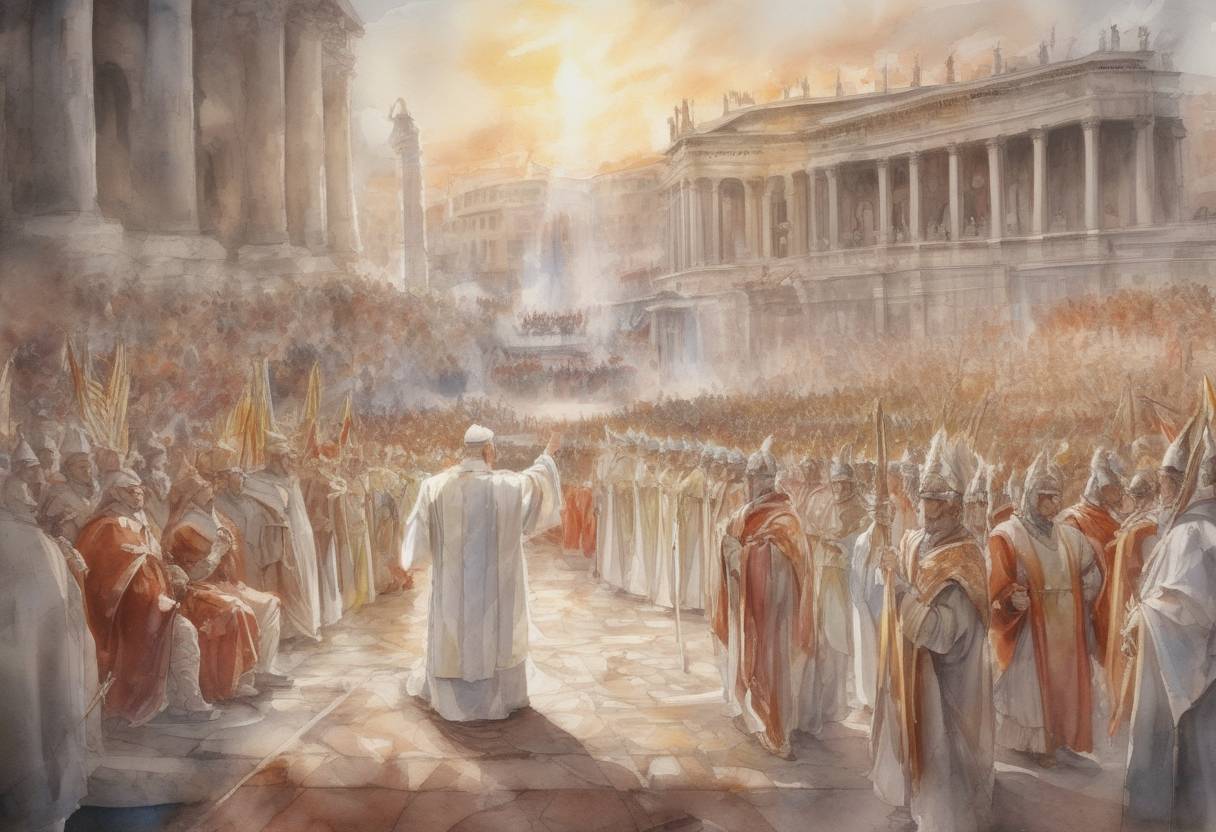
On November 2, 676, Donus was consecrated as the Pope, succeeding Pope Adeodatus II. His papacy, though relatively brief, lasted until his death on April 11, 678. Here is a detailed account of his papacy and its historical context:
Predecessor: Donus succeeded Pope Adeodatus II, who had served as the head of the Roman Catholic Church from 672 until his death in 676. Adeodatus II’s papacy was marked by efforts to restore monastic discipline and the physical restoration of churches in Rome.
Historical Setting: The 7th century was a period of significant religious and political change. The Byzantine Empire was a dominant force in the Mediterranean, and the papacy was often involved in complex relationships with Byzantine emperors. The church was also dealing with theological disputes, such as the Monothelitism controversy, which debated the nature of Christ’s will.
Church Restoration: Donus is noted for his contributions to the physical restoration of church buildings in Rome. He continued the work of his predecessor in maintaining and beautifying the city’s religious structures.
Relations with the Byzantine Empire: During Donus’s papacy, the relationship between the papacy and the Byzantine Empire remained stable. Although there were ongoing theological disputes, Donus’s tenure did not see significant conflict with the Byzantine authorities.
Monastic Reforms: Donus is credited with addressing issues within the Roman clergy and monastic communities. He worked to ensure discipline and order within these groups, which was a continuation of the efforts initiated by Adeodatus II.
Lombard Relations: The Lombards, a Germanic people who had settled in Italy, were a significant presence during Donus’s time. While there were tensions between the Lombards and the papacy, Donus managed to maintain peaceful relations during his short reign.
Succession: After Donus’s death in 678, he was succeeded by Pope Agatho. Agatho’s papacy would become notable for addressing the Monothelitism controversy at the Third Council of Constantinople.
Legacy: Although Donus’s papacy was brief, his efforts in church restoration and maintaining ecclesiastical discipline contributed to the stability of the Roman Church during a period of potential upheaval.
Historical Impact: Donus’s papacy is often seen as a transitional period that helped set the stage for subsequent theological and political developments within the Church and its relations with the Byzantine Empire.
In summary, Pope Donus’s tenure was marked by a focus on church restoration and maintaining ecclesiastical order, with a relatively peaceful relationship with both the Byzantine Empire and the Lombards. His contributions, though not revolutionary, provided continuity and stability to the papacy during a time of broader religious and political challenges.
Source: en.wikipedia.org