The Battle of Huoyi: A Pivotal Moment in Chinese History
Background
The Battle of Huoyi, which took place on September 8, 617, was a crucial engagement during the waning years of the Sui Dynasty. This battle marked a significant step in the rebellion led by Li Yuan, who would later establish the Tang Dynasty. The Sui Dynasty, which had unified China in 589, was plagued by internal strife, heavy taxation, and forced labor projects, leading to widespread discontent and rebellion.
- Li Yuan: A prominent Sui military commander and governor of Taiyuan, Li Yuan was initially hesitant to rebel against the Sui. However, the political instability and the influence of his ambitious children, particularly Li Shimin (later Emperor Taizong of Tang), persuaded him to take action.
- Sui Forces: The Sui military, although formidable, was stretched thin due to multiple rebellions and the costly campaigns against Goguryeo.
The Battle
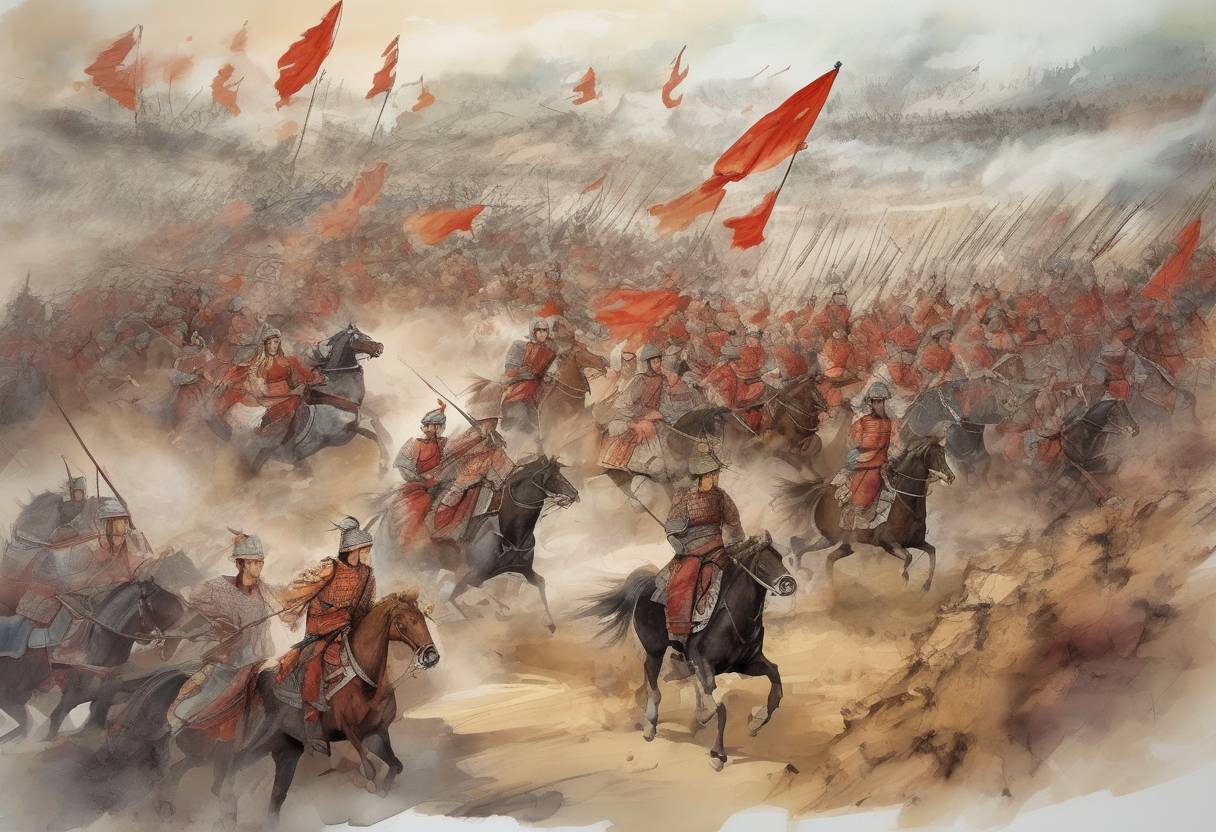
Li Yuan’s rebellion began in Taiyuan, a strategic location in present-day Shanxi Province. As he moved southward, his forces encountered the Sui army at Huoyi, near modern-day Linfen. Despite being outnumbered, Li Yuan’s troops were highly motivated and well-led. The battle resulted in a decisive victory for Li Yuan, significantly boosting his momentum and credibility as a leader capable of challenging the Sui Dynasty.
Aftermath and Significance
- Capture of Chang’an: Following his victory at Huoyi, Li Yuan advanced towards the Sui capital, Chang’an (modern Xi’an). By the end of 617, he had captured the city, further solidifying his power.
- Establishment of the Tang Dynasty: In 618, Li Yuan declared himself Emperor Gaozu of the Tang Dynasty, marking the official end of the Sui Dynasty. His reign initiated a period of stability and prosperity, with the Tang Dynasty becoming one of China’s most celebrated and influential dynasties.
Broader Historical Impact
The Battle of Huoyi was more than just a military victory; it was a turning point that facilitated the transition from the Sui to the Tang Dynasty. The Tang era is renowned for its cultural, economic, and political achievements, which had a lasting impact on Chinese civilization and beyond. The success of Li Yuan’s rebellion demonstrated the importance of strategic leadership and the ability to capitalize on the weaknesses of a declining regime.
In summary, the Battle of Huoyi was a decisive moment in Chinese history, setting the stage for the rise of the Tang Dynasty and the subsequent flourishing of Chinese culture and influence.