The Western Sahara Protest Dispersal on November 2, 2005
2005 · Laayoune, Western Sahara
The military forces of the Moroccan government violently disperse hundreds of Sahrawi demonstrators in Laayoune, Western Sahara.
November 6, 1975
The Green March began as 350,000 unarmed Moroccans marched into the disputed territory of Western Sahara to claim it from Spanish control.
Tarfaya, Morocco | Moroccan Government
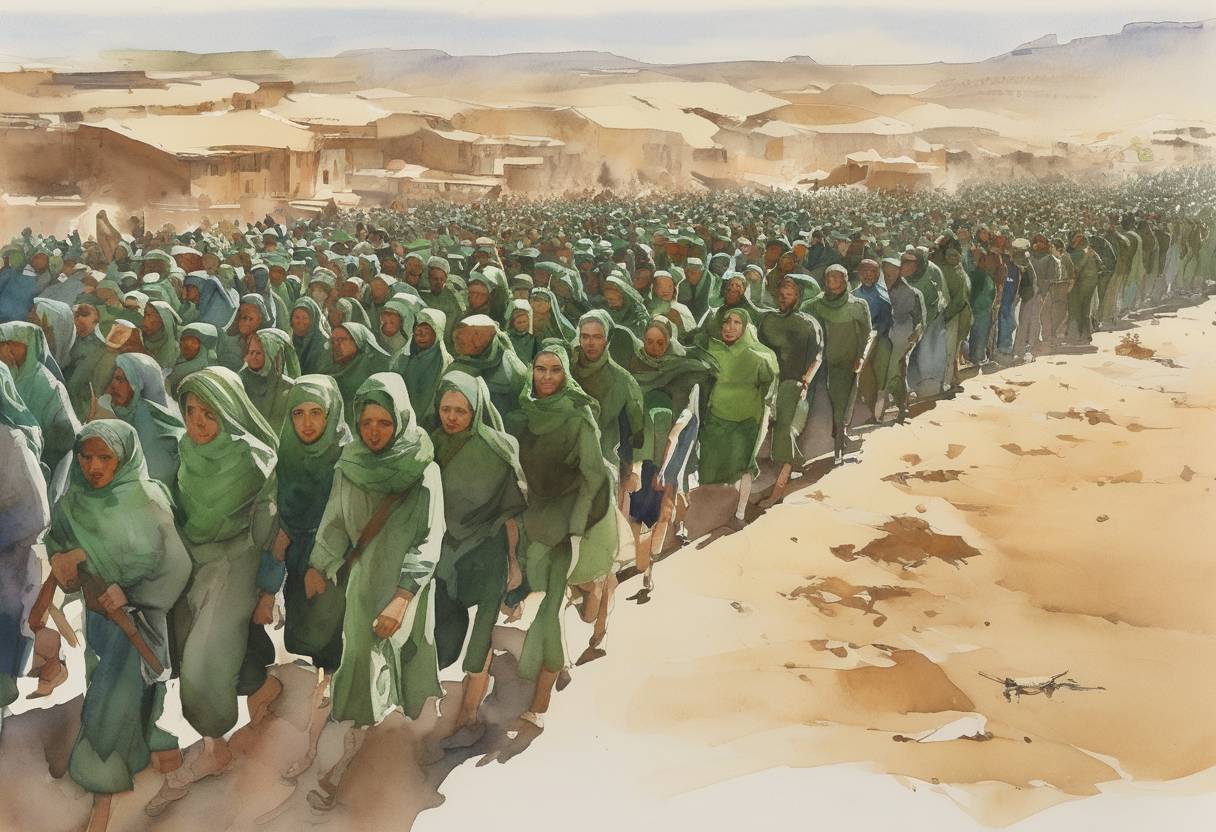
On November 6, 1975, a significant event known as the Green March took place, marking a pivotal moment in the history of Western Sahara and Morocco. This peaceful demonstration involved approximately 350,000 unarmed Moroccans who marched into the disputed territory of Western Sahara, aiming to assert Morocco’s claim over the region, which was then under Spanish colonial control.
Western Sahara: A sparsely populated region in North Africa, Western Sahara was a Spanish colony since the late 19th century. By the mid-20th century, the territory became a focal point of decolonization movements.
Moroccan Claim: Morocco, having gained independence from France in 1956, laid historical claims to Western Sahara, citing pre-colonial ties and cultural connections.
International Pressure: The United Nations had been advocating for decolonization and self-determination for the people of Western Sahara. In 1975, the International Court of Justice (ICJ) issued an advisory opinion acknowledging some historical ties between the Sahrawi tribes and Morocco, but it also emphasized the right to self-determination.
Organization: The Green March was orchestrated by King Hassan II of Morocco. It was a strategic move to pressure Spain into relinquishing control of Western Sahara without resorting to military conflict.
Participants: The march involved 350,000 volunteers, including men, women, and children, who were symbolically armed with green flags, representing Islam, and portraits of King Hassan II.
Execution: On November 6, 1975, the marchers crossed into Western Sahara, advancing towards the town of Tarfaya. The march was peaceful, with participants instructed to avoid any form of violence.
Spanish Withdrawal: The Green March, coupled with diplomatic negotiations, led to the Madrid Accords on November 14, 1975. Spain agreed to withdraw from Western Sahara, transferring administrative control to Morocco and Mauritania.
Conflict with the Polisario Front: The withdrawal of Spain did not resolve the issue of self-determination for the Sahrawi people. The Polisario Front, a Sahrawi nationalist movement, opposed Moroccan and Mauritanian control, leading to a protracted conflict.
Ongoing Dispute: The status of Western Sahara remains unresolved, with the region being one of the most prolonged territorial disputes in Africa. The United Nations continues to advocate for a referendum to determine the region’s future.
The Green March is a landmark event in Moroccan history, symbolizing national unity and the country’s determination to reclaim what it considers its rightful territory. It also highlights the complexities of decolonization in Africa and the enduring challenges of territorial disputes and self-determination.
The event remains a point of national pride in Morocco, commemorated annually, while also serving as a reminder of the unresolved status of Western Sahara and the ongoing quest for a peaceful resolution.
Source: www.britannica.com