Michelle Bachelet's Victory in the 2013 Chilean Presidential Election
2014 · Santiago, Chile
President Michelle Bachelet of Chile won the second round of the presidential election, returning to office for a non-consecutive term.
November 3, 1970
Salvador Allende is inaugurated as president of Chile, becoming the first Marxist to be elected president in a country with a significant democratic history.
Santiago, Chile | Government of Chile
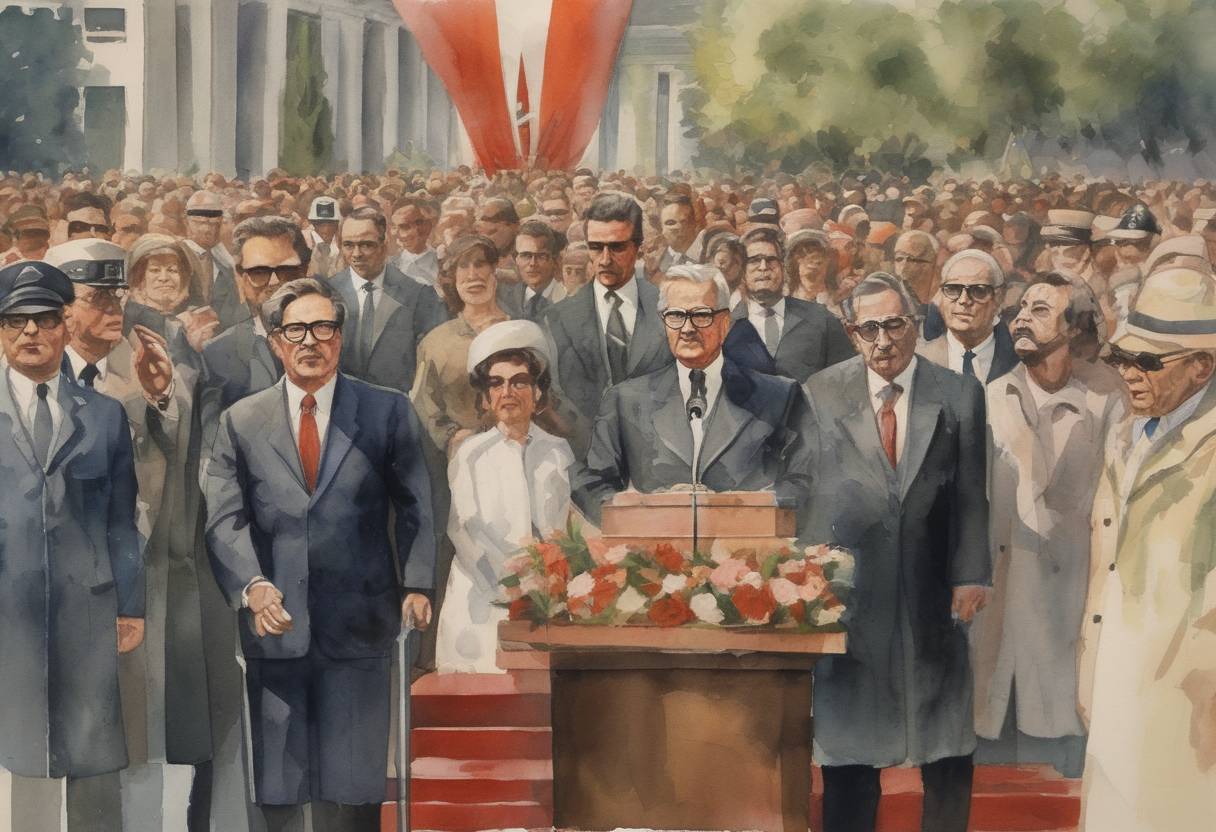
On November 3, 1970, Salvador Allende was inaugurated as the President of Chile, marking a significant moment in both Chilean and global history. Allende’s election was notable for making him the first Marxist to become president through open elections in a country with a longstanding democratic tradition.
Political Climate: Chile had a vibrant political landscape with a strong tradition of democratic elections. The country was characterized by a multiparty system, with significant political activity from leftist, centrist, and right-wing parties.
Allende’s Political Journey: Salvador Allende, a physician by training, was a founding member of the Chilean Socialist Party. He had run for the presidency three times before, in 1952, 1958, and 1964, gradually increasing his support base.
Unidad Popular Coalition: Allende’s victory came as the candidate of the Unidad Popular (Popular Unity) coalition, a left-wing alliance that included socialists, communists, and other progressive groups. The coalition promised sweeping reforms, including nationalization of industries and agrarian reform.
Election Results: In the presidential election held on September 4, 1970, Allende won with 36.6% of the vote, a plurality but not an outright majority. His closest rival, Jorge Alessandri, received 35.3%, while Radomiro Tomic, representing the Christian Democrats, garnered 28.1%.
Congressional Decision: Due to the lack of a majority, the decision fell to the Chilean Congress, which traditionally ratified the candidate with the most votes. After negotiations and assurances regarding the preservation of democratic institutions, Congress confirmed Allende’s presidency.
Inauguration Ceremony: Allende was inaugurated on November 3, 1970, amidst significant national and international attention. His presidency was seen as a test of whether a socialist government could be democratically elected and operate within a capitalist framework.
Policy Initiatives: Allende’s government embarked on an ambitious program of nationalization, including the copper industry, which was a major source of national revenue. His administration also focused on land redistribution and improving social services.
Economic and Political Challenges: Allende’s presidency faced significant challenges, including economic difficulties, political polarization, and opposition from both domestic and international actors, notably the United States, which was concerned about the spread of socialism in Latin America.
Coup and Legacy: Allende’s presidency ended abruptly on September 11, 1973, when a military coup led by General Augusto Pinochet overthrew the government. Allende died during the coup, and Chile entered a period of military dictatorship that lasted until 1990.
Historical Impact: Allende’s election and presidency remain significant for their demonstration of the potential for democratic socialism. His legacy continues to influence political discourse in Chile and beyond, symbolizing both the aspirations and challenges of leftist movements in democratic contexts.
Salvador Allende’s inauguration as president was a landmark event that highlighted the complexities of political change and the tensions between democratic processes and ideological divides during the Cold War era.
Source: www.britannica.com