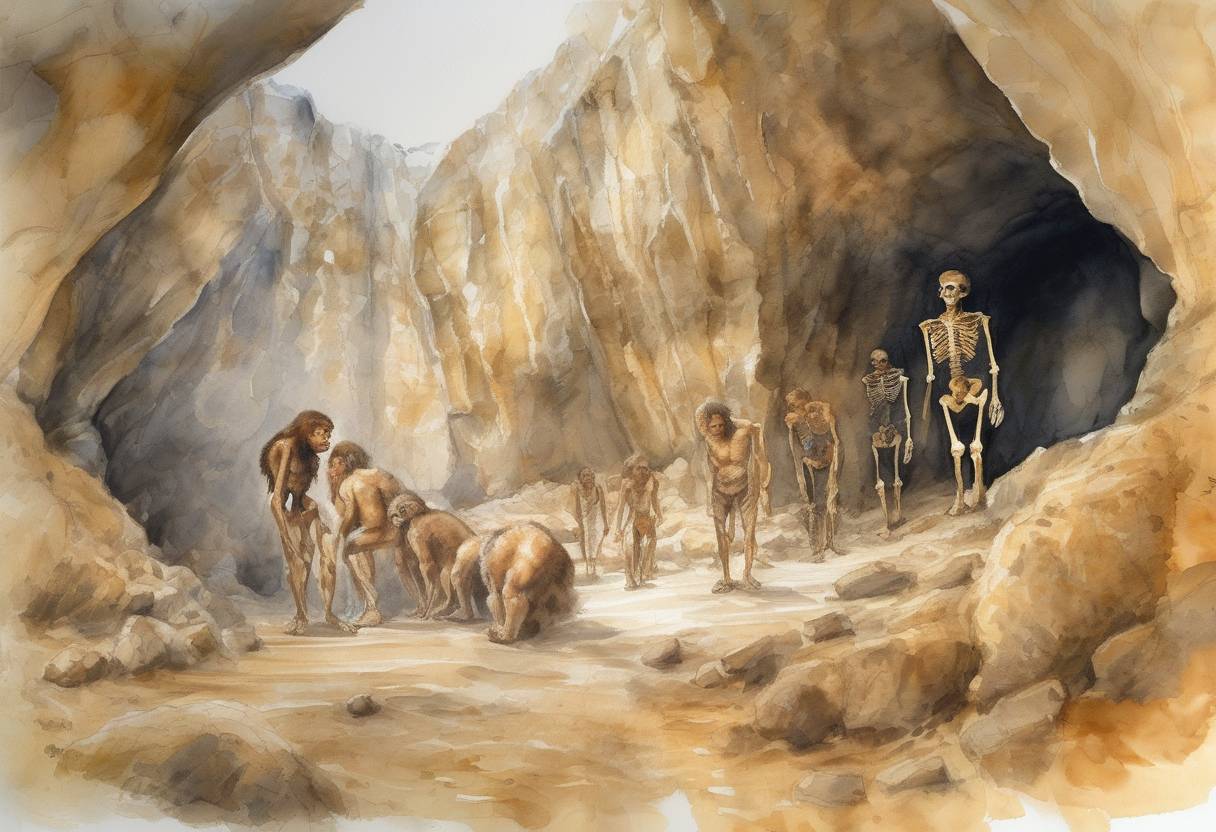
Discovery of Neanderthal Remains at El Sidrón Cave - April 30, 2008
On April 30, 2008, a significant archaeological discovery was made at the El Sidrón cave site in Asturias, Spain. Two skeletal remains of Neanderthals were unearthed, contributing valuable insights into the Neanderthal genome and their lifestyle. This discovery is part of a larger collection of Neanderthal remains found at the site, which has been under excavation since the early 1990s.
Context and Background
The El Sidrón cave has been a focal point for paleoanthropologists due to its rich deposits of Neanderthal remains. The site has yielded over 2,500 bone fragments from at least 13 individuals, making it one of the most important Neanderthal sites in Western Europe. The remains date back approximately 49,000 years, during the Middle Paleolithic period.
Key Findings
Genetic Insights: The discovery of these skeletal remains has been pivotal in advancing the understanding of the Neanderthal genome. DNA extracted from the bones has allowed scientists to sequence parts of the Neanderthal genome, providing insights into their genetic makeup and their relationship to modern humans.
Diet and Lifestyle: Analysis of the remains and associated artifacts has shed light on the Neanderthal diet and lifestyle. Isotopic analysis of the bones suggests a diet primarily composed of meat, supplemented by plant materials. The presence of stone tools and evidence of butchering indicates a sophisticated approach to hunting and food preparation.
Social Structure: The El Sidrón site has provided evidence of a close-knit social structure among Neanderthals. The remains suggest that the group consisted of individuals of varying ages, indicating a family or clan-based social organization.
Broader Historical Significance
The findings at El Sidrón have contributed significantly to the understanding of Neanderthals, challenging previous perceptions of them as primitive and unsophisticated. The genetic data has been crucial in studying the interbreeding between Neanderthals and early modern humans, revealing that non-African modern human populations carry a small percentage of Neanderthal DNA.
Aftermath and Continuing Research
Research at El Sidrón continues to provide new insights into Neanderthal life. The site remains a key location for studying the evolution and eventual extinction of Neanderthals. Ongoing studies focus on further unraveling the genetic, cultural, and environmental factors that influenced Neanderthal existence and their interactions with early modern humans.
In summary, the discovery of Neanderthal remains at El Sidrón on April 30, 2008, has been instrumental in deepening the understanding of Neanderthal biology, culture, and their place in human evolutionary history.