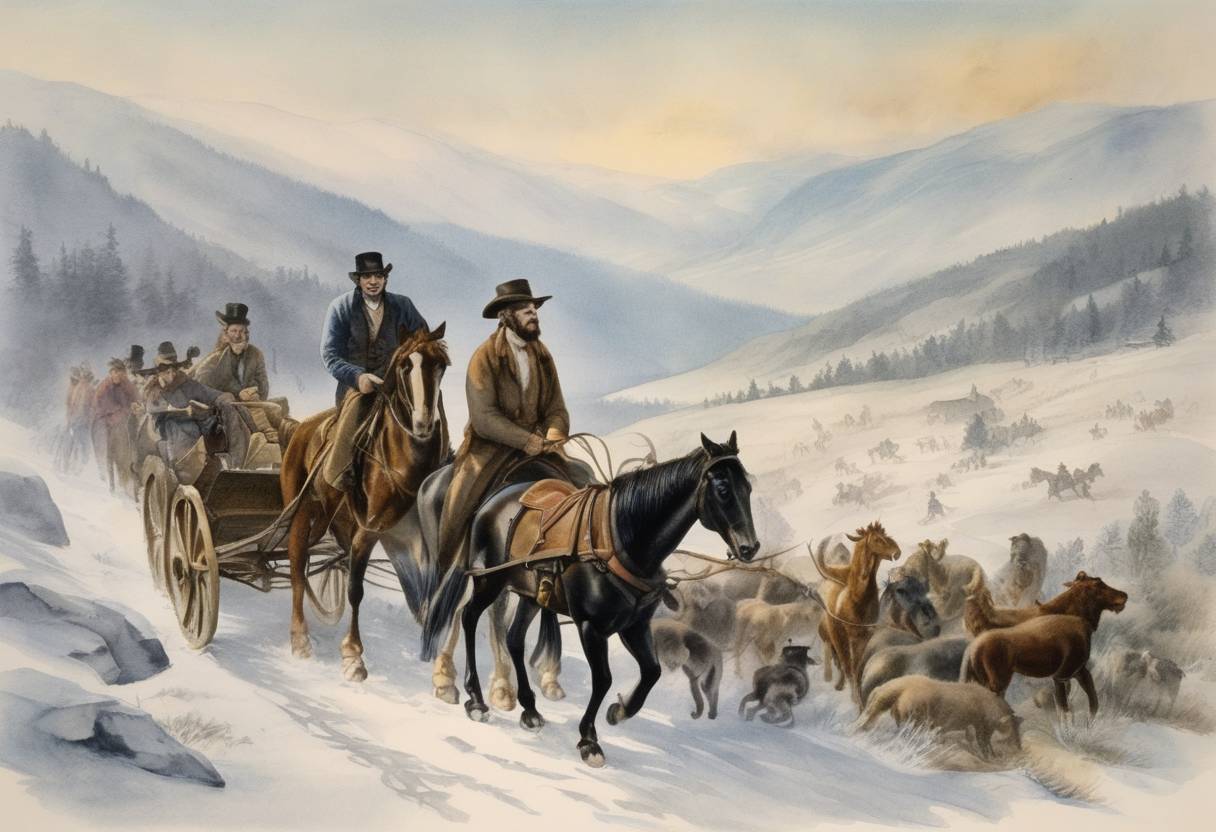
Departure of the Donner Party - April 14, 1846
On April 14, 1846, a group of American pioneers known as the Donner Party left Springfield, Illinois, embarking on a journey that would become one of the most infamous episodes of westward migration in United States history. Comprised primarily of two families led by George Donner and James F. Reed, the group initially numbered about 33 people. Their destination was the fertile lands of California, driven by the promise of new opportunities and prosperity.
Background and Plan
The Donner Party was part of the larger westward expansion movement of the mid-19th century, when many Americans traveled the Oregon and California trails in search of better living conditions and economic prospects. The group planned to take the California Trail, a well-trodden path from the Midwest to the West Coast. Unbeknownst to them, their journey would become fraught with peril due to poor decisions, harsh conditions, and an agonizing fight for survival.
Hastings Cutoff
A critical decision that significantly impacted the outcome of their journey was choosing to follow a new route called the Hastings Cutoff. Promoted by Lansford Hastings in his guidebook “The Emigrants’ Guide to Oregon and California,” the cutoff promised to shorten the journey significantly. However, the route was untested and poorly understood, leading the Donner Party into severe delays and difficult terrain.
Initial Progress
Setting off in April gave the group a reasonable timeline to complete their journey before the onset of winter. The early stages of their travel followed the established trails, and by June, they reached the Platte River, following the path of other emigrants heading west. However, the decision to take Hastings Cutoff would place them weeks behind schedule.
Historical Context
At the time of their departure, the American West was largely uncharted and treacherous. Pioneers faced numerous challenges, including rough terrain, unpredictable weather, and the need to secure adequate food supplies. The organization and cooperation of traveling parties were crucial for survival, as shared resources and labor often determined their success or failure.
The choices made on April 14, 1846, set the stage for the tragic series of events that unfolded later. The determination and hope of these pioneers were emblematic of the broader American spirit of exploration and expansion, but the hardships they endured would serve as a cautionary tale in the annals of American history.