The Missouri Compromise of March 3, 1820
1820 · Washington D.C., United States
The Missouri Compromise was passed by the U.S. Congress.
February 8, 1887
The Dawes Act, also known as the General Allotment Act, was enacted by the United States Congress. This act authorized the federal government to divide tribal lands into individual plots and aimed to assimilate Native Americans into American society by encouraging farming practices in line with Anglo-American culture.
Washington D.C., United States | United States Congress
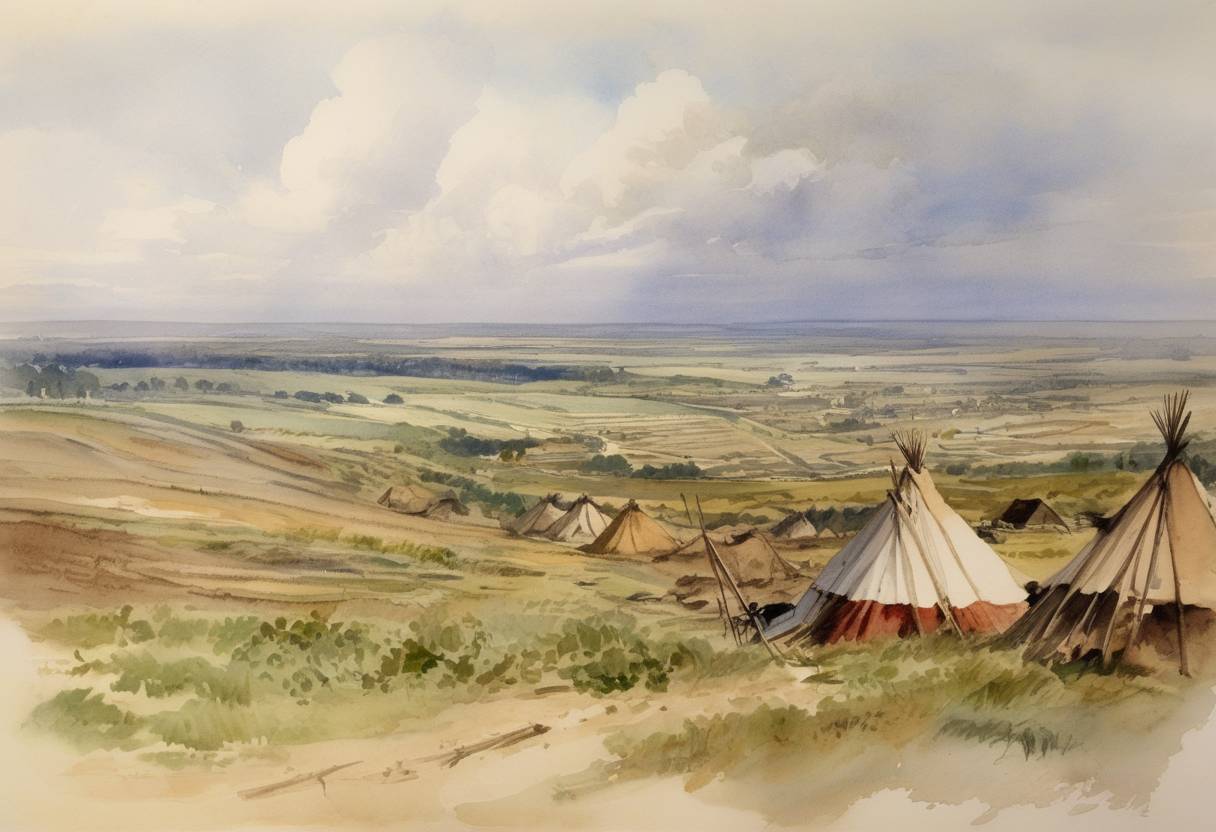
On February 8, 1887, the United States Congress enacted the Dawes Act, formally known as the General Allotment Act. This critical piece of legislation was designed to alter the communal land ownership system of Native American tribes by authorizing the federal government to divide tribal lands into individual plots. Each Native American family was granted an allotment of 160 acres, while single adults and orphans received 80 acres, and minors were allotted 40 acres. The primary aim of the Dawes Act was to assimilate Native Americans into American society by encouraging agricultural practices consistent with Anglo-American culture.
The Dawes Act emerged from the broader context of late 19th-century United States policies toward Native Americans, which increasingly emphasized assimilation and cultural integration. Proponents of the act believed that private land ownership and individual farming would encourage Native Americans to adopt ‘civilized’ lifestyles, reduce their dependence on communal tribal structures, and integrate more seamlessly into the expanding American agricultural economy. It was also seen as a means to reduce the perceived threat of Native American resistance and open up additional lands for non-Native settlement.
Allotment of Land: The act stipulated that each Native American head of a family would receive 160 acres of farmland or 320 acres of grazing land. The remaining unallotted lands would be declared “surplus” and sold to non-Native settlers.
Trust Period: Allotted lands would be held in trust by the United States government for 25 years, ostensibly to protect Native Americans from land speculators and ensure they adopted farming techniques before receiving full ownership.
U.S. Citizenship: Native Americans who agreed to the allotment and adopted “civilized life” would be granted United States citizenship, which was both an incentive and a tool for enforcement of assimilation policies.
The legislation profoundly affected Native American societies and territories. The communal and cultural cohesion inherent in tribal land ownership was severely disrupted. By the end of the allotment process, Native Americans had lost approximately 90 million acres of treaty land, a reduction of about two-thirds from the original tribal holdings before the Dawes Act.
Moreover, the Dawes Act often failed to deliver on its promise of supporting Native American self-sufficiency and prosperity. Many Native Americans were either unwilling or unprepared to transition to a sedentary, agricultural lifestyle as envisioned by policymakers. Additionally, the trust period, instead of safeguarding interests, often resulted in mismanagement and further dispossession as lands were lost to taxes, sales, or legal tricks.
The Dawes Act ultimately set the stage for decades of policy that continued to erode Native American landholding and sovereignty. Its legacy is marked by a profound impact on Native American culture and economic conditions, and it remains a significant chapter in the history of U.S. government-Native American relations. The effects of the Dawes Act were so detrimental that they led to its eventual reversal and the return of tribal land holdings with the Indian Reorganization Act of 1934, which sought to restore some measure of tribal governance and communal landholding.
Source: en.wikipedia.org