The Assassination of Abraham Lincoln
1865 · Washington, D.C., United States
U.S. President Abraham Lincoln died after being shot the previous day by John Wilkes Booth at Ford's Theatre in Washington, D.C.
November 19, 1863
U.S. President Abraham Lincoln delivered the Gettysburg Address at the dedication of the Soldiers' National Cemetery in Gettysburg, Pennsylvania.
Gettysburg, United States | U.S. Government
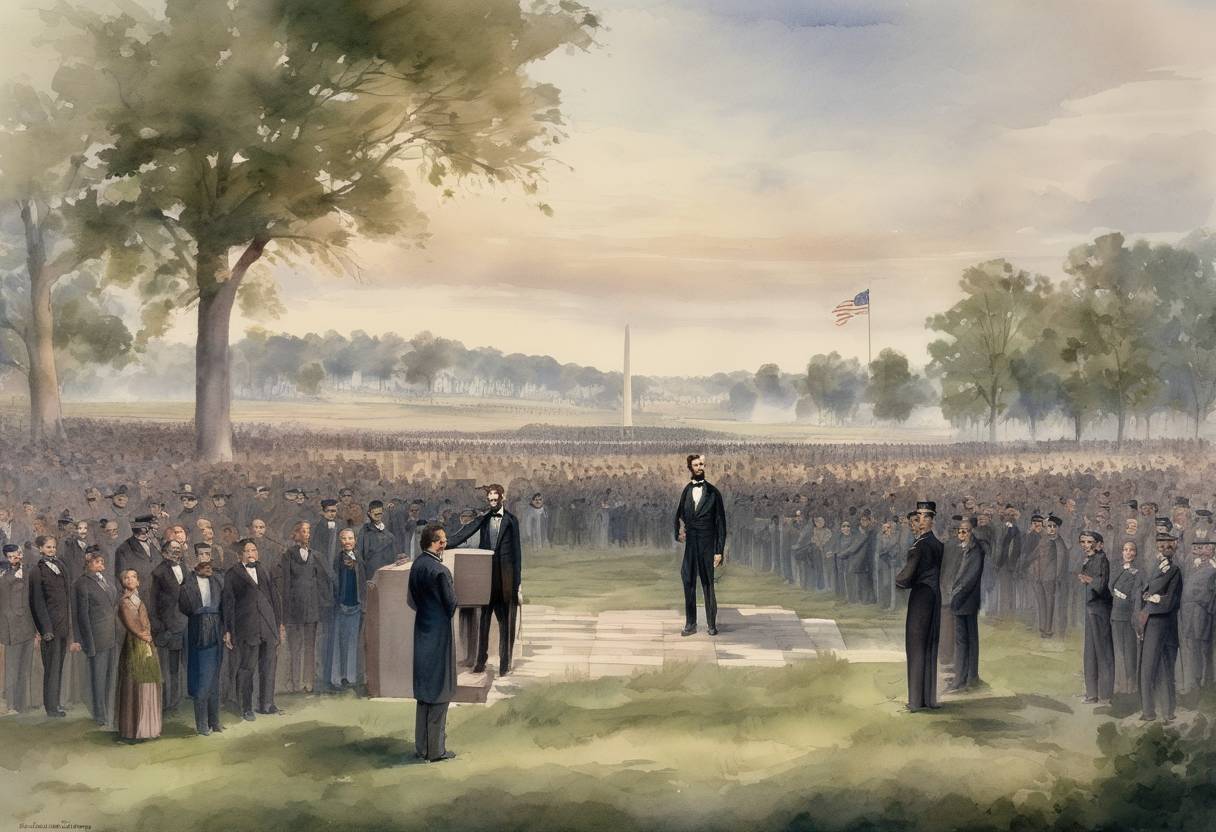
On November 19, 1863, U.S. President Abraham Lincoln delivered one of the most iconic speeches in American history, the Gettysburg Address, at the dedication of the Soldiers’ National Cemetery in Gettysburg, Pennsylvania. This brief but profound speech was delivered in the aftermath of the Battle of Gettysburg, a pivotal conflict during the American Civil War.
The Battle of Gettysburg: Fought from July 1 to July 3, 1863, this battle was one of the bloodiest in the Civil War, resulting in approximately 51,000 soldiers killed, wounded, or missing. It marked a turning point in the war, with the Union Army, led by General George G. Meade, defeating the Confederate forces under General Robert E. Lee.
The Purpose of the Address: The dedication ceremony aimed to honor the fallen soldiers and consecrate the ground as a national cemetery. The event was part of a broader effort to commemorate the sacrifices made during the battle and to reaffirm the Union’s commitment to the war effort.
Length and Delivery: Lincoln’s address was remarkably concise, consisting of just 272 words, and lasted only about two minutes. Despite its brevity, the speech eloquently encapsulated the principles of human equality espoused by the Declaration of Independence and redefined the Civil War as a struggle not just for the Union, but for the principle of equality.
Key Themes:
Immediate Reaction: Initially, the speech received mixed reviews. Some newspapers praised its eloquence, while others criticized its brevity and simplicity. However, over time, it has come to be regarded as one of the greatest speeches in American history.
Historical Impact: The Gettysburg Address has had a lasting impact on American political thought and identity. It reinforced the idea of a unified nation dedicated to the principles of liberty and equality, influencing future generations and shaping the nation’s collective memory of the Civil War.
Legacy: Today, the Gettysburg Address is celebrated for its powerful rhetoric and enduring message. It continues to be studied and revered as a masterful expression of American ideals and a testament to Lincoln’s leadership during one of the nation’s most challenging periods.
In summary, the Gettysburg Address stands as a defining moment in American history, encapsulating the essence of the nation’s struggle and aspirations during the Civil War. Lincoln’s words continue to resonate, reminding us of the enduring values of unity, sacrifice, and equality.
Source: en.wikipedia.org