The Assassination of Lee Harvey Oswald
1963 · Dallas, United States
Lee Harvey Oswald, the alleged assassin of U.S. President John F. Kennedy, is shot and killed by Jack Ruby.
March 14, 1964
A jury in Dallas, Texas, finds Jack Ruby guilty of murdering Lee Harvey Oswald, the accused assassin of President John F. Kennedy.
Dallas, United States | Dallas County Court
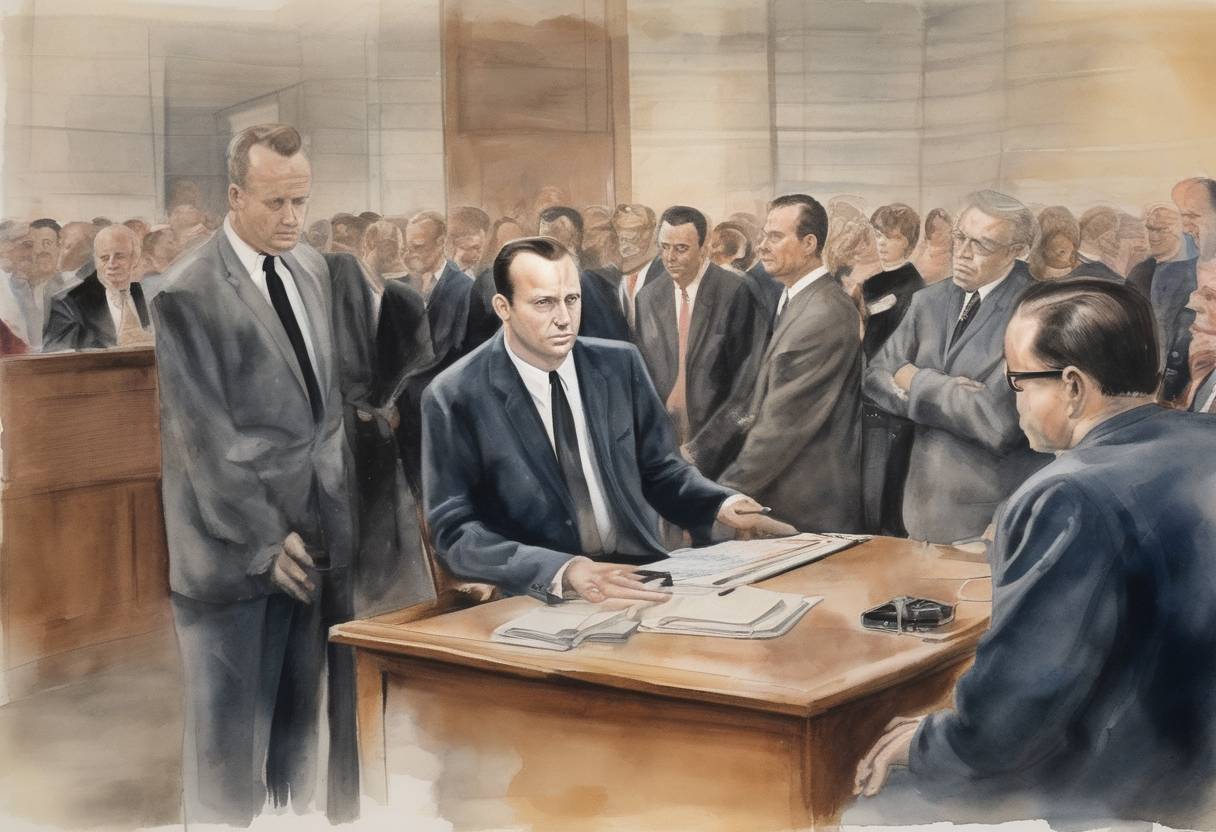
On March 14, 1964, a jury in Dallas, Texas, found Jack Ruby guilty of the murder of Lee Harvey Oswald, the accused assassin of President John F. Kennedy. This verdict was a pivotal moment in the aftermath of one of the most shocking events in American history—the assassination of President Kennedy.
Assassination of JFK: President John F. Kennedy was assassinated on November 22, 1963, in Dallas, Texas. Lee Harvey Oswald was arrested shortly after the assassination and charged with the murder of both President Kennedy and a Dallas police officer, J.D. Tippit.
Murder of Oswald: On November 24, 1963, as Oswald was being transferred from the city jail to the county jail, Jack Ruby, a nightclub owner, shot and killed Oswald in the basement of the Dallas Police Headquarters. The event was broadcast live on national television, shocking the nation.
Location and Date: The trial took place in Dallas, Texas, beginning on February 17, 1964.
Defense and Prosecution: Ruby’s defense, led by attorney Melvin Belli, argued that Ruby had acted impulsively due to a condition they termed “psychomotor epilepsy.” The prosecution, however, contended that Ruby’s actions were premeditated.
Verdict: After deliberating for just over two hours, the jury found Ruby guilty of murder with malice, which carried the death penalty.
Sentencing: Ruby was sentenced to death by electric chair. However, his conviction was later overturned in 1966 by the Texas Court of Criminal Appeals on the grounds that he had not received a fair trial due to the publicity surrounding the case.
Retrial and Death: Before a retrial could take place, Ruby died of a pulmonary embolism on January 3, 1967, while suffering from lung cancer.
Public Reaction: Ruby’s murder of Oswald and subsequent trial fueled numerous conspiracy theories regarding the assassination of President Kennedy, as many questioned Ruby’s motives and potential connections to larger plots.
Impact on Legal Proceedings: The case highlighted issues related to media influence on legal proceedings and the challenges of ensuring a fair trial in high-profile cases.
Jack Ruby’s conviction remains a significant chapter in the complex narrative surrounding the assassination of President Kennedy, reflecting the intense emotions and controversies of the era.
Source: en.wikipedia.org