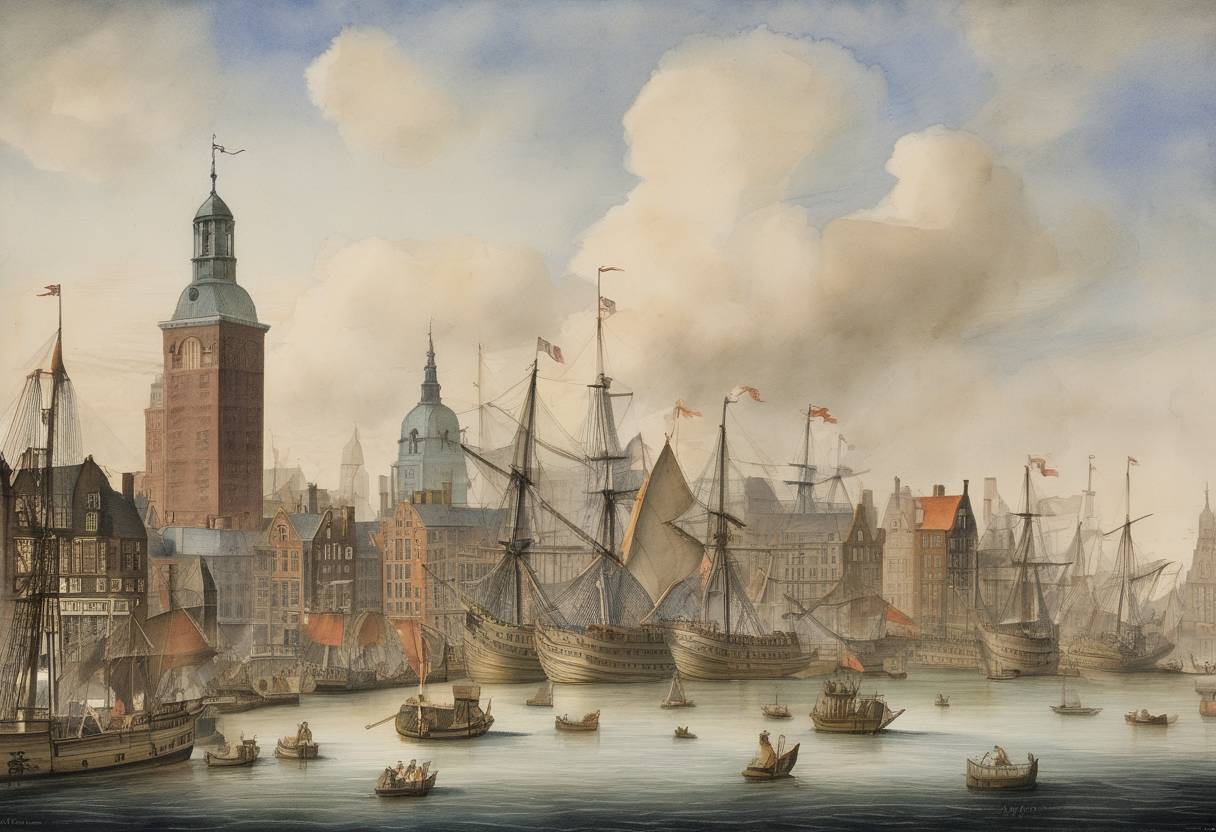
Incorporation of New Amsterdam: June 12, 1665
On June 12, 1665, New Amsterdam was formally incorporated as a city under English rule, marking a pivotal moment in the history of what would eventually become New York City. This incorporation was a significant development in the establishment of one of the world’s most influential cities.
Historical Context
Dutch Beginnings
- Founding: New Amsterdam was originally established by the Dutch in 1624 as a trading post for the Dutch West India Company. It was strategically located at the southern tip of Manhattan Island, serving as the capital of the Dutch colony of New Netherland.
- Growth: Over the next few decades, New Amsterdam grew into a bustling port and a center for trade, attracting a diverse population of settlers, including Dutch, Africans, Germans, and others.
English Conquest
- Capture: In 1664, the English, under the command of Colonel Richard Nicolls, seized control of New Amsterdam without much resistance. The Dutch governor, Peter Stuyvesant, surrendered the city to the English forces.
- Renaming: Following the capture, the city was renamed New York in honor of the Duke of York, who later became King James II of England.
Incorporation as a City
- Formal Incorporation: On June 12, 1665, New Amsterdam was formally incorporated as a city under English governance. This incorporation was part of the broader English efforts to solidify control over their newly acquired territories in North America.
- Governance: The incorporation established a municipal government, which included a mayor, aldermen, and a sheriff, reflecting the English administrative structure.
Significance and Aftermath
- Urban Development: The incorporation laid the groundwork for the city’s transformation into a major urban center. It facilitated the development of infrastructure, legal systems, and governance that would support its growth.
- Cultural and Economic Hub: Over the ensuing centuries, New York City evolved into a cultural and economic powerhouse, playing a crucial role in the history of the United States and the world.
- Legacy: The incorporation of New Amsterdam as New York City marked the beginning of its journey from a small colonial outpost to a global metropolis, renowned for its diversity, innovation, and influence.
The formal incorporation of New Amsterdam as New York City on June 12, 1665, was a foundational moment in the city’s history, setting the stage for its future development and enduring legacy.