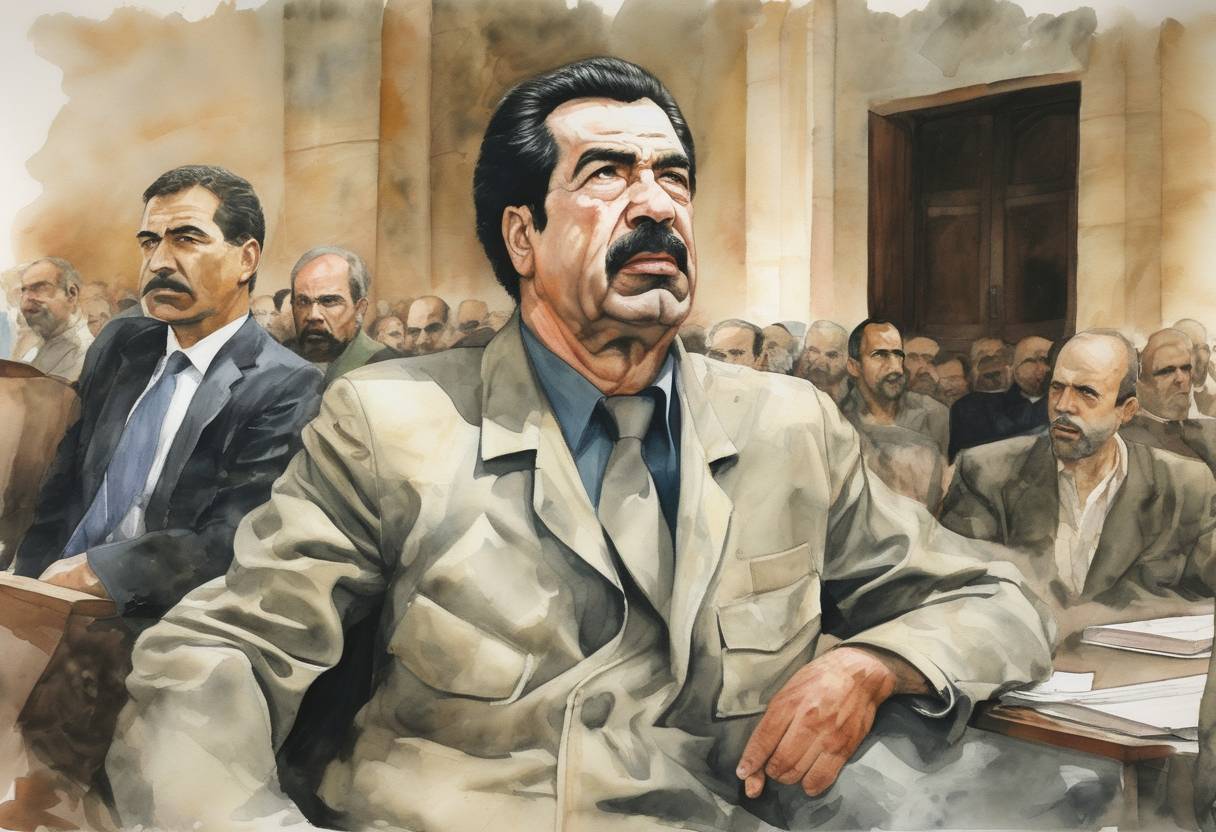
Saddam Hussein’s Trial for Crimes Against Humanity
On October 19, 2005, the trial of Saddam Hussein, the former President of Iraq, commenced in Baghdad. This trial was a landmark event in the history of Iraq, as it represented a significant step towards justice and accountability for the atrocities committed during Hussein’s regime. The trial was held at the Iraqi Special Tribunal, established specifically to prosecute members of the former regime for crimes against humanity, war crimes, and genocide.
Context and Background
Saddam Hussein ruled Iraq from 1979 until 2003, when he was deposed following the U.S.-led invasion. His regime was marked by widespread human rights abuses, including the use of chemical weapons, mass executions, and the suppression of political dissent. The trial was part of broader efforts to address the legacy of his dictatorship and to establish a new legal and political order in post-invasion Iraq.
Key Events Leading to the Trial
- 2003 Invasion of Iraq: The U.S.-led coalition invaded Iraq in March 2003, leading to the collapse of Hussein’s government. Saddam Hussein was captured by U.S. forces in December 2003.
- Establishment of the Iraqi Special Tribunal: In December 2003, the Iraqi Governing Council established the tribunal to prosecute former regime officials.
- Charges Against Hussein: The initial charges against Saddam Hussein focused on the 1982 massacre in the town of Dujail, where 148 Shiite men and boys were killed in retaliation for an assassination attempt on Hussein.
The Trial
The trial began with Saddam Hussein and seven co-defendants facing charges related to the Dujail massacre. The proceedings were broadcast internationally, drawing significant media attention. Hussein, known for his defiant demeanor, challenged the legitimacy of the court and refused to recognize its authority.
Key Aspects of the Trial
- Legal Proceedings: The trial was conducted under Iraqi law, with both Iraqi and international legal experts involved. The proceedings were marked by frequent disruptions and security concerns, reflecting the volatile situation in Iraq at the time.
- Defense and Prosecution: Hussein’s defense team argued that the trial was politically motivated and questioned the fairness of the process. The prosecution presented evidence of the regime’s systematic human rights abuses.
Aftermath and Consequences
- Verdict and Sentencing: On November 5, 2006, Saddam Hussein was found guilty of crimes against humanity and sentenced to death by hanging. The verdict was upheld on appeal, and Hussein was executed on December 30, 2006.
- Impact on Iraq: The trial and execution of Saddam Hussein were pivotal in Iraq’s transition from dictatorship to a new political system. However, the process also highlighted the challenges of achieving justice in a deeply divided and unstable country.
Broader Historical Significance
The trial of Saddam Hussein was a significant moment in international justice, illustrating the complexities of prosecuting former leaders for human rights violations. It underscored the importance of accountability while also raising questions about the role of international intervention and the challenges of rebuilding a nation after decades of authoritarian rule.