The Battle of Rignano - October 30, 1137
1137 · Rignano Garganico, Italy
The Battle of Rignano takes place, where Roger II of Sicily defeats Ranulf II of Alife's forces.
November 5, 1138
The Battle of Rignano took place between the forces of Roger II of Sicily and Ranulf of Alife, resulting in a decisive victory for Roger II.
Rignano Garganico, Italy | Kingdom of Sicily
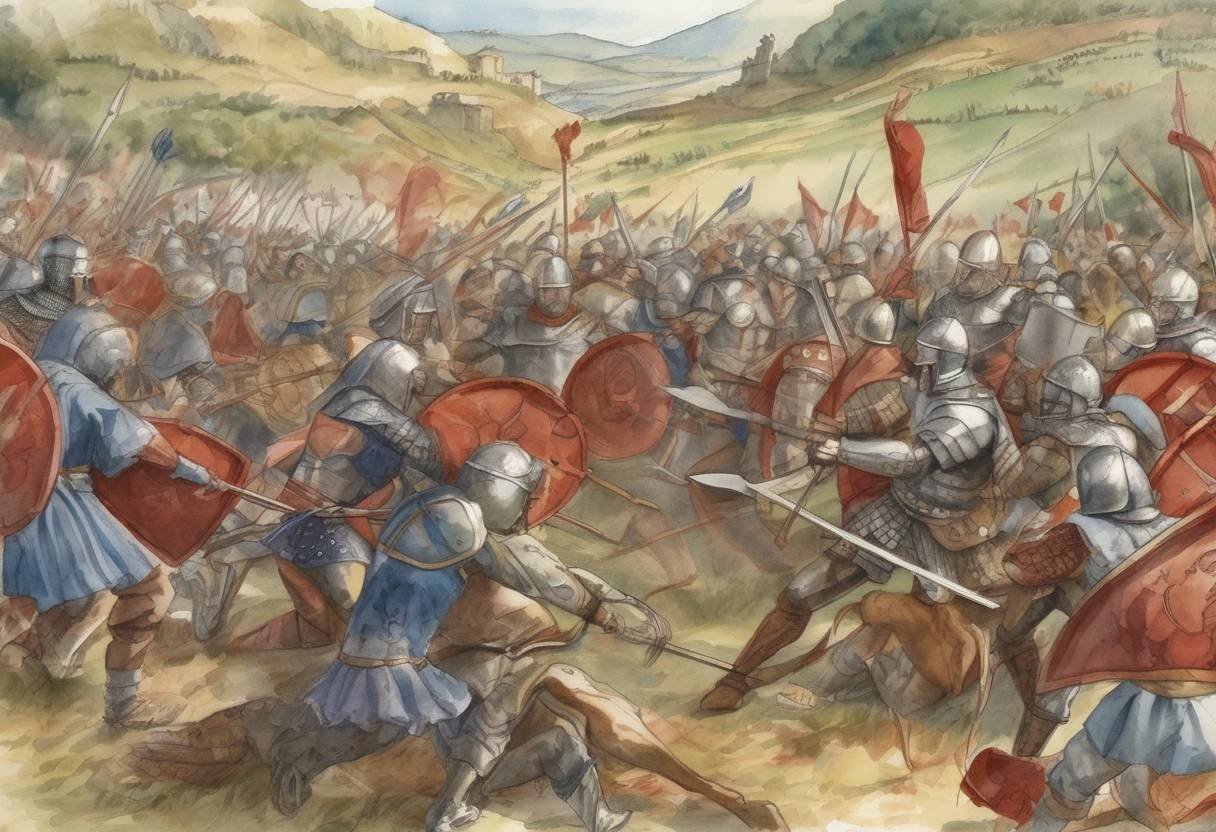
The Battle of Rignano, fought on November 5, 1138, was a significant conflict in the history of Southern Italy, marking a decisive victory for Roger II of Sicily over Ranulf of Alife. This battle was part of the broader power struggles in the region during the 12th century, as various noble factions vied for control and influence.
Roger II of Sicily: Roger II was a formidable ruler who had unified the Norman territories in Southern Italy and Sicily, establishing the Kingdom of Sicily in 1130. His reign was characterized by efforts to consolidate power and expand his influence across the Italian peninsula.
Ranulf of Alife: Ranulf was a prominent Norman nobleman and a key figure in the opposition against Roger II. He was the Count of Alife and had allied himself with other discontented nobles and the Papacy, which opposed Roger’s growing power.
Political Tensions: The battle was rooted in the ongoing conflicts between the Papacy and the Norman rulers of Southern Italy. The Papacy, wary of Roger’s ambitions, supported local nobles like Ranulf in their resistance against Roger’s authority.
Location: The battle took place near Rignano Garganico, a strategic location in the Apulia region of Southern Italy.
Forces Involved: Roger II led a well-organized and disciplined army, leveraging his resources as the King of Sicily. Ranulf, on the other hand, commanded a coalition of rebellious nobles and their forces, bolstered by Papal support.
Outcome: The battle concluded with a decisive victory for Roger II. His forces managed to outmaneuver and overpower Ranulf’s coalition, effectively quelling the rebellion and reinforcing Roger’s dominance in the region.
Consolidation of Power: The victory at Rignano allowed Roger II to further consolidate his control over Southern Italy. It demonstrated his military prowess and the effectiveness of his centralized rule.
Impact on the Papacy: The defeat weakened the Papal influence in the region and diminished the power of the rebellious nobles who had opposed Roger.
Legacy: The battle reinforced the stability of Roger II’s reign and contributed to the prosperity and cultural flourishing of the Kingdom of Sicily. His rule is often noted for its administrative efficiency and the blending of diverse cultures, including Norman, Arab, and Byzantine influences.
In summary, the Battle of Rignano was a pivotal moment in the history of Southern Italy, underscoring the complex interplay of power, politics, and military strategy during the medieval period. Roger II’s victory not only solidified his kingdom but also set the stage for the continued development of a unique and influential Sicilian state.
Source: en.wikipedia.org