President Harry S. Truman's First Televised Oval Office Address
1947 · Washington, D.C., United States
President Harry S. Truman holds the first televised Oval Office address, emphasizing the need to prevent food shortages in Europe.
October 5, 1947
President Harry S. Truman delivered the first televised White House address, urging Americans to conserve food to aid post-war Europe.
Washington, D.C., United States | U.S. Government
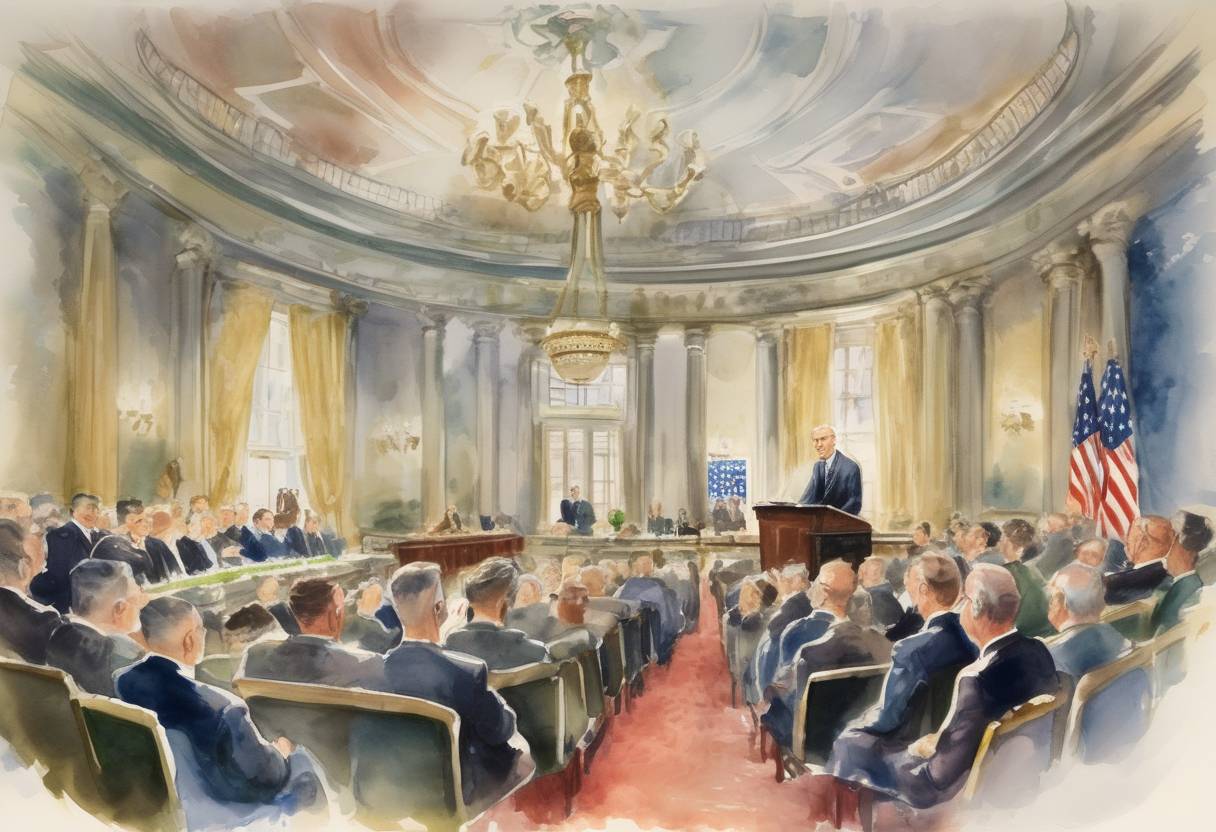
On October 5, 1947, President Harry S. Truman delivered the first televised address from the White House, marking a significant moment in both political communication and media history. This address was not only notable for its medium but also for its urgent message to the American public.
In the aftermath of World War II, Europe was struggling with severe food shortages. The war had devastated agricultural production across the continent, leading to widespread hunger and economic instability. The United States, having emerged from the war with its infrastructure intact and its economy booming, was in a position to provide crucial assistance.
Conservation Appeal: President Truman called on Americans to conserve food to help alleviate the crisis in Europe. He emphasized the moral responsibility of the United States to assist in the recovery of war-torn nations.
Specific Measures: Truman urged citizens to reduce their consumption of key staples such as wheat and meat. He suggested “Meatless Tuesdays” and “Poultryless Thursdays” as part of a voluntary rationing effort.
Economic and Political Implications: The address highlighted the interconnectedness of global economies and the potential political instability that could arise from prolonged suffering in Europe. Truman’s appeal was not just a humanitarian plea but also a strategic move to stabilize Europe and prevent the spread of communism.
Public Response: The American public largely responded positively to Truman’s call, with many households participating in the voluntary conservation efforts. This collective action demonstrated the power of media in mobilizing public support for government initiatives.
Marshall Plan: Truman’s address can be seen as a precursor to the Marshall Plan, officially known as the European Recovery Program, which was announced in 1948. The plan provided extensive economic aid to help rebuild European economies, further solidifying the U.S. role in post-war recovery.
Television as a Political Tool: This address marked the beginning of television as a critical tool for political communication. It set a precedent for future presidents to use television to reach a broad audience directly.
In summary, President Truman’s televised address on October 5, 1947, was a pivotal moment in both media and international relations, showcasing the United States’ commitment to global recovery and the emerging influence of television in shaping public policy and opinion.
Source: en.wikipedia.org