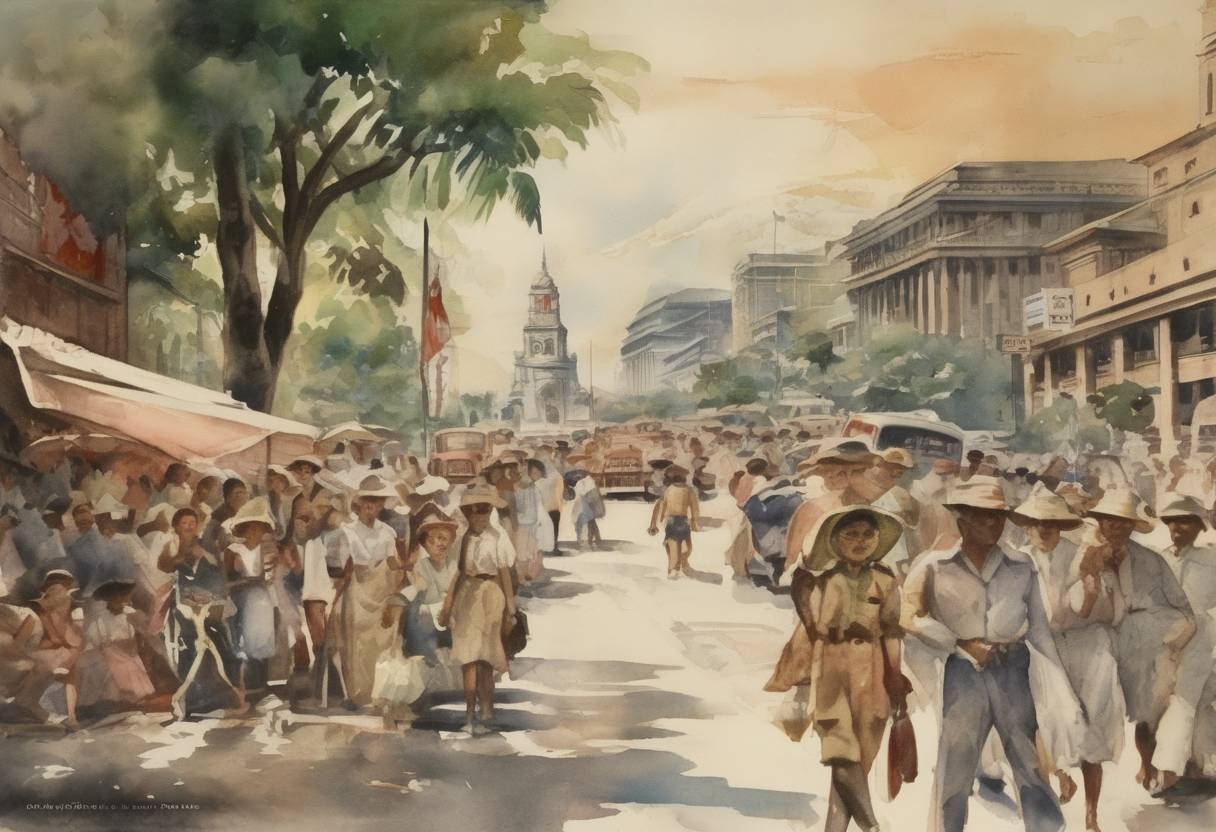
The Philippines Gains Independence from the United States: July 4, 1946
On July 4, 1946, the Philippines officially gained independence from the United States, marking the end of over four decades of American colonial rule. This significant event took place in the aftermath of World War II and was a pivotal moment in the history of the Philippines, as it transitioned from a colonial territory to a sovereign nation.
Historical Context
- Spanish Colonial Rule: Before American colonization, the Philippines was under Spanish rule for over 300 years, from 1565 until 1898.
- Spanish-American War: The defeat of Spain in the Spanish-American War led to the Treaty of Paris in 1898, where Spain ceded the Philippines to the United States.
- American Colonial Period: The Philippines was governed as an American colony, with the U.S. implementing various political, economic, and educational reforms.
Path to Independence
- Philippine Revolution: The desire for independence was strong, and the Philippine Revolution against Spanish rule had already begun in 1896. This continued against American rule, culminating in the Philippine-American War (1899-1902).
- Tydings-McDuffie Act: In 1934, the Tydings-McDuffie Act was passed by the U.S. Congress, establishing the Commonwealth of the Philippines and setting a ten-year transition period towards full independence.
- World War II: The Japanese occupation of the Philippines during World War II delayed the independence process. The Philippines was a significant battleground in the Pacific theater, suffering extensive damage and loss of life.
Independence Day
- Proclamation of Independence: On July 4, 1946, the Treaty of Manila was signed, officially recognizing the independence of the Republic of the Philippines. The ceremony took place at the Luneta Park in Manila, with representatives from both the United States and the Philippines in attendance.
- First President: Manuel Roxas became the first President of the independent Republic of the Philippines.
Aftermath and Significance
- Post-Independence Challenges: The newly independent nation faced numerous challenges, including rebuilding from the devastation of World War II, addressing economic issues, and establishing a stable political system.
- U.S.-Philippines Relations: The United States retained significant influence in the Philippines, with military bases and economic ties continuing to play a crucial role in bilateral relations.
- Change of Independence Day: Initially celebrated on July 4, the Philippines later moved its Independence Day to June 12, commemorating the 1898 declaration of independence from Spain.
The independence of the Philippines on July 4, 1946, was a landmark event that not only marked the end of colonial rule but also set the stage for the country’s future as a sovereign nation. It remains a significant chapter in the history of the Philippines and its relationship with the United States.