The Siege of Jerusalem Begins - June 6, 1099
1099 · Jerusalem, Kingdom of Jerusalem (modern-day Israel)
The First Crusade: Crusaders begin the Siege of Jerusalem, a pivotal moment in the campaign to capture the Holy City from Muslim control.
July 15, 1099
The First Crusade captures Jerusalem, marking a pivotal moment in the Crusades as Christian forces take control of the city from Muslim rule.
Jerusalem, Kingdom of Jerusalem (modern-day Israel) | Crusaders
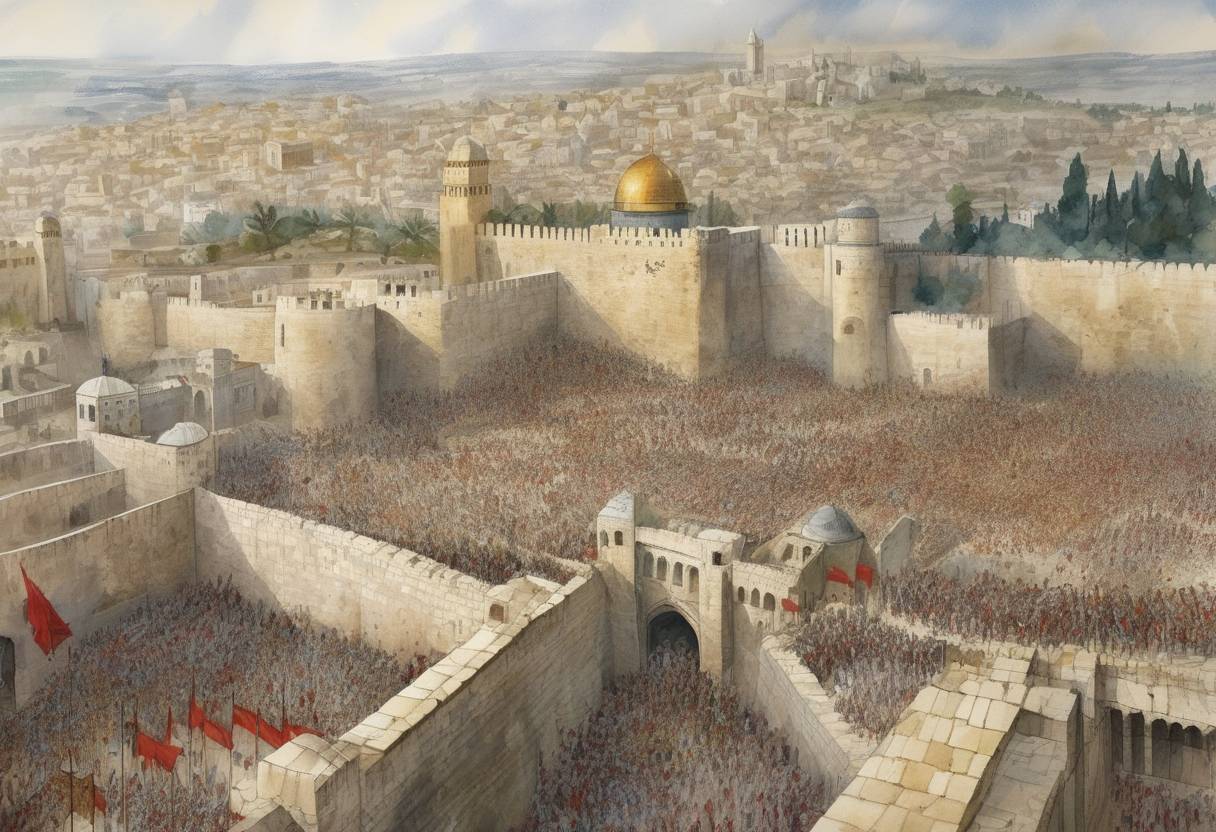
On July 15, 1099, the First Crusade reached a climactic moment when Christian forces successfully captured Jerusalem from Muslim rule. This event marked a pivotal point in the Crusades, a series of religious and military campaigns initiated by Western European Christians in response to Muslim expansion and to reclaim the Holy Land.
The First Crusade was launched in 1095 following a call to arms by Pope Urban II at the Council of Clermont. The Pope urged Western Christians to aid the Byzantine Empire, which was under threat from Seljuk Turkish forces, and to reclaim Jerusalem and other sacred sites in the Holy Land. Motivated by religious fervor, promises of spiritual rewards, and the prospect of land and wealth, thousands of knights and peasants embarked on the arduous journey to the East.
The siege of Jerusalem began in June 1099. The Crusaders, numbering around 12,000, faced a formidable task as they approached the heavily fortified city, which was defended by a Fatimid garrison. The Crusaders constructed siege towers and other equipment to breach the city’s defenses. After weeks of intense fighting and strategic maneuvering, the Crusaders launched a final assault on July 14, 1099.
On July 15, the Crusaders breached the walls of Jerusalem. The ensuing battle was brutal, and historical accounts describe a massacre of the city’s Muslim and Jewish inhabitants. The capture of Jerusalem was a significant victory for the Crusaders, fulfilling their primary objective and establishing a Christian foothold in the Holy Land.
The capture of Jerusalem had profound implications:
Establishment of the Kingdom of Jerusalem: The Crusaders established the Kingdom of Jerusalem, a feudal state that would last until 1291, serving as a base for further Crusader activities in the region.
Religious Impact: The success of the First Crusade bolstered the papacy’s influence and inspired subsequent Crusades, although none would achieve the same level of success.
Cultural and Political Consequences: The Crusades intensified Christian-Muslim relations, leading to centuries of conflict and cultural exchange. They also contributed to the end of the Byzantine Empire’s dominance in the region.
Legacy: The capture of Jerusalem became a symbol of Christian triumph and was celebrated in medieval European literature and art.
The First Crusade’s success in capturing Jerusalem set a precedent for future Crusades and left a lasting legacy on the history of the Middle East and Europe.
Source: en.wikipedia.org