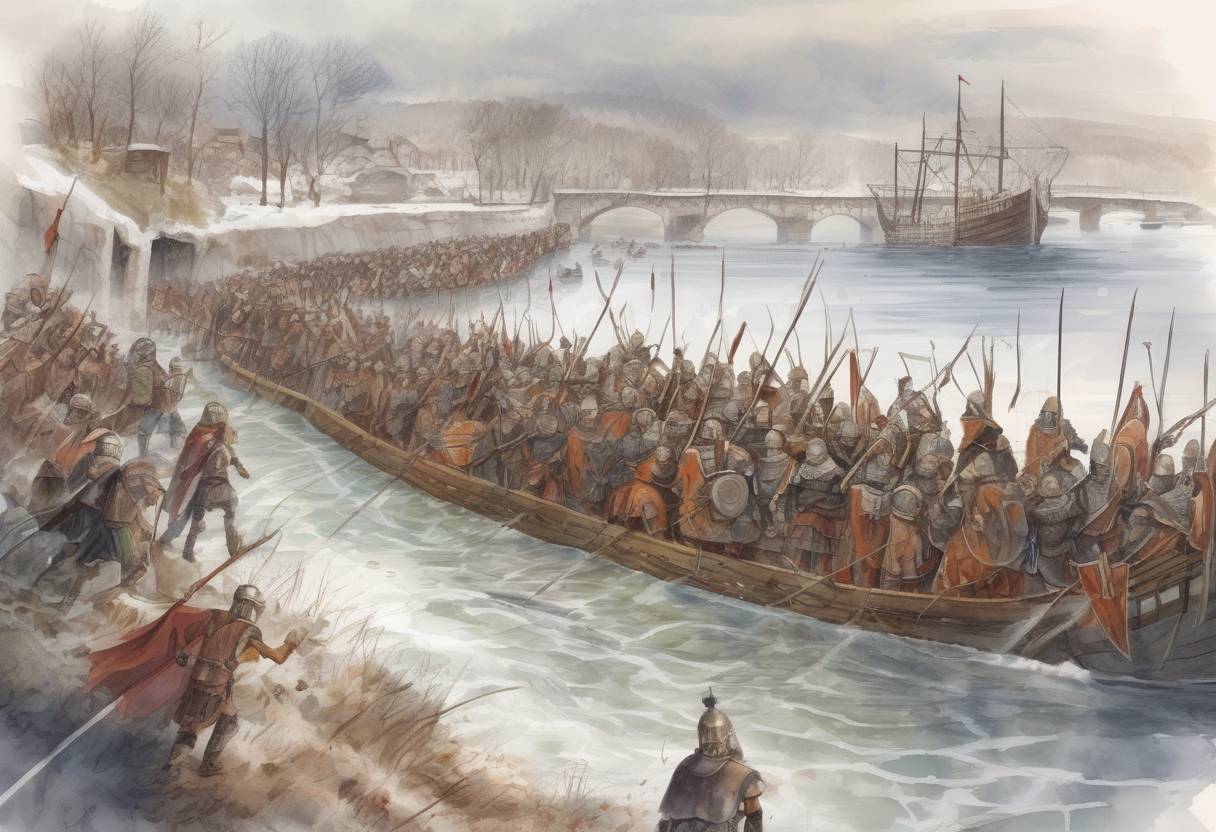
Crossing of the Rhine by Germanic Tribes on December 31, 406
On December 31, 406, a significant event unfolded that marked a pivotal moment in the decline of Roman control in Western Europe. A coalition of Germanic tribes, including the Vandals, Alans, and Suebi, crossed the frozen Rhine River, entering the territory of the Western Roman Empire. This incursion is often seen as a critical point in the series of events leading to the eventual fall of the Western Roman Empire.
Context and Background
- Roman Empire’s State: By the early 5th century, the Roman Empire was already experiencing internal strife and external pressures. The Western Roman Empire, in particular, was plagued by political instability, economic troubles, and military challenges.
- Barbarian Pressure: Various Germanic tribes had been pressing against the Roman frontiers for centuries. The Roman policy of settling some tribes within the empire as foederati (allied tribes) had only temporarily alleviated the pressure.
- Climate Conditions: The winter of 406-407 was notably harsh, leading to the freezing of the Rhine River, which traditionally served as a formidable natural barrier against invasions.
The Crossing
- The Tribes Involved: The Vandals, Alans, and Suebi were part of a larger migratory movement of Germanic peoples. The Vandals, originally from the region of modern-day Poland, were joined by the Alans, an Iranian nomadic group, and the Suebi, a Germanic tribe.
- The Event: On the last day of 406, these tribes took advantage of the frozen Rhine to cross into Roman Gaul. This crossing was not merely a raid but a large-scale migration, as these groups sought new territories to settle.
- Roman Response: The Roman military was stretched thin, dealing with multiple threats across the empire. The crossing caught the Romans off guard, and they struggled to mount an effective defense.
- Impact on Gaul: The entry of these tribes into Gaul led to widespread devastation. Cities were sacked, and the Roman administrative and military presence in the region was severely weakened.
Broader Historical Significance
- Decline of Roman Authority: The crossing of the Rhine in 406 is often cited as a significant event in the decline of Roman authority in the Western Empire. It demonstrated the inability of the Roman military to defend its borders effectively.
- Foreshadowing the Fall: This event foreshadowed further incursions and the eventual collapse of Roman control in the West. It set a precedent for other tribes, such as the Visigoths and Huns, to challenge Roman territories.
- Legacy: The settlement of these tribes within Roman lands contributed to the cultural and political transformation of Western Europe, laying the groundwork for the emergence of medieval European kingdoms.
In summary, the crossing of the Rhine by the Vandals, Alans, and Suebi on December 31, 406, was a watershed moment in European history. It highlighted the vulnerabilities of the Roman Empire and accelerated the processes that would lead to its eventual fragmentation and transformation.