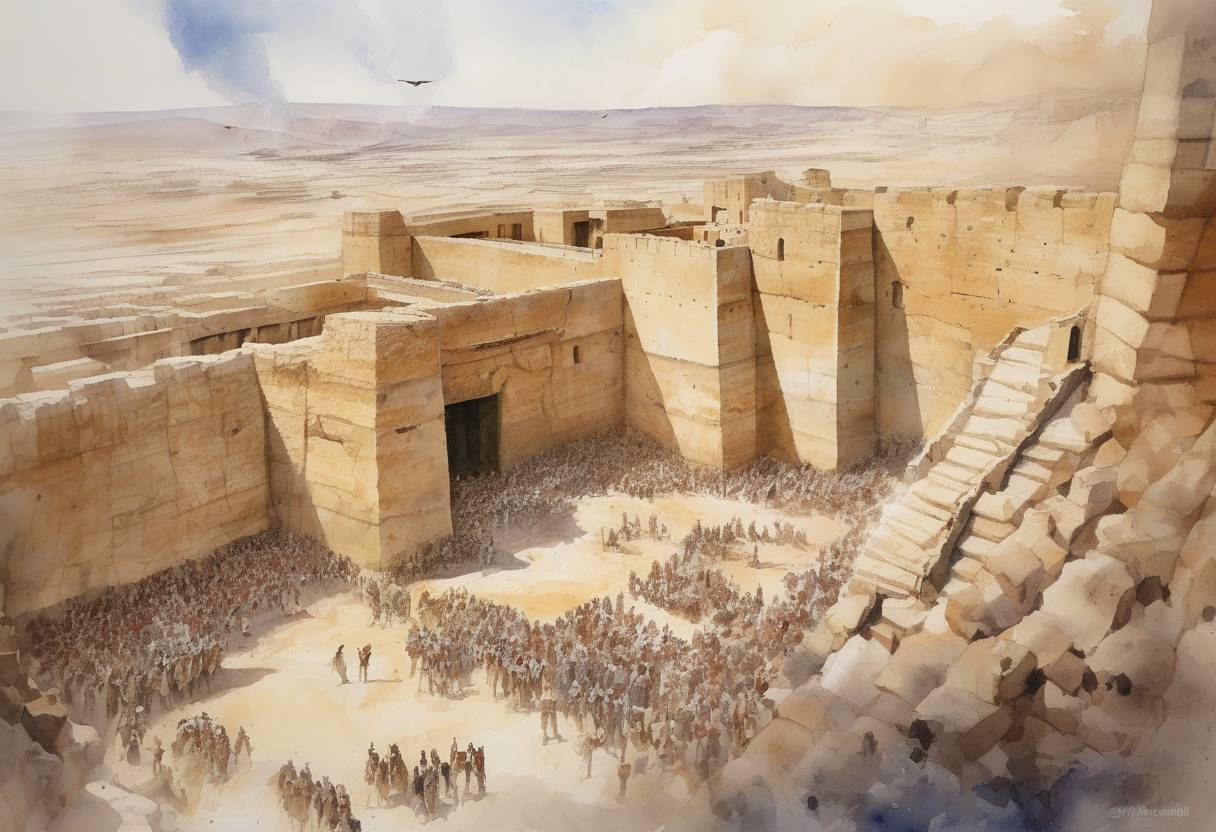
The Siege of Masada: April 15, 73 CE
The Siege of Masada, culminating on April 15, 73 CE, marked a significant and dramatic conclusion to the First Jewish-Roman War (66-73 CE). This event is remembered for its tragic end and the enduring symbol of resistance it represents in Jewish history.
Background
The First Jewish-Roman War, also known as the Great Jewish Revolt, began in 66 CE as a result of religious tensions, heavy taxation, and Roman oppression. The conflict saw several Jewish factions rise against the Roman Empire, leading to a series of battles and sieges, including the infamous destruction of Jerusalem and the Second Temple in 70 CE.
The Fortress of Masada
Masada is a natural fortress located on a plateau overlooking the Dead Sea in present-day Israel. Originally built by King Herod the Great as a palace complex, it became a refuge for Jewish rebels known as the Sicarii, a splinter group of the Zealots, following the fall of Jerusalem.
The Siege
The Roman governor of Judea, Lucius Flavius Silva, led the Roman Tenth Legion, along with auxiliary troops and thousands of Jewish prisoners, to lay siege to Masada in 72-73 CE. The Romans constructed a circumvallation wall and a massive ramp on the western side of the plateau to breach the fortress.
The defenders, numbering around 960 men, women, and children, held out against the Romans for several months. The siege is notable for the engineering prowess of the Romans and the determination of the Jewish defenders.
The Fall of Masada
On April 15, 73 CE, the Romans finally breached the walls of Masada using a battering ram. According to the ancient historian Flavius Josephus, the defenders, led by Eleazar ben Yair, chose mass suicide over capture. Josephus’ account, though the primary source, is debated among historians regarding its accuracy and the extent of the mass suicide.
Aftermath and Significance
The fall of Masada effectively ended the First Jewish-Roman War. The event has since become a symbol of Jewish heroism and resistance against oppression. In modern times, Masada is a significant archaeological site and a poignant reminder of the past, attracting visitors from around the world.
The story of Masada continues to resonate, reflecting themes of freedom, sacrifice, and the struggle for survival against overwhelming odds.