SpaceX's First Successful Reuse of a Falcon 9 Rocket
2017 · Cape Canaveral, United States
SpaceX successfully reused a Falcon 9 rocket for the first time, marking a major milestone in the company's efforts to reduce the cost of space travel.
September 1, 2016
A SpaceX Falcon 9 rocket exploded during a routine test at Cape Canaveral, Florida, destroying the rocket and its payload, the AMOS-6 satellite.
Cape Canaveral, United States | SpaceX
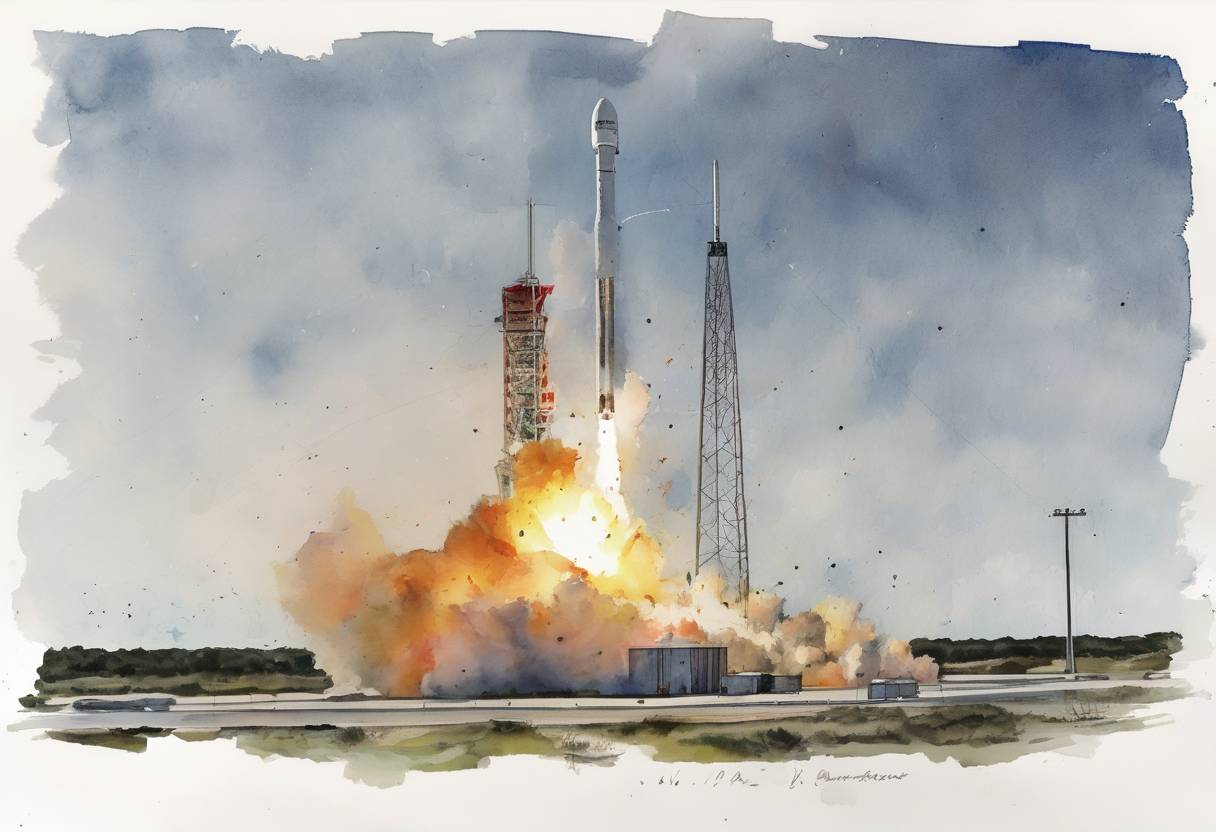
On September 1, 2016, a SpaceX Falcon 9 rocket exploded during a routine pre-launch test at Cape Canaveral Air Force Station in Florida. This incident resulted in the destruction of both the rocket and its payload, the AMOS-6 satellite.
SpaceX, founded by Elon Musk in 2002, had been making significant strides in the aerospace industry with its Falcon 9 rocket, known for its reusability and cost-effectiveness. The AMOS-6 satellite, owned by the Israeli company Spacecom, was intended to provide internet access to sub-Saharan Africa, the Middle East, and Europe. Facebook had partnered with Eutelsat to use AMOS-6 as part of its Internet.org initiative to expand internet connectivity in underserved regions.
The explosion was traced back to a breach in the cryogenic helium system of the rocket’s second stage. The investigation revealed that the likely cause was the failure of a composite overwrapped pressure vessel (COPV) inside the liquid oxygen tank. The supercooled liquid oxygen interacted with the carbon composite material, leading to the rupture.
Despite the setback, SpaceX continued to innovate and improve its technology. The company resumed launches in January 2017 and has since achieved numerous milestones, including the successful reuse of Falcon 9 rockets and the development of the Starship program. The incident underscored the challenges of space exploration and the importance of rigorous testing and safety protocols.
In summary, the Falcon 9 explosion on September 1, 2016, was a significant event in SpaceX’s history, highlighting both the risks involved in spaceflight and the resilience of the company in overcoming challenges to advance space technology.
Source: en.wikipedia.org