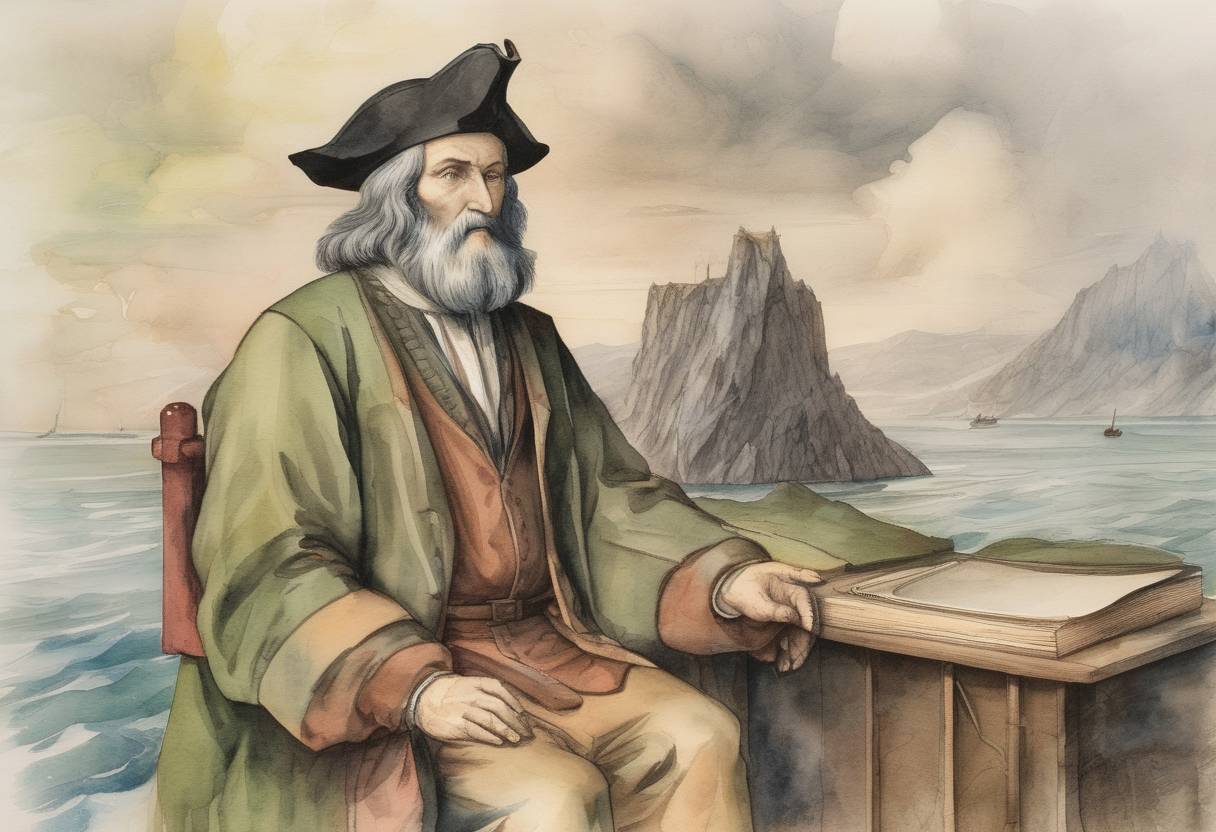
John Cabot’s Landing in North America - June 24, 1497
On June 24, 1497, the Italian navigator and explorer John Cabot, sailing under the English flag, made a significant landfall in North America. This event marked one of the earliest European explorations of the continent since the Norse expeditions centuries earlier.
Background
- John Cabot (Giovanni Caboto): Born in Genoa, Italy, around 1450, Cabot later moved to Venice, where he became a citizen. He was inspired by the successes of Christopher Columbus and sought his own route to Asia by sailing west.
- Sponsorship by England: Cabot received backing from King Henry VII of England, who was eager to expand English influence and trade. The king granted him a patent in 1496 to explore unknown lands and claim them for England.
The Voyage
- The Matthew: Cabot’s expedition was conducted aboard a single ship, the Matthew, a small but sturdy vessel. The crew consisted of about 18 men.
- Departure and Route: Cabot set sail from Bristol, England, in May 1497. He took a more northerly route across the Atlantic than Columbus, which eventually led him to the coast of North America.
Landfall and Exploration
- Arrival on June 24, 1497: Cabot is believed to have landed on the coast of what is now Newfoundland, although the exact location remains uncertain. Some historians suggest it could have been Cape Bonavista or another nearby site.
- Claim for England: Upon landing, Cabot claimed the land for England, marking the beginning of English territorial claims in the New World.
- Observations: Cabot noted the abundance of fish and the potential for rich fishing grounds, which would later become significant for European economies.
Aftermath and Significance
- Return to England: Cabot returned to England in August 1497, where he was celebrated and rewarded by King Henry VII.
- Subsequent Voyages: Encouraged by his success, Cabot embarked on a second voyage in 1498 with a larger fleet. However, this expedition’s fate remains unclear, as it did not return, and Cabot’s ultimate fate is unknown.
- Legacy: Cabot’s 1497 voyage laid the groundwork for future English claims and colonization efforts in North America. It also contributed to the European Age of Exploration, which reshaped global trade and interactions.
John Cabot’s exploration was a pivotal moment in the history of European exploration, marking the beginning of England’s long and complex relationship with the New World. His journey demonstrated the potential for new routes and resources, influencing subsequent explorers and the eventual establishment of English colonies in North America.