Philip Astley and the Birth of the Modern Circus
On September 1, 1768, Philip Astley, an English equestrian, entrepreneur, and showman, staged what is widely considered the first modern circus in London. This event marked the beginning of a new form of entertainment that would evolve and spread across the globe.
Background
Philip Astley was born in Newcastle-under-Lyme, England, in 1742. He initially served in the British Army, where he honed his skills as a horseman. After leaving the military, Astley sought to capitalize on his equestrian talents by performing trick riding shows.
The First Circus
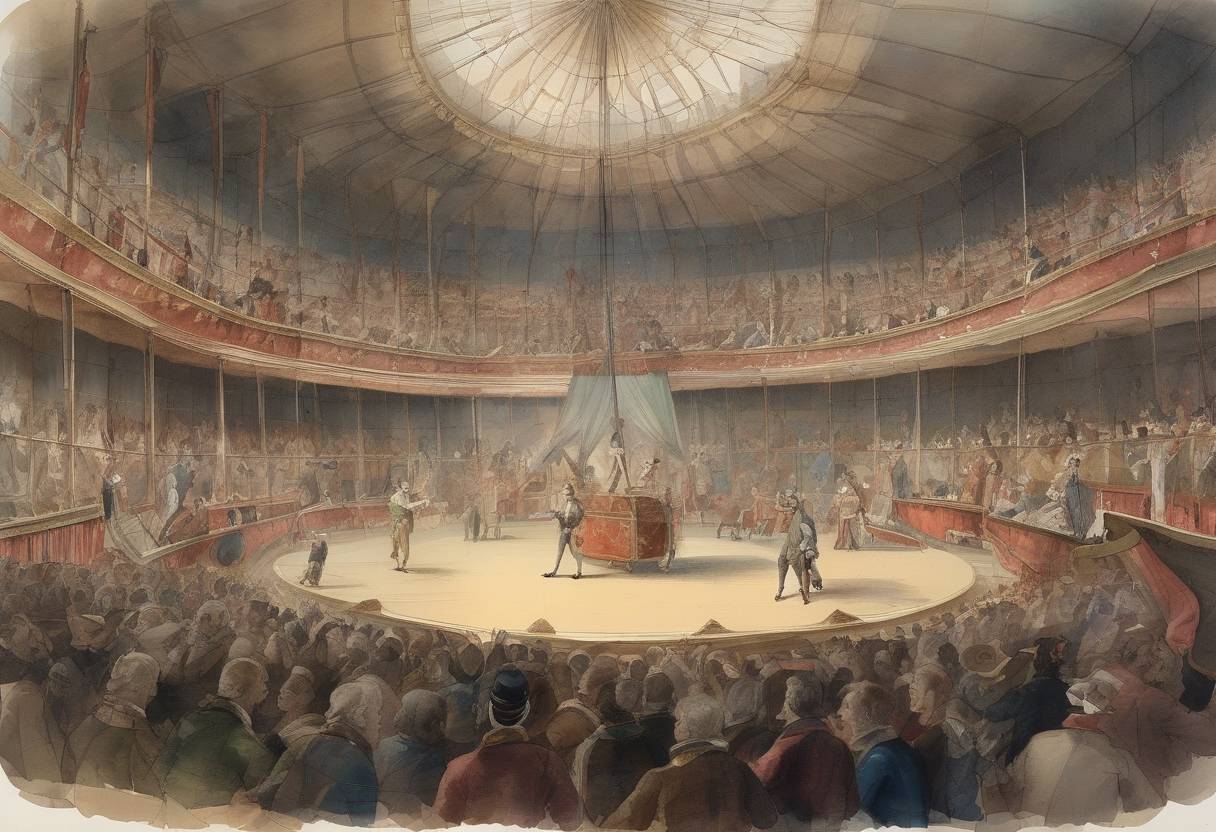
Astley’s first performance took place in an open field near Westminster Bridge in London. He showcased his equestrian skills, performing daring feats on horseback. What set Astley’s show apart from other equestrian exhibitions of the time was his innovative use of a circular performance space. This 42-foot diameter ring allowed riders to maintain balance through centrifugal force, enhancing the spectacle of their tricks.
Astley’s show was not limited to equestrian acts. He incorporated clowns, acrobats, and other performers, creating a diverse and engaging program. This combination of acts laid the foundation for the modern circus, characterized by a variety of performances within a single show.
Significance and Legacy
Astley’s innovation in creating a circular performance ring and his inclusion of various acts established a template for future circuses. His approach was so successful that he opened a permanent venue, Astley’s Amphitheatre, in 1773. This venue became a popular attraction in London and was replicated in other cities.
The concept of the circus quickly spread across Europe and eventually to the United States. Astley’s influence is evident in the continued use of the circular ring and the diverse array of acts that define circuses today.
Conclusion
Philip Astley’s staging of the first modern circus on September 1, 1768, was a pivotal moment in entertainment history. By combining equestrian displays with a variety of other performances, he created a new form of entertainment that captivated audiences and laid the groundwork for the global circus tradition that continues to thrive today.