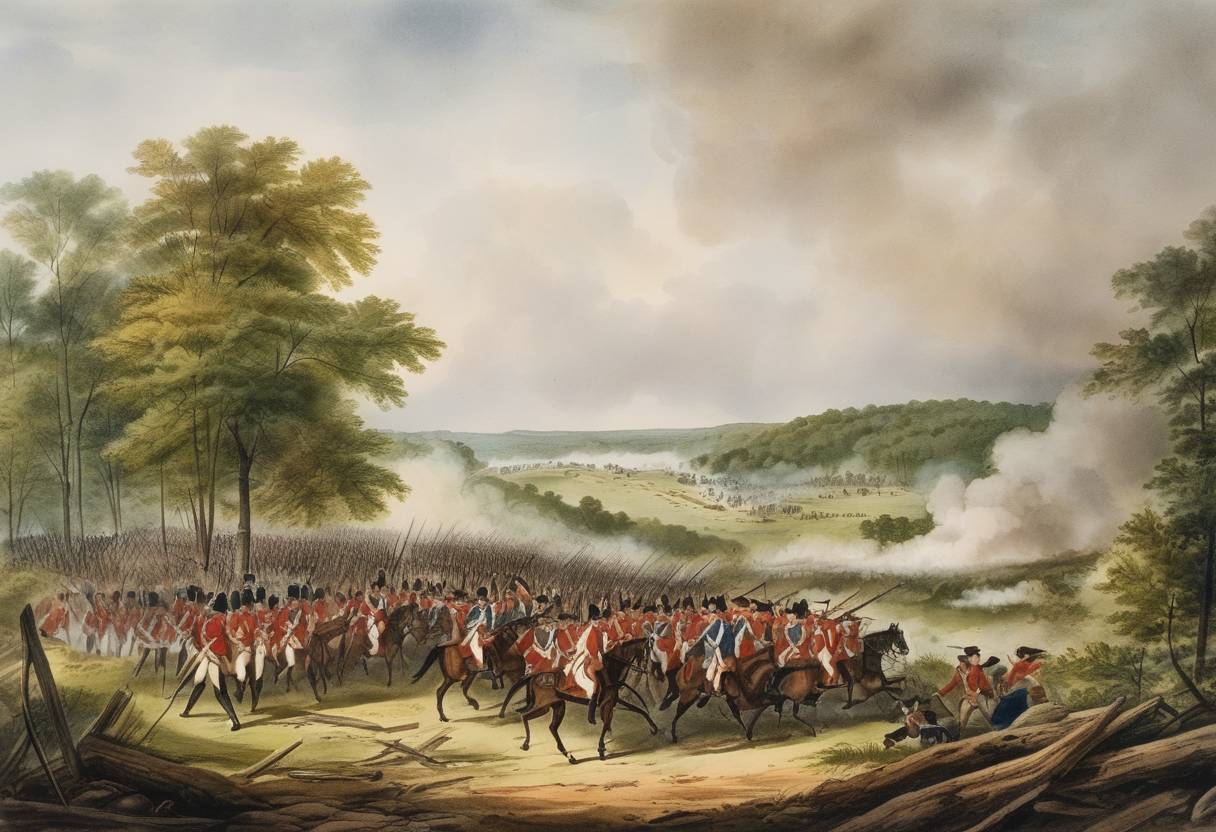
The Battle of White Plains
The Battle of White Plains occurred on October 28, 1776, not April 29, 1778, as part of the American Revolutionary War. This engagement was a pivotal moment within the British campaign to seize control of the strategic Hudson River Valley, aiming to isolate New England from the other rebellious colonies.
Context
In 1776, General George Washington’s Continental Army had suffered a series of defeats around New York City, prompting a strategic withdrawal northward through Manhattan and into White Plains, New York. The British, commanded by General William Howe, sought to exploit this retreat, advancing with the aim of delivering a decisive blow that could cripple the American resistance.
The Battle
On October 28, 1776, the British forces engaged the Continental Army at White Plains. The American troops had established defensive positions on high ground and were prepared for the confrontation. Despite this, the British launched a formidable assault, particularly targeting Chatterton Hill, a prominent location on the battlefield.
The British attack on Chatterton Hill was marked by intense fighting. The initial assault was repelled by American resistance, but subsequent reinforcements allowed the British to eventually secure the hill. This victory forced Washington to continue his strategic withdrawal, further relocating his forces to stronger defensive positions in New Jersey.
Aftermath and Significance
The Battle of White Plains was not a definitive victory for either side but served to further underscore the British dominance in the New York campaign. Washington’s ability to preserve the core of his army during the retreat, however, was crucial for continuing the struggle for independence.
The battle’s outcome encouraged the British in their strategic ambitions to divide and conquer the rebellious colonies, yet it also revealed the tenacity and resilience of the Continental Army. This engagement, while ultimately not a turning point in the war, demonstrated the enduring complexities and prolonged nature of the Revolutionary War.
Overall Impact
The battle underscored the difficulties of the British campaign to control the Hudson River Valley. The American ability to regroup and later launch counter-offensives confirmed the ongoing stalemate in the region, which persisted until the eventual turning points later in the war.