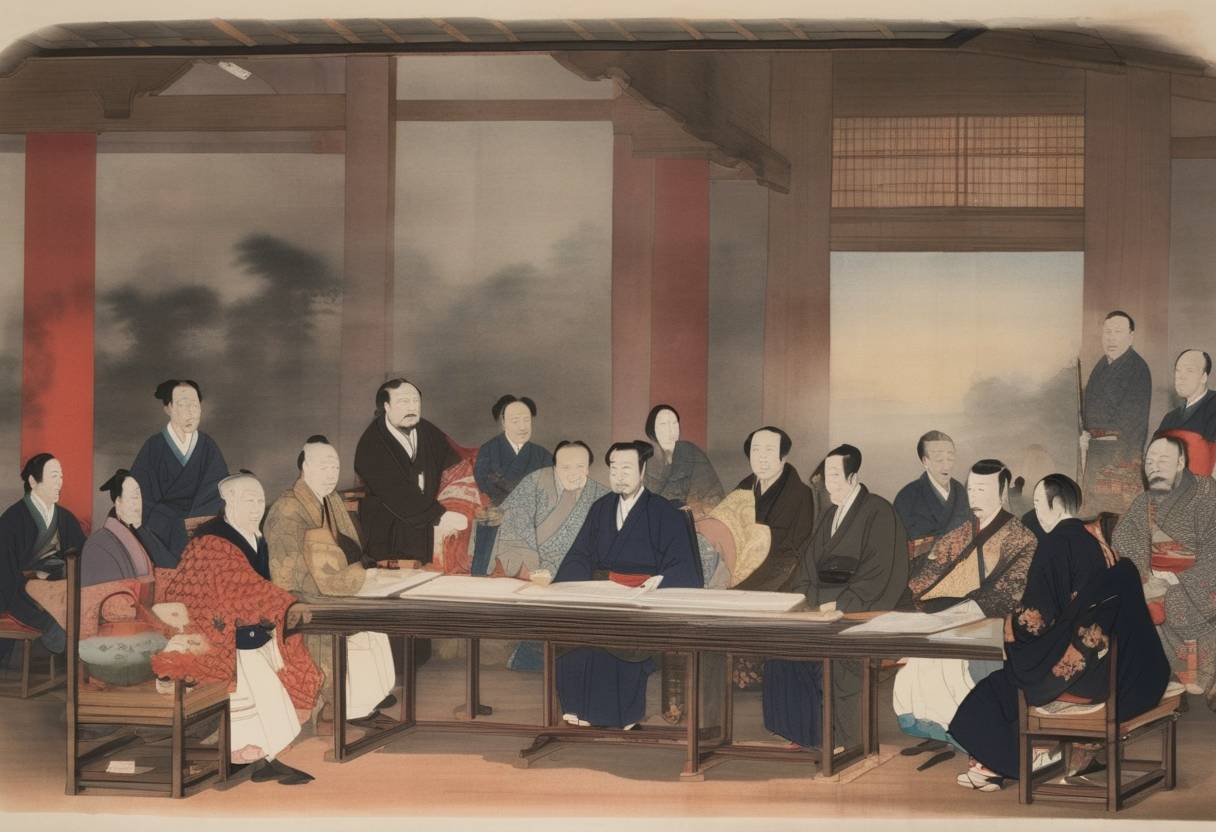
The Harris Treaty of 1858
On July 29, 1858, the Harris Treaty, formally known as the Treaty of Amity and Commerce between the United States and Japan, was signed. This significant diplomatic accord marked a pivotal moment in the opening of Japan to Western influence and trade. Negotiated by Townsend Harris, the first U.S. Consul General to Japan, the treaty followed the historic arrival of Commodore Matthew Perry in 1853–1854 and the signing of the Convention of Kanagawa, which had begun to open Japan after centuries of isolation under the Tokugawa shogunate.
Context and Background
For over two centuries, Japan had adhered to a policy of national seclusion (sakoku), which limited foreign influence and restricted trade relations primarily to China and the Netherlands. However, the mid-19th century presented growing pressures from Western powers eager to expand trade with Japan, seeing its strategic and economic potential.
The arrival of Commodore Perry’s “Black Ships” had forced the Japanese government to reassess its isolation policies. The subsequent signing of the Convention of Kanagawa in 1854 was a precursor, opening two ports to American ships. Harris arrived in Japan in 1856 and spent two years negotiating terms that would further open up Japanese ports and establish formal commercial relations.
Key Provisions of the Treaty
The Harris Treaty included several critical provisions:
- Opening of Ports: The treaty stipulated the opening of additional ports, including Edo (later Tokyo), Kobe, and Nagasaki, to American trade and residence.
- Diplomatic Residence: It allowed for the establishment of a U.S. diplomatic presence in Japan.
- Extraterritoriality: American citizens in Japan were granted extraterritorial rights, meaning they were subject to U.S. laws rather than Japanese laws while residing in treaty ports.
- Tariff Regulations: It established fixed low import-export duties, which were disadvantageous to Japan and aimed to favor American commercial interests.
- Most-Favored-Nation Clause: Ensured that any privileges Japan granted to other countries would also apply to the United States.
Historical Significance
The signing of the Harris Treaty represented a critical step in ending Japan’s isolationist policies and integrating the nation into the global economic system. It set the stage for further unequal treaties with other Western powers, which had similar terms, fundamentally affecting Japan’s economic sovereignty and political landscape. These events contributed to internal unrest and were a factor in the eventual downfall of the Tokugawa shogunate and the rise of the Meiji Restoration in 1868, which sought to modernize and industrialize Japan.
The treaty reflected broader 19th-century geopolitical dynamics, where Western powers aggressively pursued trade agreements and territorial concessions in Asia, often at the expense of local autonomy. It also illustrated the increasing globalization of commerce and diplomacy, signaling the deepening of international connections in the modern era.